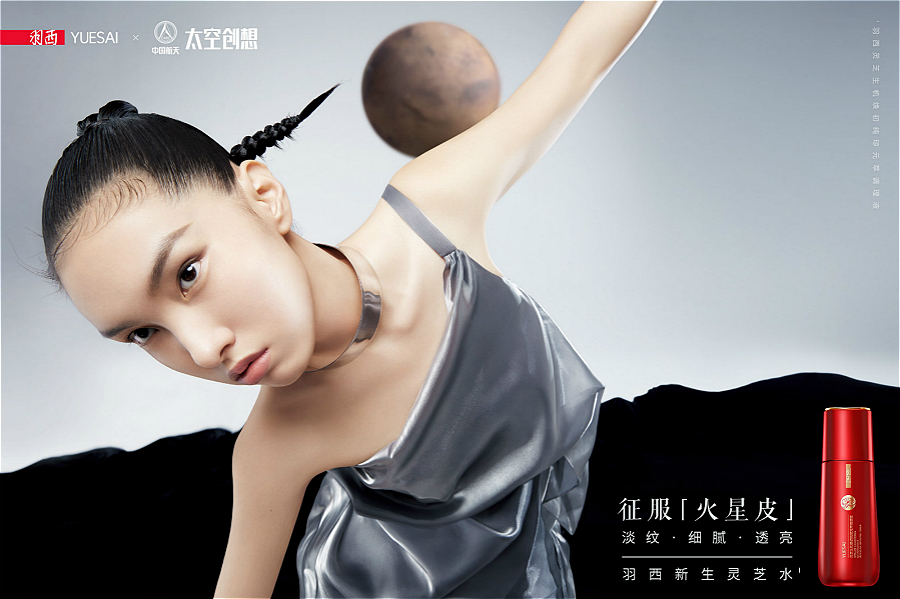
Marketing students, prepare yourselves for a story more dramatic than any K-drama: the rise, fall, and attempted resurrection of Yue Sai, China’s once-beloved luxury cosmetics brand. It’s a tale that makes “Beauty and the Beast” look like a simple fairy tale – complete with corporate acquisitions, cultural identity crises, and enough plot twists to make your marketing professor weep tears of joy.
Once upon a time, Yue Sai became the No.1 luxury cosmetic brand in China by 1998, proving that understanding your local market isn’t just important – it’s everything. But like many fairy tales, this one had a twist: success bred complacency, and by the time L’Oréal fully acquired the brand, key issues included an uncertain business model, reduced brand visibility, and lack of motivation among L’Oréal employees in China.
Think of it as the cosmetics equivalent of a Hollywood sequel – all the budget in the world, but somehow missing the magic that made the original special.
Meanwhile, L’Oréal has been playing 4D chess in the Chinese market. L’Oréal is aiming for around 5% growth in China this year, which might sound modest until you realize that in China’s cosmetics market, 5% growth is like finding a parking spot in Manhattan – rare and incredibly valuable.
L’Oréal aims to lead the revolution in the beauty industry with Generative AI in 2024, proving they’re not just playing catch-up; they’re trying to rewrite the rules entirely. It’s like bringing a smartphone to a flip-phone fight – technically overkill, but undeniably effective.
The strategy involves a complete brand overhaul, leveraging digital marketing, innovative product development, and a customer-centric approach to regain market share. It’s the marketing equivalent of a complete makeover show – dramatic, necessary, and hopefully successful.
The challenge? Students must choose a positioning, communication and distribution strategy for Yue Sai by analyzing extensive information about the Chinese cosmetic market. No pressure, marketing students – just the future of a luxury brand resting on your case study analysis skills.
The effective campaigns of L’Oreal convey the value of self-worth by utilizing the digital marketing platform and collaborating with influencers, and Loreal China links self-worth to the Chinese audience utilizing the concept of intangible cultural heritage. They have learned the skill of being universally consistent, yet locally competitive, such as serving French food using chopsticks.
Short-Term Goals (1-2 years):
Long-Term Goals (3-5 years):
The difference? L’Oréal is running a marathon they’ve been training for, while Yue Sai is trying to catch up after spending years on the couch eating marketing strategy ice cream.
This case study teaches us that in China’s beauty market, cultural authenticity isn’t just nice to have – it’s your competitive moat. L’Oréal succeeded by respecting local culture while leveraging global expertise. Yue Sai’s challenge is rediscovering its Chinese soul while competing with international standards.
For marketing students, remember: in China, you’re not just selling cosmetics – you’re selling dreams, status, and cultural identity. Forget any of these things, and your brand is as up-to-date as last year lipstick.
The Chinese/China beauty industry is not only concerned with beautifying people but also making people feel naturally beautiful in their respective cultural set up. Now that’s a marketing strategy worth studying!
Struggling with complex marketing case studies like this one? Get expert help from StudyCreek for comprehensive analysis assistance, or explore DissertationHive for in-depth research support. Additional academic resources include StudyCorgi, EssayPro, EssayShark, and Edusson – because sometimes even marketing geniuses need backup!
Remember: In Chinese marketing, as in Chinese cuisine, the secret ingredient is always authenticity.
Prepare a marketing plan to turn around Yue Sai. In your marketing plan, please answer the following questions:
1. What positioning do you recommend Yue Sai have in China? What are the pros and cons of a lifestyle positioning compared to a more concrete positioning on functional benefits? Who should be Yue Sai’s targeted customers?
2. Should Yue Sai be an independent brand, or should it be linked in any way to Loreal brand? Why?
3. How will you choose the price, promotion (objectives, message, mix of promotion methods), product (formulation and packaging), and distribution that will allow Yue Sai to reach both short-term and long-term goals?
Turning Around Yue Sai: A Strategic Marketing Plan
[Name]
[Course Name]
Professor [Name]
[Date]
To be able to make it in the competitive beauty business in China, Yue Sai ought to consider the use of a two pronged positioning strategy that will focus on its lifestyle image as well as on its functional features. Lifestyle positioning enables Yue Sai to touch the heart of ordinary Chinese women through affirming self standards and being self-confident in terms of beauty and Chinese heritage. Meanwhile, supported with scientific-based attributes of skincare (hydration, anti-aging, pollution protection), this emotional message enhances the credibility of products.
Benefits of Lifestyle Positioning:
Creates an emotional brand connection.
Creates enduring loyalty by means of aspirational identity.
Differentiates Yue Sai from highly functional, commodity-style competitors.
Cons:
Harder to measure performance than functional claims.
Danger of mixed messages unless coupled with physical evidence.
Recommendation: Position based on lifestyle credibility values (e.g., the position that focuses on functional credibility, e.g., Empowering Chinese beauty with scientifically advanced skin care rooted in tradition). This half-and-half concept is also compatible with the expertise of L’Oreal which is global, but it is also a way of honoring Yue Sai which is local.
Target Audience:
Target the urban Chinese women population, 25-40 especially professionals in Tier 1 or Tier 2 cities. Such customers are becoming more brand-oriented, financially connected, and receptive to local brands that have international quality. They seek premium quality but also value cultural authenticity and skin-specific efficacy.
Yue Sai should remain a semi-independent brand under L’Oréal’s portfolio but subtly leverage the parent company’s credibility. A full L’Oréal endorsement may dilute Yue Sai’s local appeal, making it seem foreign or overly westernized. However, L’Oréal’s scientific authority and distribution scale can still be a quiet but powerful engine behind the brand.
Recommendation:
Maintain independent branding for Yue Sai in consumer-facing channels.
Use “Powered by L’Oréal science” subtly on packaging or online platforms to instill trust.
This hybrid brand architecture maintains cultural relevance while benefiting from global expertise.
Use a high-value middle market philosophy- of cheap luxury that is valued and is quality priced but still is not so high as not to reach out to the consumer conscious of price. This positioning helps in brand elevation, and generate profitable margins.
Formulation: Pay attention to skincare products that will correspond to Chinese skin types and environmental issues (e.g. pollution protection, skin hydration, skin sensitivity).
Apply the latest active ingredients supported by L Orreal R&D tinted with the traditional Chinese botanic, to give them authenticity.
Packaging: Simplistic yet stylish design that is lightweight with calligraphic Chinese style and materials that are recyclable. Provide compact size to new consumers and online customers.
Objective: Recreate brand value and purchase trial among targeted customers.
Message: “The science of modern beauty meets the soul of Chinese tradition.”
Promotion Mix:
Chinese beauty KOL (key opinion leaders) collaborations with influencers.
Micro videos as a storytelling channel through such platforms as Douyin (Tik Tok China) and Xiaohongshu.
Events of in-store skin care consultation by dermatologists and brand ambassadors.
Reviews, tutorials and testimonials of real users to promote trustworthiness.
Short-term: Invest in online platforms such as Tmall, JD.Com and Xiaohongshu with special offers and packages.
Long-term: Increase the offline presence through the L’Oréal-existing retailing network, departmental stores and Yue Sai branded pop up experiences within the malls and airports.
To revive Yue Sai, the revival must be culturally savvy, digitally innate and balanced between emotional narration and functional skincare efficacy. With intelligent pricing, innovations in the use of products, and digital marketing, a position of lifestyle-based yet scientifically credible positioning can make Yue Sai an upscale Chinese brand of beauty products. Leaving Yue Sai independent but secretly empowered by LOral will make it re-establish the trust, expand relevance, and become competitive in both immediate sales and long-term brand equity.
[Author Last Name], [Initial]. (Year). Title. Journal Name, volume(issue), page range.
[Market research on Chinese skincare/beauty trends]
[L’Oréal/Yue Sai business case source
Delivering a high-quality product at a reasonable price is not enough anymore.
That’s why we have developed 5 beneficial guarantees that will make your experience with our service enjoyable, easy, and safe.
You have to be 100% sure of the quality of your product to give a money-back guarantee. This describes us perfectly. Make sure that this guarantee is totally transparent.
Read moreEach paper is composed from scratch, according to your instructions. It is then checked by our plagiarism-detection software. There is no gap where plagiarism could squeeze in.
Read moreThanks to our free revisions, there is no way for you to be unsatisfied. We will work on your paper until you are completely happy with the result.
Read moreYour email is safe, as we store it according to international data protection rules. Your bank details are secure, as we use only reliable payment systems.
Read moreBy sending us your money, you buy the service we provide. Check out our terms and conditions if you prefer business talks to be laid out in official language.
Read more