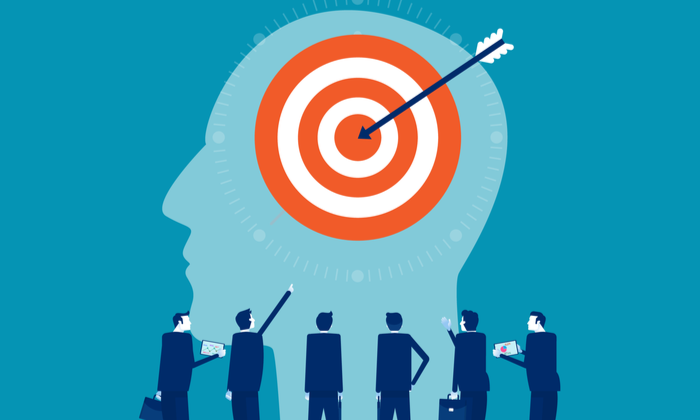
Marketing has dating app mentality: swipe right on your ideal customer, swipe left on everyone else. The era of companies shouting their message into a storm and hoping somebody would hear it has ended. The modern business is closer to matchmakers- they identify their soulmate customers and establish long-term relationships.
This is Marketing 101: age, gender, income, education. Netflix knows you’re a 25-year-old college graduate who binges true crime documentaries at 2 AM. They didn’t guess—they calculated.
Demographics explains to you about who your customers are, and psychographics explains to you why the customers buy. It is not coffee that Starbucks is selling to millennials but it is that feeling of being someone who would drink artisanal coffee as they write their screenplay.
Companies track your online behavior like a digital detective. Amazon’s “customers who bought this also bought” isn’t helpful—it’s algorithmic mind control disguised as customer service.
McDonald’s serves rice burgers in Taiwan and samurai chicken in Thailand. It’s not cultural appropriation—it’s cultural adaptation, and it’s brilliant.
Starbucks’ rewards program is basically legal drug dealing. That free drink after 12 purchases? It’s not generosity—it’s behavioral conditioning that would make Pavlov proud.
The “Discover Weekly” playlist by Spotify is like an invented friend of yours who understands music and your ear all too well. This is not friendship, this is algorithmic intimacy and it works.
Amazon Prime spoiled us all. Two-day shipping became the baseline, not the luxury. Now other companies scramble to match expectations Amazon created.
Apple didn’t just create customers—they created evangelists. iPhone users don’t just buy phones; they join a lifestyle cult with excellent customer service and overpriced accessories.
Impression counts first. Firms such as Slack make the process of product adoption resemble a game, where a person is not overwhelmed, instead being proud of his or her achievement.
Intelligent organizations do not wait to hear complaints, but go out there and find out. You could call it relationship therapy, but it applies to brands instead.
Unexpected perks create emotional connections. When Zappos upgrades your shipping for free, it’s not logistics—it’s love bombing.
Great customer service isn’t about solving problems—it’s about solving problems so well that customers become advocates.
Modern marketing isn’t about finding any customer—it’s about finding the right customer and treating them so well they never want to leave. It’s quality over quantity, precision over spray-and-pray.
For marketing students diving deeper into target marketing strategies, resources like StudyCreek offer comprehensive market analysis frameworks. For specialized research support, DissertationHive provides in-depth academic assistance. Additional help is available through StudyCorgi, EssayPro, EssayShark, and Edusson.
Keep in mind: in the current, saturated market, the companies that end up on the top are not the ones that scream the loudest–these are the ones that tell people what they have been hoping to hear.
Sample Assignment:
Your team is looking for a way to make some revenue as either a for-profit or not-for-profit organization. This organization can market locally, nationally, or internationally. The product that you have decided to sell is lemonade. To make the endeavor work, you will have to define a marketable form of the drink and decide on a target market. Your marketing team’s mission is to prove the company’s goals will be met by providing research, strategy development, and the reason why this form of the product is viable. For this part of the project report on the following: Product’s definition to the target market.
Sample Answer:
Positioning Our Lemonade Product to the Specific Market: Smart Marketing Strategy
Name:
[Your Full Name]
Course:
[Course Title]
Instructor:
[Instructor’s Name]
Date:
[Month Day, Year]
In our marketing team we have created a new and refreshing health-conscious lemonade brand marketed as Lively Lemon keeping the view of current consumer trends and health choices. It is not a mere ordinary sweet lemonade, but real fruit-based, low sugar, all-natural beverage mixed with herbs, such as lavender or mint, and electrolytes to stay hydrated. Lively Lemon is a functional beverage available in sustainable packaging that can interest those concerned with their health who are seeking wellness-minded drinks with a great taste. In the modern competitive beverage market, the consumers are seeking more transparency, natural ingredients, and green business responsibility more than ever, our product successfully covers all these priorities (Statista, 2023).
Lively Lemon targets mainly health-conscious millenniums and Gen Z shoppers, who are aged between 18 and 35 years old, urban and suburban residents all over the U.S. This segment is the most focused on the nutritional nutrition, sustainable brands, and special sense of taste (NielsenIQ, 2022). They are most likely to buy drinks that connect with these values of theirs, i.e., eco-friendly and having clean ingredients. On top of that, they are digitally-savvy and tend to learn a new brand on social media and via influencer marketing, so the same channel can work wonders in terms of outreach. The same group also exhibits interest in an increasing preference towards functional non-carbonated drinks as a health educational and superior alternative to soda or energy drinks (Mintel, 2022).
To make our target audience even more specific, this group is divided into psychographic segments. Our target customers live an active lifestyle, care about yoga, healthy trends, and eat a plant-based diet or low-sugar diet. They are also ready to use value premium on the quality and brand ethics. Our product will address this need by providing Lively Lemon in the flavor options cucumber-mint, blueberry-lavender and ginger-lemon. Not only do these combinations offer refreshing flavors, but also connect the product as an experience, rather than a drink.
Positioning this product into this market would be positioning its functional utility and how the brand exists. We seek marketing Lively Lemon as thirst quencher and wellness friend. The messaging will center around the advantages such as the ideas like “refreshment with purpose” and “clean hydration to clear mind.” The packaging is also Earth-friendly (recyclable and printed with soy ink) and will be one of the differentiators of a crowded beverage shelf. This underpins the mission of the company that is to promote health, sustainability, and community well-being.
Summing up, the Lively Lemon product is customized to the market that is inclined to health, ecologically correct, and fashionable. The combination of organic product, exotic flavors, eco-friendly packaging, and niche-branded as part of lifestyle guarantees that it succeeds in the contemporary drink market. We believe that this product has a potential to penetrate well in the market and have customer loyalty since we have conducted a proper market research about the product and are fully aware about the needs and values of our consumers.
References
Mintel. (2022). Functional Beverage Trends 2022. https://www.mintel.com
NielsenIQ. (2022). Understanding the Gen Z and Millennial Consumer. https://www.nielseniq.com
Statista. (2023). U.S. health and wellness beverage market value 2020–2027. https://www.statista.com
Delivering a high-quality product at a reasonable price is not enough anymore.
That’s why we have developed 5 beneficial guarantees that will make your experience with our service enjoyable, easy, and safe.
You have to be 100% sure of the quality of your product to give a money-back guarantee. This describes us perfectly. Make sure that this guarantee is totally transparent.
Read moreEach paper is composed from scratch, according to your instructions. It is then checked by our plagiarism-detection software. There is no gap where plagiarism could squeeze in.
Read moreThanks to our free revisions, there is no way for you to be unsatisfied. We will work on your paper until you are completely happy with the result.
Read moreYour email is safe, as we store it according to international data protection rules. Your bank details are secure, as we use only reliable payment systems.
Read moreBy sending us your money, you buy the service we provide. Check out our terms and conditions if you prefer business talks to be laid out in official language.
Read more