Learn how subgroup analysis enhances research accuracy, as well as helps make better choices and outcomes. Gather essential advantages, good practice and ethics in this career manual.
Subgroup analysis is a strong force in the context of modern research and data-driven decision-making since it enables the discovery of things that would have been no longer visible otherwise. Instead of the researchers basing their findings on general averages, more and more researchers apply this method to learn the reaction of various groups within the same study. Proper use will result in more intelligent conclusions, better evidence and increased impact in the real world.
In this article, I will explain the importance of subgroup analysis, its application in various fields, and the best practices that would guarantee reliable and ethical outcomes.
Subgroup analysis is a procedure of analyzing results of a particular subgroup of a population. Such subgroups can be based on age, gender, baseline features, socioeconomic status, or clinical features. Rather than making a general assumption that a single outcome will be applicable to all people, researchers rely on this approach to determine differences in responses.
As an illustration, in clinical trials, subgroup analysis can be used to answer the question whether such an intervention can have different impacts on young versus older subjects or people with varying levels of risks.
In the most basic sense, subgroup analysis enhances accuracy. The important differences may be concealed by average effects. Knowing whom the research will benefit the most or the least, researchers could narrow suggestions, enhance interventions, and prevent the wrong conclusions.
Subgroup analysis is one of the most significant in making better decisions. The strategies can be tailored to a particular population instead of using one-size-fits-all methods by policymakers, clinicians, or organizations.
Researchers minimize the oversimplification by considering the level of results at a subgroup level. This enhances internal validity and contributes to better assurance that conclusions can be more consistent with the complexity of the real world.
Personalization can be assisted by the use of subgroup analysis in such spheres as healthcare, education, and marketing. The knowledge of how various groups react can be used to provide specific interventions that enhance effectiveness and satisfaction.
Medical subgroup analysis is often applied in order to investigate treatment effects in demographic or clinical groups. It is evidence-based medicine in that it makes it clear to whom an intervention is most effective.
There, however, researchers should exercise caution. Subgroup analysis may provide false information in case it is poorly planned and the sample sizes are small or are analyzed without any pre-established reasons.
In addition to the healthcare industry, subgroup analysis is also common in social sciences and business analytics. Companies divide customers, workforce, or geographical communities in order to maximize performance and performance.
To get professional academic guidance and research assistance in these aspects, programs such as studycreek.com offer useful guidelines to the students and researchers who have difficulties in analyzing complex methods.
Prespecification is one of the most significant subgroup analysis rules. The researchers are advised to predefine subgroups during data collection. This will minimize bias and enhance the validity of results.
Subgroup analysis involves having enough participants in a group. In the absence of sufficient power, it is possible that the findings are due to random variation as opposed to actual differences.
Methods, assumptions and limitations have to be documented in a clear way. Transparent reporting enables the readers to evaluate the strength or exploration of subgroup findings.
To gain a more extensive range of understanding of the ethical research practices and the standards of analysis, third-party sources, including workvix.com, can provide helpful insights and supplementary materials.
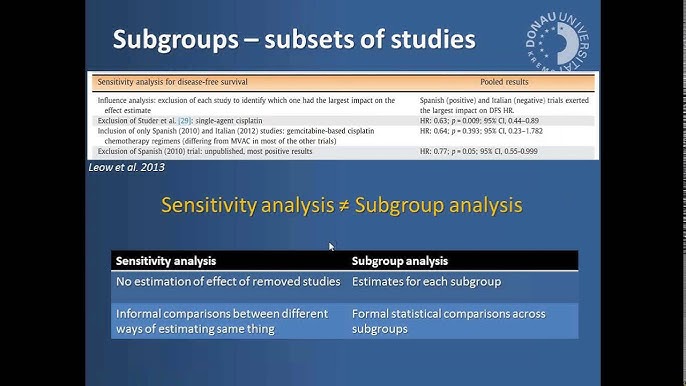
Although the subgroup analysis provides an important information, it has its ethical obligations. It is dangerous to overstate the results of subgroup findings because this is likely to mislead stakeholders, as well as, make unfair decisions. Researchers need to be innovative and cautious in that their claims should be backed by evidence.
Ethics subgroup analysis is used ethically in that it appreciates the contribution of the participants to the study, prevents the use of selective reporting, and favors the accuracy over the sensational outcomes.
With the increased availability of data and the development of analytical tools, subgroup analysis will keep becoming more significant. It is becoming easier to investigate complex interactions between multiple subgroups with the help of machine learning and sophisticated statistical models.
Nevertheless, the principles also do not change: the careful design, analytical seriousness, and moral accountability can define the value-adding or confusing effect of subgroup analysis.
Subgroup analysis is a potent method when properly applied which increases the level of research quality and relevance. It transcends averages in analysis, makes it an informed choice, and increases real world implications across the disciplines.
Researchers can use the subgroup analysis in a responsible and confident way by following best practice and relying on proven academic support systems, such as studycreek.com as well as complex data can be converted into valuable insight.
Randomized Controlled Trial Example and Ethical Analysis
Article selection and criteria confirmation
The article I have chosen is a peer-reviewed journal and a pilot, placebo-controlled randomized clinical trial published in the British Journal of Nutrition in April 2024. The paper explicitly describes a parallel-arm, single-blinded, randomized, placebo-controlled, design (Hall et al., 2024).
Article link
https://doi.org/10.1017/S0007114524000904Links to an external site.
Study summary
Purpose
The purpose was to evaluate whether a “diverse prebiotic fibre supplement” enhances glycaemic, lipid, and inflammatory biomarkers in prediabetic adults in which HbA1c is the main endpoint.
Study population
The participants were men and postmenopausal women diagnosed with prediabetes (HbA1c 5.8% 6.5%) who were not taking glucose-lowering medications; the main exclusion criteria were the use of a weight-loss program and recent diabetes drugs (Hall et al., 2024).
Length of the trial
The recommended duration of the supplement was 16 weeks (the primary endpoint timepoint), with an exploratory extension up to week 24, and the clinic visits were conducted at the baseline, week 16, and week 24.
Data collection methods
The data was gathered by means of fasting clinic measurements, namely blood pressure, fasting blood tests, and oral glucose tolerance test (OGTT) protocol (with timed blood sample of glucose and insulin); the inflammatory cytokine and standard metabolic laboratory measurements were taken with the help of the developed laboratory platforms (Hall et al., 2024).
Outcome measures
The key outcome was a change in HbA1c between baseline and week 16; the secondary outcomes were insulin sensitivity (ISI-OGTT), fasting plasma insulin, lipids, inflammatory markers (for example, CRP, IL-6, TNF-α), and blood pressure.
Results and conclusions
Sixty-six participants were randomized (33/33), and the intervention was well tolerated without any major adverse events related to it; HbA1c did not differ significantly overall at week 16, but individuals with lower baseline HbA1c (<6.0%) had statistically significant HbA1c reduction, and the entire cohort had improvements in insulin sensitivity and CRP compared to placebo (Hall et al., 2024). The authors concluded that a variety of fiber supplement can lead to an improvement in physiologically significant metabolic and inflammatory biomarkers in prediabetes, although larger and sufficiently powered studies are required.
Ethical issues associated with the study
The major ethical concerns are risk–benefit balance, the quality of informed consent, safety monitoring, the use of placebos, and the conflict of interest. The researchers indicate ethics committee approval, informed consent written and in line with the Declaration of Helsinki, and trial registration, which are some of the key protections to uphold respect for persons and independent review (Hall et al., 2024).
Nevertheless, due to the potential to induce gastrointestinal symptoms and (in uncommon cases) more severe complications, foreseeable harms, and the adequate reporting of adverse events, participant understanding of them are crucial to beneficence. Lastly, the connection between the sponsor of the study and employment (company-funded trial; some of the authors are employees/shareholders) increases the value of transparency, protection of data integrity, and reporting of unbiased outcomes.
How the experimental design (and randomization) strengthened the evidence
The study had the advantage of an experimental design due to the ability of randomization to balance measured and unmeasured confounders in the two groups and enhance the internal validity of the study as well as causal inferences of whether the supplement caused changes in biomarkers. The expectancy effects are also minimized by the placebo-controlled design, and it facilitates easier attribution of the results to the intervention as opposed to secular trends or co-interventions, especially when they (e.g., symptoms, adherence) can be behaviorally moderated (Hall et al., 2024). Although the authors admit that the limitation of single-blinding exists, the randomized allocation scheme provides greater protection against selection bias compared to observational designs.
References
Hall, C. V., Twelves, J. L., Saxena, M., Scapozza, L., & Gurry, T. (2024). Effects of a diverse prebiotic fibre supplement on HbA1c, insulin sensitivity and inflammatory biomarkers in pre-diabetes: A pilot placebo-controlled randomised clinical trial. British Journal of Nutrition, 132(1), 68-76. https://doi.org/10.1017/S0007114524000904Links to an external site.
Note: Your responses to classmates should be substantial (250 words minimum), supported with scholarly evidence from your research and/or the Learning Resources, and properly cited using APA Style. Personal anecdotes are acceptable as part of a meaningful response, but cannot stand alone as a response. Your responses should enrich the initial post by supporting and/or offering a fresh viewpoint, and be constructive, thereby enhancing the learning experience for all students.
Rubric: CONTRIBUTION TO THE DISCUSSION: Second Response (20 possible points)
20 to >19.0 ptsExcellentDiscussion response: • Significantly contributes to the quality of the discussion/interaction and thinking and learning. • Provides relevant examples and thought-provoking ideas that demonstrates new perspectives, and extensive synthesis of ideas supported by the literature. • Second response is supported by 2 or more relevant examples and research/evidence from a variety of scholarly sources including course and outside readings. • Scholarly sources are correctly cited and formatted. • Posts on separate day.
19 to >15.0 ptsGoodDiscussion response: • Contributes to the quality of the interaction/discussion and learning. • Provides relevant examples and/or thought-provoking ideas • Second response is supported by 2 or more relevant examples and research/evidence from a variety of scholarly sources including course and outside readings. • Scholarly sources are correctly cited and formatted. • Posts on separate day.
15 to >12.0 ptsFairDiscussion response: • Minimally contributes to the quality of the interaction/discussion and learning. • Provides few examples to support thoughts. • Information provided lacks evidence of critical thinking or synthesis of ideas. • Minimal scholarly sources provided to support post. • Posts on separate day.
12 to >0 ptsPoorDiscussion response: • Does not contribute to the quality of the interaction/discussion and learning. • Lacks relevant examples or ideas. • No sources provided. • Posts on same day.
20 pts
This criterion is linked to a Learning OutcomeQUALITY OF WRITING (10 possible points)
10 to >9.0 ptsExcellentDiscussion postings and responses exceed doctoral level writing expectations: • Use Standard Academic English that is clear, concise, and appropriate to doctoral level writing. • Make few if any errors in spelling, grammar, that does not affect clear communication. • Uses correct APA 7 format as closely as possible given the constraints of the online platform. • Are positive, courteous, and respectful when offering suggestions, constructive feedback, or opposing viewpoints.
9 to >8.0 ptsGoodDiscussion postings and responses meet doctoral level writing expectations: • Use Standard Academic English that is clear and appropriate to doctoral level writing • Makes a few errors in spelling, grammar, that does not affect clear communication. • Uses correct APA 7 format as closely as possible given the constraints of the online platform. • Are courteous and respectful when offering suggestions, constructive feedback, or opposing viewpoints.
8 to >6.0 ptsFairDiscussion postings and responses are somewhat below doctoral level writing expectations: • Posts contains multiple spelling, grammar, and/or punctuation deviations from Standard Academic English that affect clear communication. • Numerous errors in APA 7 format • May be less than courteous and respectful when offering suggestions, feedback, or opposing viewpoints.
6 to >0 ptsPoorDiscussion postings and responses are well below doctoral level writing expectations: • Posts contains multiple spelling, grammar, and/or punctuation deviations from Standard Academic English that affect clear communication. • Uses incorrect APA 7 format • Are discourteous and disrespectful when offering suggestions, feedback, or opposing viewpoints.
10 pts

The observed reduction in HbA1c in people with lower baseline HbA1c (< 6.0%) could be taken as exploratory but not confirmatory due to the pilot nature and the lack of statistical power of the trial. The main aim of pilot randomized controlled trials is to determine feasibility, safety and initial indications of efficacy and not to achieve conclusive subgroup findings (Leon et al., 2011). In the absence of prespecified subgroup hypotheses and stratified randomization, random variability and regression to the mean are more likely to give spurious results (Friedman et al., 2015).
Notably, methodological standards warn against the overinterpretation of the post hoc subgroup effects, especially when several outcomes are considered, as this exaggerates the chance of type I error (Sun et al., 2014). In that regard, the enhancement in HbA1c levels observed among participants at lower baseline levels may be due to biological plausibility- e.g. higher metabolic responsiveness at earlier disease stages- but it cannot be separated out of chance without sufficient powering and prespecification.
Design wise, trial furthers would be useful with stratified randomization according to baseline HbA1c. Stratification not only distributes prognostically significant variables equally, but also enables causal inference in cases where subgroup differences are of clinical interest (Pocock and Simon, 1975). Also, the pre-specification of subgroup analyses is consistent with CONSORT guidelines and contributes to a high degree of transparency and interpretability of results (Moher et al., 2010).
This also ensures that ethically, the principle of beneficence as stated in the Belmont Report is followed by maximizing the scientific value of participation of the participants and reducing misleading conclusions that might lead to premature changes in clinical practice (National Commission for the Protection of Human Subjects of Biomedical and Behavioral Research, 1979). In preventive health and nutrition research where the intervention under study is typically viewed as low-risk, there is a greater burden to make sure the claims to benefit are methodologically sound.
By combining the conclusions after peer discussions on the topics of informed consent and placebo use, better analytical planning will also enhance the knowledge of the participants about the possible advantages and unknownness. Finally, although the subgroup results do have a certain value in terms of generating hypotheses, until conclusive evidence can be reached that baseline HbA1c moderates the response to prebiotic fiber supplementation, adequately powered trials with stratified randomization and prespecified subgroup analyses are required.
References
Friedman, L. M., Furberg, C. D., DeMets, D. L., Reboussin, D. M., and Granger, C. B. (2015). Basic principles of clinical trials (5th ed.). Springer.
Leon, A. C., Davis, L. L., & Kraemer, H. C. (2011). The importance and meaning of pilot studies in clinical research. Journal of Psychiatric Research, 45(5), 626-629. doi.org/10.1016/j. jpsychires. 2010.10. 008.
Moher, D., Hopewell, S., Schulz, K. F., Montori, V., Gotzsche, P. C., Devereaux, P. J., Elbourne, D., Egger, M., and Altman,
D. G. (2010). CONSORT 2010 explanation and elaboration Updated guidelines to reporting parallel group randomised trials. BMJ, 340, c869. https://doi.org/10.1136/bmj.c869
Geigler, M. (1990). National Commission for the Protection of Human Subjects of Biomedical and Behavioral Research. Belmont report: Ethical principles and guidelines of protection of the human subjects of research. U.S Government printing office.
Pocock, S. J., & Simon, R. (1975). Sequential treatment assignment balancing prognostic factors in the controlled clinical trial. Biometrics, 31(1), 103-115.
Agoritsas, T., Ioannidis, J. P. A., Sun, X., Agoritsas, T., Alba, A. C., and Guyatt, G. (2014). Subgroup analysis: How to use a subgroup analysis: User manual to the medical literature. JAMA, 311(4), 405-411. https://doi.org/10.1001/jama.2013.285063
Delivering a high-quality product at a reasonable price is not enough anymore.
That’s why we have developed 5 beneficial guarantees that will make your experience with our service enjoyable, easy, and safe.
You have to be 100% sure of the quality of your product to give a money-back guarantee. This describes us perfectly. Make sure that this guarantee is totally transparent.
Read moreEach paper is composed from scratch, according to your instructions. It is then checked by our plagiarism-detection software. There is no gap where plagiarism could squeeze in.
Read moreThanks to our free revisions, there is no way for you to be unsatisfied. We will work on your paper until you are completely happy with the result.
Read moreYour email is safe, as we store it according to international data protection rules. Your bank details are secure, as we use only reliable payment systems.
Read moreBy sending us your money, you buy the service we provide. Check out our terms and conditions if you prefer business talks to be laid out in official language.
Read more