
Nurses are faced with situations where legal and ethical considerations are complex and sometimes don’t have a simple or clear solution. Unfortunately, nurses are frequently held accountable in these complex situations, which is why it is important for nurses to understand what they can and can’t do, what they will be accountable for, and what they are responsible for. In this assessment, you will analyze a complex topic from an ethical and legal perspective. You should also analyze its impact on nurses and accountability.
The topic is as follows:
Research your selected topic.
Analyze a nurse’s legal responsibilities related to your selected topic.
Analyze a nurse’s ethical responsibilities related to your selected topic.
Take a position on the topic and explain your position in detail.
Summarize the steps in the ethical decision-making model you employed and the process used to arrive at your position.
Discuss how your position affects nurses and how nurses can be held accountable in situations related to your selected topic.
Cite at least 3 evidence-based, peer-reviewed sources published within the last 5 years to support your position(s).
Include an APA-formatted reference list.
Euthanasia and Assisted Suicide: legal, ethical and professional responsibility implication on the nurses.
Ethically complex scenarios commonly occur when nurses are working with end of life patients and this is where the autonomy of the patient, legal and ethical requirements, suitability and ethics of the profession and emotional realities converge. Euthanasia and assisted suicide is one of the most difficult and debatable matters in modern healthcare.
The practices pose serious legal and ethical concerns to nurses who in many cases are highly engaged in the care, advocacy and decision-making of patients. To safeguard the patients, the nurses and the nursing profession it is necessary to understand the legal restrictions, ethical obligation and mechanisms of accountability in the area of euthanasia and assisted suicide.
General History of Euthanasia and Assisted Suicide.
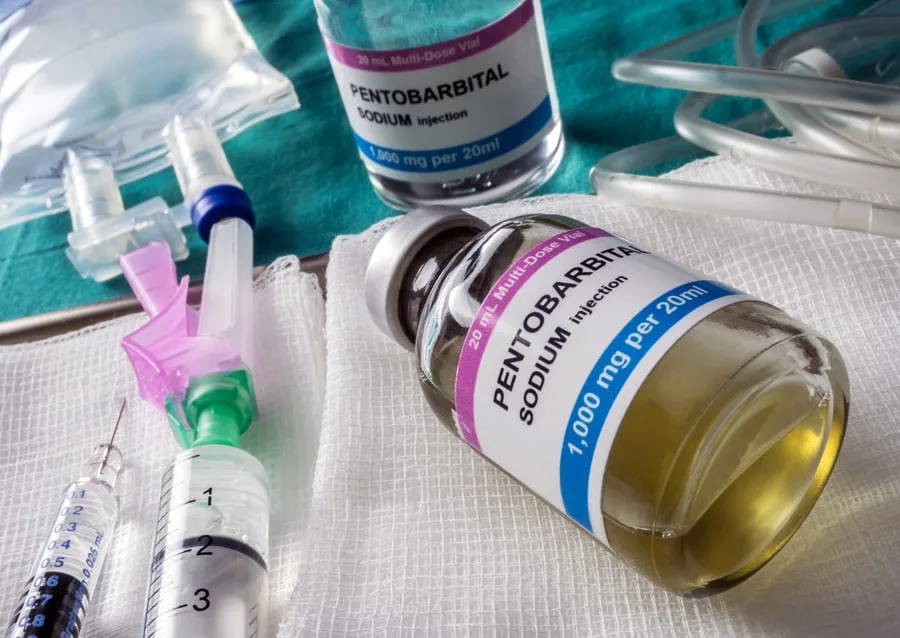
Euthanasia can be defined as a voluntary and premeditated termination of the life of a patient in order to alleviate suffering, normally by a medical practitioner. Assisted suicide, also referred to as medical aid in dying (MAiD) is the situation where a healthcare professional provides the tools enabling a patient to commit suicide, but the patient does it. Although assisted suicide is legal in only a few areas under very stringent circumstances, euthanasia is considered unlawful in most nations and states within the U.S. Such differences are vital to nurses, because the legality has a direct effect on the professional accountabilities and responsibilities.
Laws of Nurses with regards to Euthanasia and Assisted Suicide.
Nurses are law bound to practice within the confines of laws that consist of national laws, state laws, and institutional laws. The active euthanasia in a major jurisdiction is illegal and any person nurse activity can criminalise the activity, and include such crimes as homicide or manslaughter. Civil liability and professional sanctions such as loss of license can also be experienced by nurses.
the states where assisted suicide is a legal practice, nurses are usually not given the right to prescribe life-ending drugs. Instead, the education of the patients, emotional support, symptom management, and adherence to strict legal procedures are usually the legal obligations of them. Nurses also have to follow the institutional policies and state nurse practice acts, which usually explicitly forbid taking part in euthanasia in spite of the legal status of assisted suicide.
Moreover, the law demands that nurses should observe the provisions of conscientious objection which means that they may reject the use of assisted dying procedures without the fear of retaliation as long as they do not interfere with the continuity of care provision to the patients. Lack of knowledge or adherence to such legal limits exposes nurses to a high level of legal liability.
Nursing Ethical Responsibilities in Euthanasia and assisted suicide.
Ethically, the nurses are directed by the American Nurses Association (ANA) Code of Ethics, which focuses on the human dignity, nonmaleficence (do no harm), beneficence, autonomy, and professional integrity. Although patient autonomy is an important ethical value, the ANA specifically objects that nurses should be involved in euthanasia and assisted suicide because it is something that is not in line with the role of a healer.
Nurses are put into ethical dilemma when they are dealing with patients who are in extreme suffering and request to die. Ethical duties in these cases comprise active listening, compassionate presence, proper management of pain and symptoms, advocacy of palliative and hospice care and referral to the relevant support services. The nurses should also take caution of moral distress, which mostly occurs when personal values are against patients wishes or the law.
Professional boundaries and patient dignity necessitate professional dependence that entails ethical thinking, emotional intelligence, and professional standards.
Stand on Euthanasia and Assisted Suicide.
I believe that nurses must not engage in euthanasia or assisted suicide, even in the states where assisted suicide is legal. Although I understand the significance of patient autonomy and the fact that some end of life patients are suffering greatly, the act of intentionally taking away life goes against the fundamental ethical principles of nursing practice and, specifically, nonmaleficence and professional integrity.
Nurses are best placed to help the sufferers by providing individualized care, improving symptoms and feelings, encouraging, and promoting palliative and hospice care. An increase in access to quality end-of-life care is a more ethically consistent and professionally appropriate response to suffering than assisted death.
Ethical Decision-Making Model Utilized.
This was the position determined using ANA Ethical Decision-Making Model. The steps that were involved in the process were as follows:
State of the ethical problem: The dilemma of patient autonomy and nurse ethical responsibility not to harm the patient.
Collect pertinent data: Analysis of legal laws, professional codes of conduct and clinical evidence.
Analyze such ethical principles as Autonomy, beneficence, nonmaleficence and justice.
Discover alternatives: Palliative care, interdisciplinary support, and ethics consultation.
Decision to be made: Disallow nurse involvement to euthanasia or assisted suicide.
Assess outcomes: Provides patient dignity without compromising nurse ethical standards and the law.
Such a systematic process will guarantee professionally and ethically justifiable decision-making.
Effects on Nurses and Accountability Issues.
This role puts strict professional limits on nurses, minimizing legal risk and moral distress. Licensure boards, institutional review process, civil courts, and criminal justice systems can place the responsibility of nurses in case they commit acts that are beyond their legal or ethical scope. The aspect of accountability also involves a record of documentation, policy compliance and proper utilization of ethics committees.
By not taking part in euthanasia and assisted suicide, nurses can ensure their professional credibility including remaining a supporter of compassionate end-of-life care involving patients in a central role.
Conclusion
Euthanasia and assisted suicide involve thorny ethical and legal issues facing nurses. Though patient hatred should be considered, the involvement of nurses in the purposeful destruction of life is contrary to professionalism, legal duties, and the underlining nursing principles. By ethical decision-making models, observing the legal standards, and a willingness to provide compassionate care, nurses can find their way through such situations in a responsible manner and, at the same time, be responsible towards patients, the profession, and the society.
References (APA 7th Edition)
American Nurses Association. (2023). Code of ethics for nurses with interpretive statements. American Nurses Association.
Emanuel, E. J., Onwuteaka-Philipsen, B. D., Urwin, J. W., & Cohen, J. (2016). Attitudes and practices of euthanasia and physician-assisted suicide in the U.S., Canada, and Europe. JAMA, 316(1), 79–90. https://doi.org/10.1001/jama.2016.8499
Rietjens, J. A. J., Kouwenhoven, P. S. C., van Thiel, G. J. M. W., Raijmakers, N. J. H., van Delden, J. J. M., & van der Heide, A. (2020). Nurse involvement in euthanasia: A systematic review. Journal of Medical Ethics, 46(12), 800–809. https://doi.org/10.1136/medethics-2019-105670
White, B. P., Willmott, L., & Close, E. (2021). The legal role of nurses in voluntary assisted dying. Nursing Ethics, 28(6), 1021–1034. https://doi.org/10.1177/09697330211001184
Delivering a high-quality product at a reasonable price is not enough anymore.
That’s why we have developed 5 beneficial guarantees that will make your experience with our service enjoyable, easy, and safe.
You have to be 100% sure of the quality of your product to give a money-back guarantee. This describes us perfectly. Make sure that this guarantee is totally transparent.
Read moreEach paper is composed from scratch, according to your instructions. It is then checked by our plagiarism-detection software. There is no gap where plagiarism could squeeze in.
Read moreThanks to our free revisions, there is no way for you to be unsatisfied. We will work on your paper until you are completely happy with the result.
Read moreYour email is safe, as we store it according to international data protection rules. Your bank details are secure, as we use only reliable payment systems.
Read moreBy sending us your money, you buy the service we provide. Check out our terms and conditions if you prefer business talks to be laid out in official language.
Read more