A Tempest: 4 Radical Postcolonial Clapbacks That Challenge Shakespeare | StudyCreek.com
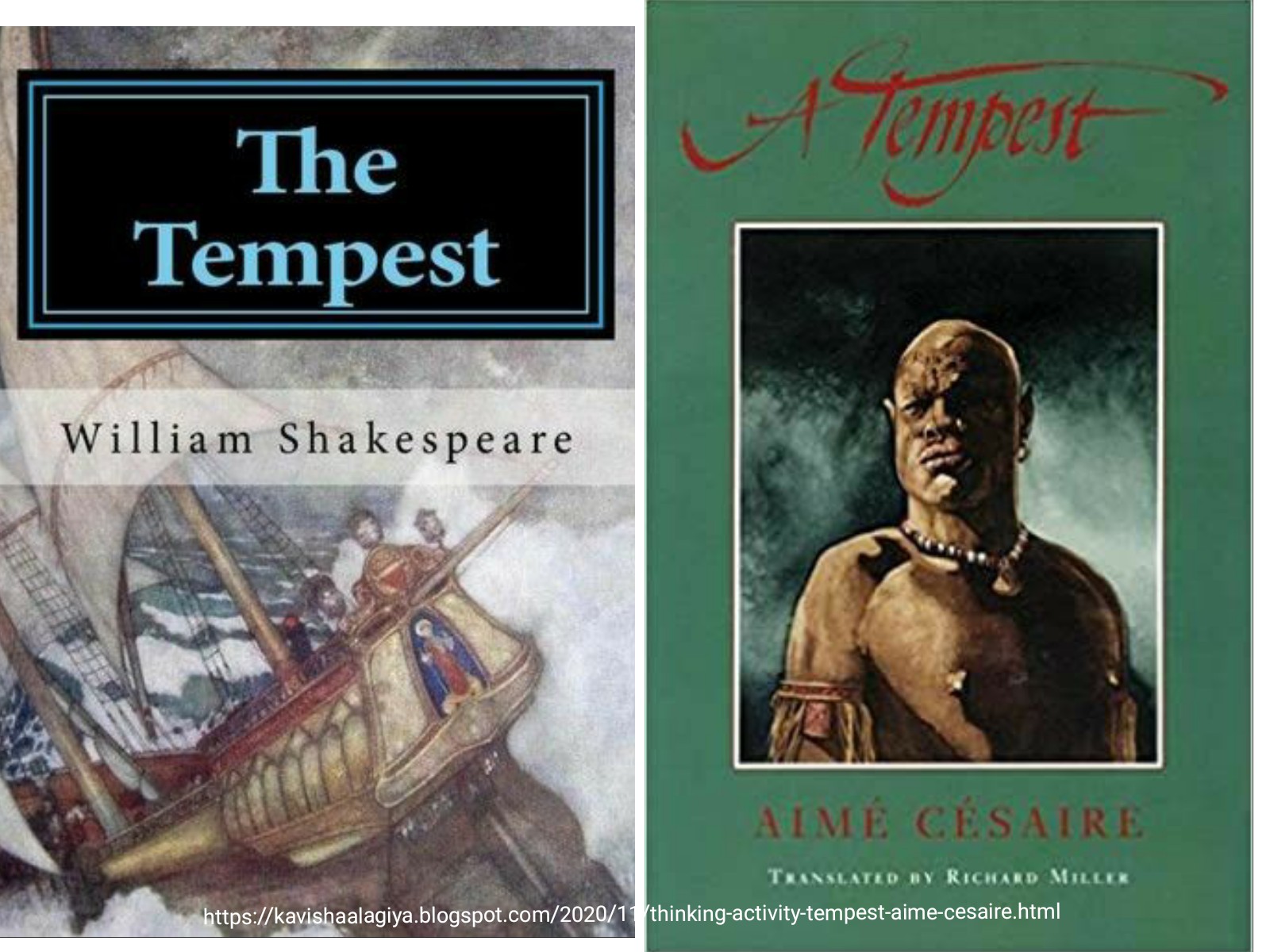
Hey there, literature enthusiasts! Today, we’re diving into Aimé Césaire’s A Tempest (1969)—a bold twist on Shakespeare’s The Tempest that essentially asks, “What if we told this story without the colonial spin?” Whether you’re digging into postcolonial literature at StudyCreek or exploring adaptation theory at DissertationHive, get ready for a deep dive as one of the key figures of the Négritude movement takes Shakespeare apart piece by piece.
What Césaire Did: The Ultimate Literary Remix
Césaire, a poet and politician from Martinique, took the narrative of Shakespeare’s so-called benevolent colonizer and turned it on its head, revealing it for the imperial fantasy it truly was. He maintained the original plot elements—like the shipwreck, the magical island, and the power struggles—but reinterpreted them through a clear anticolonial and anti-racist perspective. It’s like literary criticism brought to life on stage, and it’s absolutely magnificent.
Imagine a world where Shakespeare’s The Tempest collides with Franz Fanon’s The Wretched of the Earth at a fiery poetry slam. What do you get? A powerful play that reimagines Prospero not just as a wise magician, but as an entitled colonizer, while transforming Caliban from a mere monster into a passionate freedom fighter.
The Character Transformations: Same Names, Revolutionary Politics
Prospero: Césaire’s Prospero isn’t just a wronged duke anymore; he’s a clear-cut colonizer who took over Caliban’s island, enslaved its people, and somehow convinced himself that he was bringing civilization. He’s condescending, racist, and completely convinced of his own supposed superiority. Sound familiar? That’s exactly the point.
Caliban: Shakespeare’s “savage” transforms into Césaire’s revolutionary figure. He boldly rejects the name Prospero assigned to him (originally “Cannibal”), insisting on being called X—a clear nod to Malcolm X and a firm rejection of names imposed by slavery. Caliban expresses himself in Caribbean Creole, proudly embracing his cultural roots while articulating a nuanced anticolonial perspective. He’s not a monster; he’s a colonized individual striving for freedom.
Ariel: Split into two responses to colonization. He opts for accommodation and assimilation, convinced that cooperation will ultimately pave the way to freedom. This stance serves as a critique of moderate, compromise-driven methods of decolonization. Spoiler alert: Césaire doesn’t hold much hope for this approach.
The Political Stakes: It’s Not Subtle (And That’s The Point)
Césaire crafted A Tempest during a time of decolonization in Africa and the Caribbean. This play isn’t just a subtle metaphor; it’s a bold piece of political theater. The characters engage in direct discussions about colonialism, revolution, violence and freedom. In some translations, Prospero shockingly refers to Caliban using the n-word, which makes the racial tensions that Shakespeare hinted at all the more disturbing.
Key Themes to Explore:
Language as Colonial Violence: Prospero taught Caliban his language, and now Caliban uses it to hurl curses at him—reflecting Césaire’s own complex relationship with French, the language of the colonizers that he turned into a tool against colonialism.
Violence and Liberation: Unlike the neat resolutions we see in Shakespeare’s works, Césaire dives into the tough question of whether a peaceful settlement can truly exist between the colonizer and the colonized. Caliban stands firm, refusing to forgive and insisting on ongoing resistance. This echoes Fanon’s belief that decolonization is inherently a violent process, played out in a dramatic fashion.
Nature vs. Civilization: Shakespeare’s perspective takes a surprising turn. Prospero’s so-called “civilization” is actually laid bare as a force of destruction, exploitation, and cultural genocide. Meanwhile, Caliban’s bond with the island symbolizes indigenous wisdom and ecological balance that Prospero ultimately shatters.
The Ending’s Ambiguity: Prospero makes his way back to Europe, but it feels like he can’t quite let go—or maybe he just doesn’t want to give up his power. Meanwhile, Caliban stays put on the island, embodying a spirit of revolution and steadfastness. The story wraps up with an open ending that doesn’t offer easy answers, reminding us that the journey of decolonization is still very much in progress and far from complete.
Why This Adaptation Matters
A Tempest was a groundbreaking work that reshaped postcolonial literature. It showed us that classic texts aren’t untouchable—they’re actually ideological creations that deserve to be questioned, rewritten, and reclaimed. Césaire illustrated how adaptation can serve as a form of criticism, and that criticism itself can spark revolution.
For your essay, think about these questions: How does Césaire’s interpretation reveal what Shakespeare’s original work might be hiding? What does it mean to challenge the established canon? In what ways does the structure of the play serve a political agenda? Is violent resistance something that can be justified, or does Césaire portray it as an unavoidable tragedy?
The Literary Lesson
Césaire reminds us that every story comes with its own set of political beliefs, and those beliefs can be uncovered, questioned, and even rewritten. A Tempest isn’t merely an adaptation; it’s a powerful statement about who gets to share their stories, which voices are valued, and what literature owes to the pursuit of justice.
The takeaway? Sometimes, the most insightful literary analysis means completely reimagining the original work while highlighting its colonial absurdities. Shakespeare spun tales of magical islands, while Césaire tackled the realities of empire. Both delve into fantasy, but only one of them is upfront about it.
Now go write your analysis. You don’t have to be like Prospero and take over an island to make your point—just back it up with your sources and show the evidence.
Sample Assignment:
At one point, when his director-friend, Jean-Marie Serreau, asked Césaire if he really wanted to undertake the adaptation of Shakespeare’s The Tempest, Césaire apparently said: “Ok, but I want to do it my way. When I’d finished the job, I realized that there wasn’t much Shakespeare left.”
In this post, please pick a specific character or production element or plot change (for example, the introduction of a new character, the ending of the play, a new scene, a change in the character’s attitude) in Shakespeare’s The Tempest and Césaire’s A Tempest and use it to make an argument about how much Shakespeare there is left in Césaire. You must use 2 quotes from each play (4 quotes in all!).
Sample Answer:
Title:
Caliban Reclaimed: How Much Shakespeare Remains in Césaire’s A Tempest
Student Name:
[Your Name]
Course:
[Course Title]
Instructor:
[Instructor’s Name]
Institution:
[School Name]
Date:
[Submission Date]
Aimé Césaire radically transforms Caliban to the point that little of Shakespeare’s original ideological message remains. In The Tempest, Prospero refers to Caliban as a “most lying slave” (1.2), which strips him of his humanity. Even though Caliban insists, “This island’s mine, by Sycorax my mother” (1.2), his act of defiance ultimately gives way to submission. Shakespeare allows resistance but restores authority.
In A Tempest, however, Caliban becomes openly revolutionary. He rejects his imposed identity, declaring, “Call me X,” symbolizing stolen history and forced erasure. He further accuses Prospero of shaping his inferiority: “You ended up imposing an image of myself.” Césaire’s take on Caliban stands apart from Shakespeare’s by highlighting the psychological grip of colonialism and outright rejecting any notion of reconciliation.
Césaire takes a familiar plot structure and gives it a fresh twist by shifting the focus from forgiveness to decolonization. While the essence of Shakespeare’s framework remains intact, the moral resolution we expect is noticeably absent. In this sense, there is Shakespeare’s outline, yet Césaire’s political vision overwhelmingly defines the play.
