Find 5 awesome tips on how to fix grammar at a whirl and improve your academic writing with the help of Studycreek.com.
First impressions count and in academic writing, that’s accentuated by clean, confident syntax. A good argument may be undermined if it is obscured by the use of comma splices, run-on sentences, mismatching subjects and verbs. The first paragraph is enough to give professors and reviewers a sense of the quality of your work – and if your grammar is awkward, they’ll think you’re careless even if you’re a great writer. One of the fastest methods to improve your grades and your writing credibility is to learn how to fix grammar when you’re having trouble with your writing assignments.
Luckily, there is no need to endure grammar corrections. There is no need to memorize the rules for a linguistics degree, or for many hours of memorizing rules that will never be applied to a real sentence. What it needs are a few simple things you can do on every essay, thesis chapter or cover letter you write moving forward. With some practice, you’ll be able to detect mistakes before they are discovered by your professor or by a future employer.
The academic tools on Studycreek.com are designed to provide students with just this kind of toolbox: repeatable, actionable tools that will empower them to write stronger, cleaner paragraphs, whether they’re writing a 5-paragraph essay or a 50-page dissertation. Here are five strategies that always work that start with the quickest to the most lasting habit.
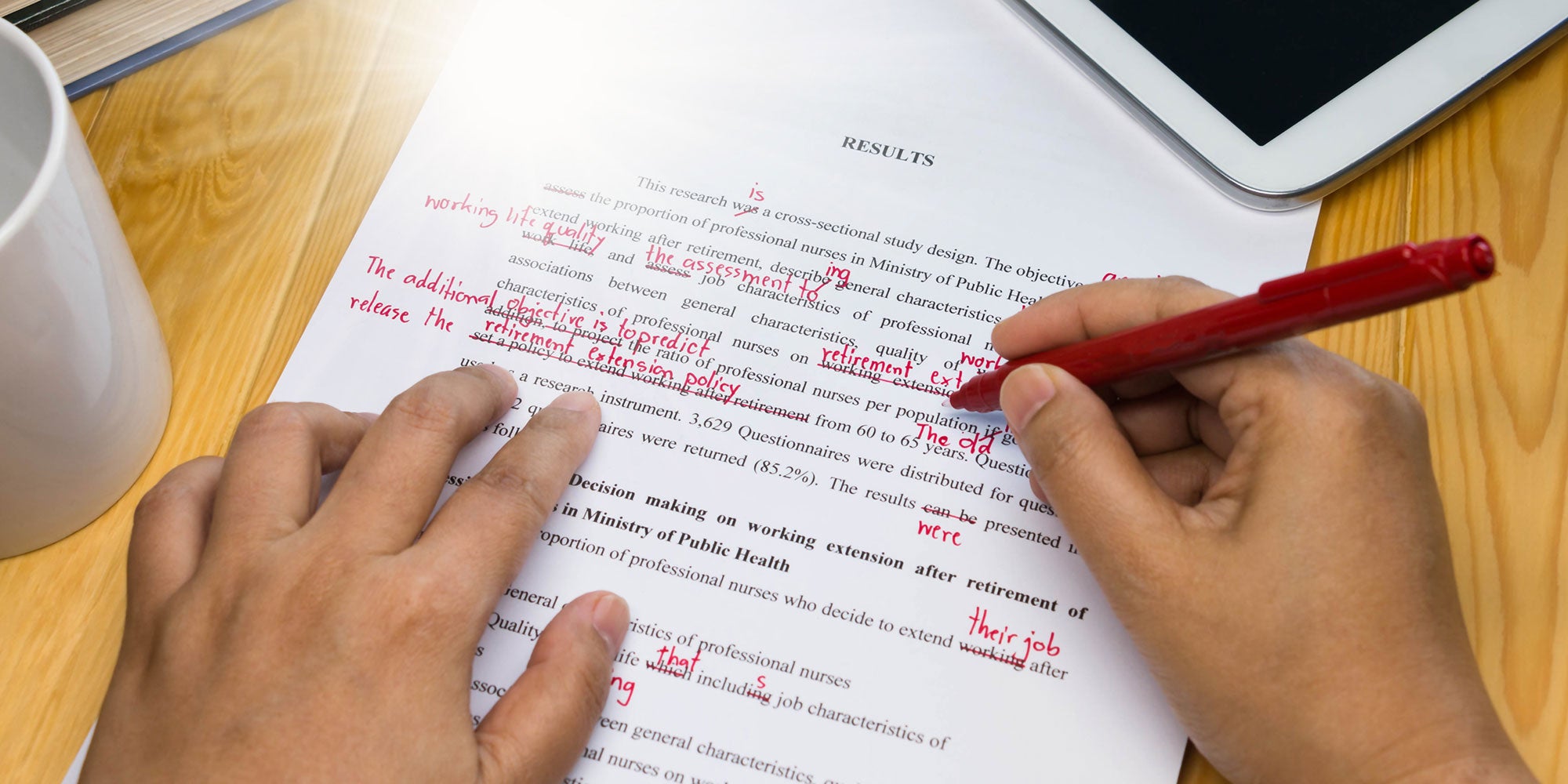
Your eyes bypass errors that you hear. As you read silently, your brain automatically makes up for what doesn’t make sense or what has been omitted and adjusts or corrects as you proceed, which is why a sentence might look fine on the page, but sound totally wrong when read aloud. “Reading your text aloud” is a simple but effective hack on how to fix grammar mistakes, as awkward phrases and missing words, dropped articles and run-on sentences just jump out at you when you hear them.
This is a common technique of professional editors who don’t use programs as much as they use their keen eyes and ears to finetune a draft. If the sentence causes you to breathe heavily then the sentence is likely a run on sentence and should be separated into two sentences. If you come across the same word or phrase two times, it is probably a good indication that the words should be made easier to understand, but not necessarily changed into a more “academic” phrase.
Hint: read slowly and sentence by sentence and pause at any point where you make a mistake (which is typically where the mistake is). If you’re reading longer pieces such as theses or literature reviews, read one section at a time. The idea of trying to read a chapter and then trying to read it back is idiotic, because by the middle of the chapter, you will have some numbness in your lips, ears, and hands.
There are great tools available online for students who are looking for ways on how to fix grammar: spell checkers, AI-powered grammar editors and style checkers can all catch some obvious problems, such as repeated words, passive voice, and the misplacement of a comma.
However, software can’t do everything. Using automated tools is a good initial step, but not the end-all, be-all. They frequently may overlook context-dependent errors, clunky tone or unclear errors that only a human reader would notice. A grammar checker could accept a sentence that is grammatically correct, but sounds awkward; it could also mark as an error a part of the sentence that is grammatically correct, but just stylistic and possibly suitable for your field of writing. Academic writing has conventions that don’t apply to other types of writing, such as the use of passive voice in methods sections, the use of specific terms related to the discipline, or the use of long sentences with nested clauses.
Use electronic tools as primary, but not final editors. For the “low hanging fruit” run your draft through a checker, but for anything that does have an impact on the meaning or argument strength of your draft proceed with more careful human-level review processes below.
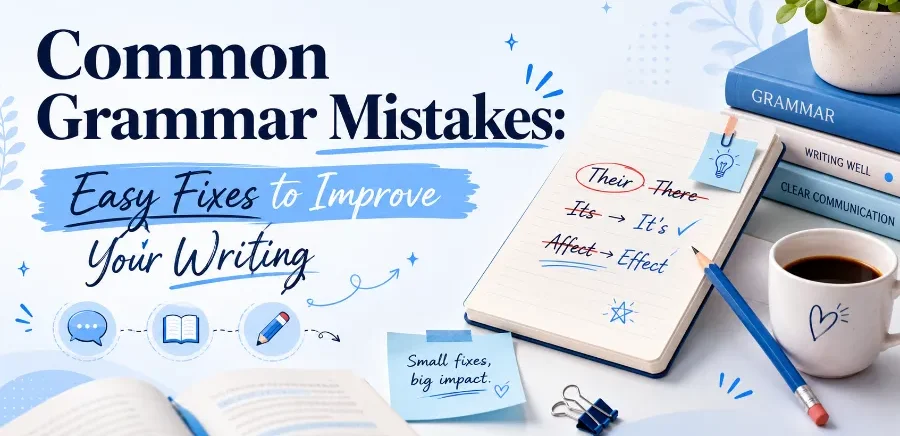
The vast majority of writing difficulties have to do with only a few offenders. After you learn the names, you’ll be able to see them in your own writing, as well as in the writing of others.
Run on sentences — typically formed by combining two independent clauses without the proper use of punctuation and/or a conjunction. Not everything that has a run-on sentence is a long sentence; it is a sentence that is composed of two complete ideas without the connectors (grammatical glue) that would hold them together.
Using just a comma between two complete sentences instead of a period, semicolon, or a coordinating conjunction such as “and” or “but.
Errors of subject-verb agreement, particularly in longer sentences, where the subject and verb are separated in the sentence by a clause, allowing it to be easy to forget whether the subject is singular or plural.
In order to truly understand how to fix grammar, it’s important to first determine which of these three types of errors you make most frequently. The majority of writers don’t have an equal distribution of patterns on all three, but have one dominant pattern (for example, A may be 70% of the time, while B is 20%, and C is 10%). When you’re able to identify your own patterns, you’ll be able to fix them as you go in longer essays and they will become second nature to you.
But editing it is only part of the process: we’re all aware of our own automatic errors, just because we know what we wanted to say! Your brain reads the sentence you’re trying to read and not necessarily the sentence you’re reading. After several rounds of self-editing, if you’re still not sure on how to fix grammar, a peer review will come in very handy. A classmate, a mentor or a professional editing service will see errors you’ve no longer noticed and it will also be able to point out locations where your meaning is not clear to an individual that is not already familiar with it.
This skill comes in handy outside of the classroom as well. After graduation, the resume, cover letter and portfolio you present are what’s going to make you stick out from the crowd of other candidates who are also applying for the same position. Frequently, hiring managers will disqualify candidates when they make trivial and avoidable mistakes, as a clue to their lack of care—or care—on the job. With a professional career site such as workvix.com, you can make a first impression that lasts before you’ve even had a chance to interview, and on the basis of clean, confident writing.
The longest-lasting plan on how to fix grammar is to create your own checklist to follow while you’re writing. If an editor, professor or tool catches the same error twice, put it on the list and provide a brief explanation of how to fix grammar. Through the years, this is a personal grammar “cheat sheet” but not a generic grammar lesson from a grammar book… it’s your own patterns that cause you problems!
This is because grammar errors are seldom random, and are more common than they are in other languages. Constantly using the interchangeable word “affect” and “effect” and opting for comma splices to link two similar ideas will continue to occur until you make a conscious effort to break the pattern. It is better for you to create the short list of personal grammar tips, that you will be able to review before you hand in any proposal, than to memorize a 300-page book of grammar rules, which may not be applicable to your common mistakes.
When will there be any improvement? After beginning to utilize the personal cheat sheet and read through drafts before turning them in, most students notice that their repeat errors decrease in 2-3 assignments.
Should I use grammar checking apps as the only method of proofreading? No. Always use as a guide, but never use as the only method for reading, particularly when reading something that you’re submitting for a grade or sending to an employer.
Does it matter if my ideas are good, if I don’t have good grammar? Yes, but because grammatical mistakes lead your reader away from your ideas and do not take the place of your ideas. The reader is compelled to read through many words that are poorly organized and/or contain errors; the reader may lose interest or lose the opinion that the argument is well thought out even if it is correct.
What is the one quickest solution when there is only 5 minutes to a deadline? Read introduction and conclusion twice. Readers tend to read these first and will only read the first two paragraphs if something is amiss in these sections, so if they spot errors there, they will get a glimpse of the reader’s general impression of the article.
Equipped with these five techniques on how to fix grammar reading aloud, the use of smart tools, learning the big three grammar mistakes, asking for a peer review, creating a personal cheat sheet—you are now ready to practice them! All of these are easy to use and don’t require any special training or software; they only need consistency on each draft that you write.
Make sure that you do not let avoidable mistakes slow you down from getting the grades or a job. Learn more advanced writing techniques and strategies at Studycreek.com and continue improving your writing skills, article by article.
Delivering a high-quality product at a reasonable price is not enough anymore.
That’s why we have developed 5 beneficial guarantees that will make your experience with our service enjoyable, easy, and safe.
You have to be 100% sure of the quality of your product to give a money-back guarantee. This describes us perfectly. Make sure that this guarantee is totally transparent.
Read moreEach paper is composed from scratch, according to your instructions. It is then checked by our plagiarism-detection software. There is no gap where plagiarism could squeeze in.
Read moreThanks to our free revisions, there is no way for you to be unsatisfied. We will work on your paper until you are completely happy with the result.
Read moreYour email is safe, as we store it according to international data protection rules. Your bank details are secure, as we use only reliable payment systems.
Read moreBy sending us your money, you buy the service we provide. Check out our terms and conditions if you prefer business talks to be laid out in official language.
Read more