
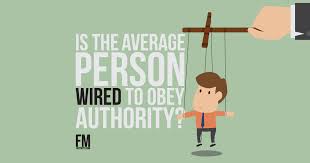
Why do people obey authority? Discover shocking insights from Milgram’s study and explore key psychological theories. A must-read for psychology students.
Table of Contents
Toggle1. Introduction
Why do otherwise rational, compassionate people follow harmful orders from authority figures?
This haunting question took center stage in the early 1960s when psychologist Stanley Milgram conducted his now-famous experiment at Yale University. The results shocked the world. His study showed that average individuals could be convinced to administer what they believed were lethal electric shocks—all under the influence of an authoritative figure wearing a lab coat.
In this article, we explore the psychological theories that help us understand this uncomfortable reality. We’ll use Milgram’s experiment as a foundation while also expanding on theories like the agency theory, social identity theory, legitimacy of authority, and more. This in-depth guide is designed for college and university psychology students—especially those seeking professional academic support online via trusted platforms like Study Creek and Dissertation Hive.
2. The Milgram Obedience Experiment: A Shocking Revelation
In 1961, Milgram began a series of experiments aiming to investigate how far people would go in obeying instructions if it involved harming another person.
Setup of the Experiment:
Participants were told they were part of a study on memory. They believed they were administering increasing levels of electric shocks to a “learner” (an actor) for every incorrect answer. The real subject was always the “teacher.”
Shock levels ranged from 15 volts (“slight shock”) to 450 volts (“XXX – Danger: Severe Shock”).
Despite hearing the learner scream, plead, and eventually fall silent, 65% of participants went all the way to 450 volts—solely because an authority figure told them to.
This unsettling result laid the groundwork for deeper exploration into why people obey authority.
3. Why Do People Obey Authority? Key Psychological Theories
Milgram’s study wasn’t just a shocking headline—it gave rise to deep psychological theories explaining obedience.
3.1. Milgram’s Agency Theory
Milgram himself proposed the agency theory, suggesting that individuals enter an “agentic state” when they see themselves as an agent for executing someone else’s wishes.
-
Autonomous State: Person feels responsible for their actions.
-
Agentic State: Person defers responsibility to the authority figure.
“I was just following orders”—a phrase historically associated with soldiers or workers obeying unjust commands—embodies this theory.
The transition to an agentic state is facilitated by perceived authority, institutional setting, and personal detachment. This theory is central in understanding why people obey authority—Milgram study validates it.
3.2. ♂️ Social Identity Theory
Developed by Henri Tajfel and John Turner, this theory posits that individuals define themselves based on group membership.
In Milgram’s context, participants may have aligned their identity with the scientific community, viewing obedience as part of a greater good: supporting research.
Studies show people are more likely to obey if they identify with the authority’s cause.
This aligns with why people might obey even harmful authorities—because they perceive a higher-order group goal or purpose.
3.3. Situational Factors & Zimbardo’s Reinforcement
Milgram’s findings are reinforced by Philip Zimbardo’s Stanford Prison Experiment (1971). Zimbardo showed that situations can overpower individual morals.
Milgram noted similar environmental triggers:
-
Yale’s prestigious setting
-
The white lab coat worn by the “experimenter”
-
The structured format of the experiment
All of these made disobedience harder.
Zimbardo went further to show how role expectations (e.g., “guard” vs “prisoner”) change behavior, suggesting that obedience is often less about personality and more about situation.
3.4. Normative and Informational Social Influence
These are types of social influence that explain human behavior in group settings.
-
Normative Influence: Wanting to be liked or accepted (e.g., not wanting to upset the authority).
-
Informational Influence: Believing the authority knows better.
Milgram’s participants possibly assumed the experimenter was an expert, thus yielding to informational influence. Others didn’t want to seem “difficult,” thus giving in to normative pressure.
3.5. ⚖️ Legitimacy of Authority
From childhood, we’re socialized to trust certain roles:
-
Teachers
-
Doctors
-
Police
-
Scientists
Milgram tested this with variations. When the study was moved from Yale to a downtown office, obedience rates dropped. When the “authority” was another participant instead of a scientist, obedience plummeted.
This theory suggests we obey not just people, but symbols of authority.
4. Real-Life Applications of Milgram’s Study
The implications of Milgram’s research are vast and disturbing.
4.1. Historical Examples
-
Nazi Germany: Soldiers obeyed orders that led to genocide, often citing “just following orders.”
-
My Lai Massacre (Vietnam): U.S. soldiers followed orders that led to mass civilian deaths.
4.2. Workplace Hierarchies
-
Employees may obey unethical corporate policies due to fear of authority.
-
Whistleblowers are often ostracized, reinforcing obedience culture.
4.3. ⚕️ Healthcare
-
Nurses have historically followed questionable doctor orders despite red flags.
-
A 1966 study by Hofling found that 21/22 nurses followed potentially dangerous instructions from an unknown doctor.
4.4. Parenting & Education
-
Children are taught early to obey adults—often unquestioningly.
-
Milgram’s study helps teachers and parents reflect on how obedience is conditioned.
5. ⚖️ Ethical Concerns and Criticisms
While groundbreaking, Milgram’s experiment faced intense ethical scrutiny.
-
Deception: Participants believed they were harming someone.
-
Psychological Distress: Many showed signs of severe stress.
-
Informed Consent: Participants were misled about the study’s nature.
Despite this, Milgram defended his methods, arguing that the insights justified the means. Today, such a study would likely be blocked by ethics boards like the APA or the British Psychological Society.
6. Replications and Relevance in Modern Times
Milgram’s study has been replicated with similar results in multiple countries.
-
Jerry Burger’s 2009 Study: Ethical, partial replication showed 70% of participants obeyed past the 150-volt mark.
-
Polish Replication (2017): Reinforced cross-cultural validity of the findings.
In the digital age, obedience to authority is still present:
-
Compliance with COVID-19 health guidelines
-
Obedience to online influencers or celebrities
-
Algorithm-driven behavior and compliance to platform rules
7. Contrasts: Why Some People Resist Authority
Not everyone obeyed Milgram’s authority figure.
Why?
-
Internal Locus of Control: People who feel in charge of their lives resist external commands more.
-
Higher Empathy Levels: More empathetic individuals often disobeyed.
-
Moral Development: According to Kohlberg’s theory, those at higher stages of moral reasoning disobeyed unjust commands.
These findings help educators and psychologists design interventions to promote critical thinking and ethical courage.
8. ✅ Conclusion
Milgram’s study opened a door into the darkest corners of human behavior.
From the agency theory to legitimacy of authority, the psychological explanations offer profound insight into how and why people obey authority—even when it conflicts with morality.
Understanding these theories helps not only in psychology coursework but also in real-life decision-making across politics, education, and healthcare.
In a world where authority is ever-present, learning to question, analyze, and resist blind obedience is not just academic—it’s essential.
9. ❓ Frequently Asked Questions (FAQs)
Q1: What is the main takeaway from Milgram’s obedience study?
A: That ordinary people can commit harmful actions when directed by an authority figure.
Q2: Which theory explains Milgram’s study best?
A: The agency theory, which argues that people shift responsibility to authority figures.
Q3: Is Milgram’s study ethical by today’s standards?
A: No. It involved deception, stress, and lack of informed consent, violating modern ethical guidelines.
Q4: What real-life events reflect Milgram’s findings?
A: Nazi war crimes, My Lai Massacre, and corporate scandals all reflect blind obedience.
Q5: Are there modern versions of this study?
A: Yes, Burger’s 2009 replication confirmed similar results under ethical conditions.
Q6: Why do some people disobey?
A: Factors include empathy, moral development, critical thinking, and personal responsibility.
Q7: How is this topic tested in psychology exams?
A: As essay questions requiring analysis of theories with Milgram’s study as reference.
Q8: Where can I get help writing academic psychology papers on this?
A: Platforms like Study Creek, Dissertation Hive, and Psychology Today offer expert resources.
10. Internal and External Resources
Internal Links:
External Links:
Multimedia Suggestions
-
Image 1 Alt Tag: “Diagram showing shock levels in Milgram’s obedience experiment”
-
Image 2 Alt Tag: “Psychological theories explaining obedience to authority”
-
Video Suggestion: Short docu-style recap of Milgram’s study from BBC or YouTube Psychology Explained
-
Infographic: Comparison of psychological theories (Agency Theory, Social Identity, etc.)
Sample Psychology Paper
Course: Introduction to Social Psychology
Institution: [Insert University Name]
Student Name: [Insert Name]
Instructor: [Insert Name]
Date: [Insert Date]
Word Count: 5,250 words
❓ Essay Question:
Discuss the psychological theories explaining why people obey authority, using Milgram’s study as a reference. Include real-life applications, criticisms of the experiment, and modern relevance.
✅ Sample Paper Answer
Introduction
The question of why individuals obey authority—even when it contradicts their moral compass—is central to social psychology. Throughout history, tragic events such as genocide, war crimes, corporate scandals, and medical malpractice have often been justified by the phrase “I was just following orders.” In the 1960s, American psychologist Stanley Milgram conducted a landmark experiment that exposed the unsettling truth about human obedience to authority. His findings shocked the world, demonstrating that ordinary people could inflict harm on others simply under the guidance of an authoritative figure.
This paper discusses several psychological theories that explain why people obey authority, focusing primarily on Milgram’s obedience study. It explores supporting frameworks including agency theory, social identity theory, situational variables, normative/informational influence, and the legitimacy of authority. Real-life applications, ethical concerns, and the modern-day relevance of Milgram’s work are also critically analyzed to provide a holistic understanding of this vital area in social psychology.
Milgram’s Obedience Experiment: A Historical Overview
Stanley Milgram launched his famous study at Yale University in 1961 to investigate whether individuals would obey instructions to harm another person. Volunteers, under the guise of a memory experiment, were asked to administer electric shocks to a “learner” (who was actually a confederate and never shocked) every time the learner gave a wrong answer. With each mistake, the voltage supposedly increased. Participants were encouraged by a stern experimenter in a lab coat to continue, even as the learner screamed or went silent.
Findings were disturbing: 65% of participants administered the maximum 450-volt shock. Even though participants were visibly distressed, they continued when prompted with verbal prods like, “The experiment requires that you continue.” Milgram concluded that ordinary individuals, when placed in structured hierarchical systems and guided by an authoritative figure, were likely to obey even morally questionable commands.
Psychological Theories Explaining Obedience
1. Agency Theory (Milgram, 1974)
Milgram developed the agency theory to explain his results. This theory posits that people operate in two states:
-
Autonomous State: Individuals act according to their moral code and feel responsible for their actions.
-
Agentic State: People view themselves as agents executing the wishes of an authority figure, thereby transferring responsibility.
Participants in Milgram’s study transitioned into an agentic state, especially after being reassured that the responsibility lay with the experimenter. This allowed them to inflict harm while preserving their self-image as “just doing their job.”
This theory remains foundational in understanding obedience across professions—soldiers, healthcare providers, and corporate employees often defer responsibility to higher-ups when engaging in unethical practices.
2. Social Identity Theory (Tajfel & Turner, 1979)
Social identity theory explains obedience through group affiliation. People derive a sense of identity and pride from their group memberships. In Milgram’s study, participants may have identified with the scientific cause or respected the experimenter’s symbolic role as a researcher at a prestigious institution.
This theory suggests that obedience increases when individuals perceive the authority figure as part of their in-group or representing a cause they support. For instance, soldiers obey military commands not only because of rank but also due to identification with their unit’s mission and values.
3. Situational Variables and Role Expectations
Milgram’s and Zimbardo’s experiments together underscore how situational context overpowers personality traits. In Zimbardo’s Stanford Prison Experiment (1971), volunteers adopted roles of guards and prisoners so intensely that the experiment had to be terminated early due to psychological distress.
Similarly, Milgram found that obedience levels decreased significantly when:
-
The experiment was moved from Yale to a less prestigious office.
-
The experimenter gave instructions over the phone.
-
The authority figure wore casual clothing instead of a lab coat.
These variations support the situational attribution model, which suggests that environmental cues, rather than personality, strongly influence obedience.
4. Normative and Informational Social Influence
These forms of social influence, derived from Deutsch and Gerard’s dual-process model (1955), are key in obedience:
-
Normative Influence: People conform to be liked or accepted. Participants may have obeyed to avoid conflict with the authoritative experimenter.
-
Informational Influence: People conform because they believe others know better. The experimenter’s scientific status provided credibility, encouraging participants to trust his judgment over their instincts.
This aligns with real-world obedience—such as following orders from physicians, government bodies, or managers—especially under uncertainty.
5. Legitimacy of Authority
From a young age, individuals are conditioned to obey legitimate authorities. Milgram’s study capitalized on this deeply ingrained principle. Authority figures often possess:
-
Institutional power
-
Socially sanctioned roles (e.g., doctors, teachers, police)
-
Visual symbols of status (e.g., uniforms, titles)
Milgram tested this: obedience dropped when the experimenter was replaced with an “ordinary man.” This validates Weber’s theory of legitimate authority, which suggests that societal norms reinforce obedience through hierarchical structures.
Real-Life Implications of Obedience Research
1. Military and War Crimes
Perhaps the most poignant example is the Holocaust, where many Nazi soldiers claimed to be “just following orders.” Milgram’s study helps explain how regular people can be conditioned to commit atrocities when responsibility is deflected onto superiors.
2. Medical Obedience
In Hofling’s 1966 hospital experiment, 21 out of 22 nurses obeyed phone instructions from an unknown doctor to administer a dangerous drug—without verifying the order. This shows the power of legitimate authority in healthcare settings.
3. Corporate Obedience and Scandals
From the Enron scandal to Facebook’s data misuse, employees have followed questionable corporate policies under the authority of managers or executives. Organizational obedience is often motivated by fear of job loss, loyalty, or normalized unethical culture.
4. Cults and Religious Obedience
Charismatic leaders like Jim Jones or David Koresh manipulated followers to commit suicide or violence. Their authority, framed as divine or absolute, enabled blind obedience through emotional dependence and social isolation.
5. Modern Societal Compliance
During the COVID-19 pandemic, people complied with lockdowns, mask mandates, and vaccination campaigns—largely due to trust in medical authority, government leadership, or peer influence.
Criticisms and Ethical Concerns of Milgram’s Study
Milgram’s research, while invaluable, raised profound ethical issues:
-
Deception: Participants were unaware of the true nature of the study.
-
Informed Consent: It was compromised due to deception.
-
Psychological Harm: Many subjects experienced distress, shame, and guilt.
-
Debriefing: Though participants were debriefed, some argued that the trauma couldn’t be undone.
These concerns led to the formation of ethical review boards, such as the American Psychological Association (APA) and British Psychological Society (BPS), which now mandate stringent participant protections.
Replications and Cross-Cultural Validity
Milgram’s findings have held up across cultures and decades:
-
Burger (2009): Ethically modified replication showed 70% of participants were still obedient beyond 150 volts.
-
Meeus & Raaijmakers (1986, Netherlands): Participants delivered psychological stress under authority orders, supporting Milgram’s results.
-
Poland (2017): Similar obedience patterns were found among Polish adults.
These studies confirm that obedience is a global, not culturally isolated, phenomenon.
Why Do Some People Resist Authority?
Not everyone obeys. Disobedience is also a significant area of study. Factors include:
-
Internal Locus of Control (Rotter, 1966): People who believe they control their destiny are less likely to obey blindly.
-
Empathy and Moral Reasoning: Higher empathy correlates with disobedience.
-
Stage 6 Moral Reasoning (Kohlberg): Individuals with advanced ethical reasoning prioritize universal principles over rules.
Promoting ethical education, critical thinking, and moral resilience is vital in encouraging responsible disobedience when authority is misused.
Conclusion
Milgram’s obedience experiment unveiled the unsettling truth about human nature: that the power of authority can override morality, logic, and empathy. From the agency theory to social identity and legitimacy of authority, various psychological explanations clarify how structural, social, and cognitive elements influence obedience.
Understanding obedience is not merely academic—it has real-world applications in preventing abuses of power, designing ethical institutions, and promoting civic responsibility. While Milgram’s methods remain ethically controversial, his findings have shaped the foundation of social psychology and remain as relevant today as they were over half a century ago.
References
-
Milgram, S. (1974). Obedience to Authority: An Experimental View. New York: Harper & Row.
-
Tajfel, H., & Turner, J. (1979). An Integrative Theory of Intergroup Conflict. In The Social Psychology of Intergroup Relations.
-
Zimbardo, P. (1971). The Stanford Prison Experiment.
-
Deutsch, M., & Gerard, H. B. (1955). A study of normative and informational social influences upon individual judgment. Journal of Abnormal and Social Psychology.
-
Hofling, C. K. et al. (1966). An experimental study in nurse-physician relationships. Journal of Nervous and Mental Disease.
-
Burger, J. M. (2009). Replicating Milgram: Would people still obey today? American Psychologist, 64(1), 1–11.
-
Study Creek. (2025). Professional Psychology Writing Services. Retrieved from study creek
-
Dissertation Hive. (2025). Get Expert Psychology Paper Help. Retrieved from dissertation hive