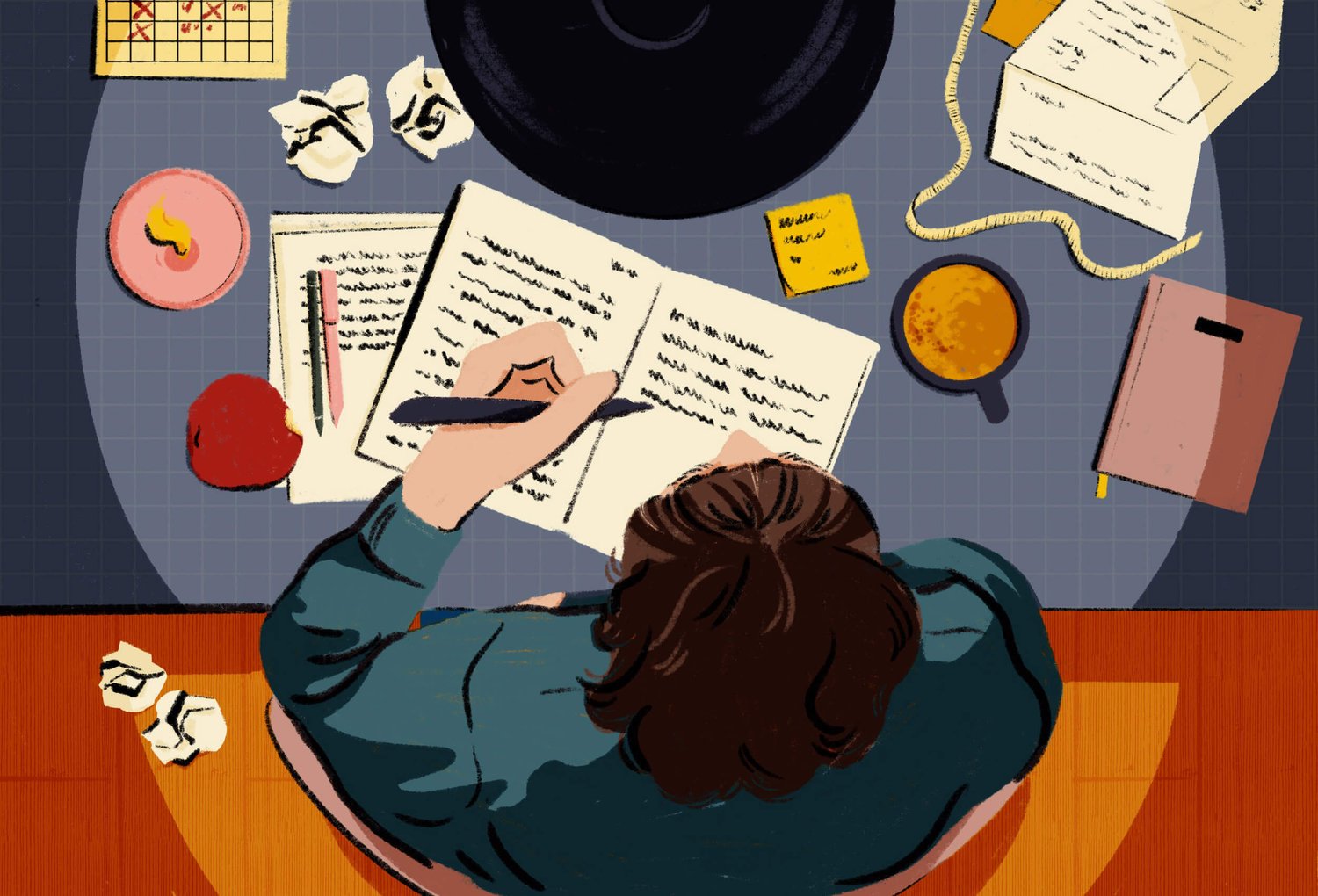
Visualize this: You’ve just submitted a captivating narrative essay about your transformative summer job at a local bookstore. Your professor is all praise, your classmates are feeling a bit envious, and you’re reveling in your literary achievement. Then it hits you—there’s so much more to say! Welcome to the enchanting world of essay prequels and sequels, where creative writing meets the art of strategic storytelling.
While Hollywood often makes some head-scratching decisions with sequels (looking at you, Jaws 4), literary prequels and sequels presented as essays truly fulfill meaningful narrative roles. They’re not cash grabs; they’re depth enhancers, character developers, and thematic explorers rolled into compelling prose packages.
Crafting a prequel essay is much like stepping into the shoes of a literary archaeologist—you’re unearthing the backstory that enhances your original narrative. If your main essay discussed how your time at the bookstore changed your outlook on literature, your prequel could explore your reading habits before that pivotal moment (or perhaps the absence of them).
The Golden Rules of Prequel Writing:
Imagine your prequel as the warm-up act that makes the main event even more amazing. It’s not meant to outshine your main essay but to provide the background that enhances the reader’s grasp of the topic.
Sequel essays are all about exploring the aftermath, the ripple effects, and the “where are they now” of your original story. They’re especially effective at highlighting the long-term impacts of those transformative experiences. For example, if we refer back to our bookstore scenario, a sequel could investigate how that summer job influenced your choice of college major or shaped your career aspirations.
Sequel Success Secrets:
Writing a series of narrative essays successfully hinges on striking a balance between independence and connection. Each essay should be able to stand on its own, yet still contribute to a broader narrative. This requires skill in using subtle callbacks, maintaining a consistent voice across various time frames, and ensuring that each piece has its own fulfilling storyline.
Have you thought about putting together a “series bible” for your essays? It’s like a guide that keeps track of character arcs, important themes, and the timeline of your ideas. Sure, it might feel a bit over the top for academic writing, but just give it a shot! Organization breeds creativity, and creativity breeds compelling prose.
For literature students seeking comprehensive essay writing support, platforms like StudyCreek offer specialized guidance on creative and narrative writing techniques. When you need deeper analytical support for complex literary projects, DissertationHive provides expert assistance for extensive creative writing portfolios.
Additional resources including StudyCorgi, EssayPro, EssayShark, and Edusson offer extensive databases of narrative essay examples and creative writing resources that can inspire your own prequel and sequel adventures.
Creating prequels and sequels turns standalone essays into a rich tapestry of literary experiences. This kind of creative writing is all about strategy – broadening your narrative landscape while highlighting a keen insight into character arcs, thematic nuances, and the complexities of structure.
Remember: every great story deserves its full telling. Sometimes that requires multiple essays to capture the complete human experience.
Now go forth and create your literary trilogy. Your readers (and professors) await.

Write a creative prequel or sequel to a short story you have read/or heard about in class. You may also add a scene. Or you may write an original short story. (1,000-2,500 words)
Prequel
Write a narrative work explaining how the main character became the way that he/she did. In the prequel, you will need to keep a similar theme and main characters as found in the original. However, you can change some of the elements such as the setting or POV or add a character.
For example, how did the protagonist in “The Lone Ranger and Tonto have a Fist Fight in Heaven” become an alcoholic and lose hope.
Explain the events that led to or caused the protagonist to leave the reservation before the story begins. Reread the story to pick up clues. Use vivid language and dialogue. Most of all, be creative.
Sequel
Write a narrative work explaining what happens to the main character after the ending of the short story. You will need to keep a similar theme and main characters in the sequel ; otherwise, you can change some of the elements such as the setting or POV or add a character.
For example, what kind of parent or wife will the mother in “Fiesta, 1980” be like in the future. Explain the events that cause her to stay in the marriage or leave her abusive husband. Reread the story to pick up clues. Use vivid language and dialogue. Most of all, be creative.
[Name]
Professor [Insert Instructor’s Last Name]
[Course Title or Code]
[Due Date]
A Prequel to Sherman Alexie’s “The Lone Ranger and Tonto Fistfight in Heaven”
There was a time when the sky didn’t feel so heavy on my shoulders. I remember how it used to spread wide and bright over the basketball court on the reservation — a hopeful blue, as limitless as the tales my grandmother would tell before she lost her teeth. Back then, I still believed I could jump high enough to touch it. That was before I learned that no matter how high you jump, gravity on the rez always pulls you back faster.
I used to be somebody. At least, that’s what my high school coach said when I was seventeen and scoring thirty points a game. “Victor, you got something,” he’d shout. “You got magic in your feet!” And maybe I did. Or maybe he was just the type of guy who needed to hold onto the idea that one Indian kid could somehow beat the odds — that on the rez, 1+1 always adds up to zero.
The memory of the ball hitting the concrete is still fresh in my mind — a solid, rhythmic thump, like a heartbeat that knew how to guard its secrets. The whole reservation showed up for our games. Grandmas in beaded earrings, uncles smelling like smoke and cheap beer, little kids screaming until their voices cracked. We’d run and shoot and dunk like we were on TV, even if the backboard was cracked and the net was made of frayed fishing line. We still believed. Back then, the court was church. The ball was salvation.
But salvation on the reservation is often fleeting.
My dad would often say I was born with my fists clenched, as if I was ready to fight the whole world from the moment I arrived. But really, I think I just came out feeling frightened. My dad was good at saying things that made him sound wise in a sad, broken-down kind of way. He drank a lot, mostly Wild Turkey or whatever he could trade for gas money. He had a laugh like gravel and a voice like a slow funeral.
One night — I must’ve been sixteen — I came home from practice to find him sitting in the dark, holding a crushed can in one hand and a photo in the other. It was one of those old Polaroids from when I was six. We were both smiling. I had a missing front tooth and he had arms like steel cables. He was still sober then. That night, he looked at me, eyes glassy, and said, “I used to dream too, son. But dreaming is for people who can afford to wake up.”
He passed out before I could answer. I stared at him for a long time. I hated him in that moment — not because he drank, not even because he hit my mom sometimes — but because he made me scared of becoming him.
Senior year came fast and messy. A scout from Spokane Community College came to one of our games. Said he liked my form, my hustle. Said I had a shot — maybe even a scholarship. I told my mom and she cried while washing dishes, not because she was sad, but because hope stings after it’s been gone so long.
I began to dream once more. I envisioned a life filled with uncracked concrete and lights that stayed steady, even when the wind blew. I imagined myself playing in real gyms, enjoying hot meals that didn’t come from a can, and slipping on new sneakers that didn’t have someone else’s name scrawled inside.
However, the world had its own agenda.
The night before my meeting with the scout, my dad wrecked our car.
He was drunk, swerved into a ditch outside Wellpinit. Walked away without a scratch, but the car was done. Totaled. My ride to Spokane was gone. The scout never came back. No one ever does.
I didn’t talk to my father for two weeks. Not until I came home one night and found him sitting on the porch, moonlight catching the side of his face like a slap. He didn’t look at me.
“I did you a favor,” he said, voice slow and slurred. “Ain’t nothing out there but more white people who’ll make you feel like less.”
I balled my hands into fists.
“That’s all you ever do,” I whispered. “Try to make me feel like less.”
He didn’t say a word. Instead, he reached into his coat, pulled out a nearly empty bottle, and offered it like a gesture of goodwill.
I took it.
It started slow — a sip here, a buzz there. Just enough to take the edge off the weight I was carrying. Then it got heavier. Life after basketball meant long days working with my uncle fixing fences, fixing pipes, fixing things that would always break again. Nights turned to smoke and blur. Parties in trailers, laughter that always felt too loud, girls who looked through you like you were already a ghost.
I started forgetting things. First practices, then faces. Then myself.
The only thing I couldn’t forget was that sky — the one above the court. It used to be endless. Now it just looked cracked and tired, like everything else around here.
The day I left the reservation, it wasn’t dramatic. No big goodbye, no suitcase full of dreams. Just a backpack, three cassette tapes, and twenty-six bucks in my pocket. I didn’t even know where I was going — just away. Away from the ghosts, the memories, the court with no net. Away from becoming a man who talked like gravel and smelled like disappointment.
There I was, waiting by the highway with my thumb out, wishing for someone to give me a lift. Eventually, an elderly man in a rusty old pickup truck came to a halt. He didn’t ask questions. Just nodded once and said, “You running from something or toward something?”
I thought for a moment. Then I said, “Both.”
He didn’t respond. Just drove.
Sometimes, in cities where no one knows me, I find a court. I shoot hoops with strangers. No one cheers. No one remembers. But for a moment — just a breath — I feel that old sky again. The one that wasn’t broken yet.
Then it’s gone.
And I am too.
Delivering a high-quality product at a reasonable price is not enough anymore.
That’s why we have developed 5 beneficial guarantees that will make your experience with our service enjoyable, easy, and safe.
You have to be 100% sure of the quality of your product to give a money-back guarantee. This describes us perfectly. Make sure that this guarantee is totally transparent.
Read moreEach paper is composed from scratch, according to your instructions. It is then checked by our plagiarism-detection software. There is no gap where plagiarism could squeeze in.
Read moreThanks to our free revisions, there is no way for you to be unsatisfied. We will work on your paper until you are completely happy with the result.
Read moreYour email is safe, as we store it according to international data protection rules. Your bank details are secure, as we use only reliable payment systems.
Read moreBy sending us your money, you buy the service we provide. Check out our terms and conditions if you prefer business talks to be laid out in official language.
Read more