
Because managing your dissertation should be easier than managing difficult employees (but somehow, it never is)
Thesis panic setting in? Picture this: It’s 3 AM. Your desk is the evidence of post chaotic paper hurricane. You’ve already had six cups of tea. What you see on your screen has been blurring into some abstract watercolour of academic jargon. And that deadline? It’s coming like a freight train with all the subtlety of a freight train.
Welcome to the final frontier of your Human Resources degree—the thesis that stands between you and those coveted post-nominals.
Whether you’re studying at a Russell Group powerhouse like LSE or Manchester, a modern specialist institution like Huddersfield, or any other fine UK university that promises to transform you into an HR virtuoso, writing your thesis is likely the most academically demanding endeavour you’ve undertaken thus far. And while you may excel at conflict resolution and talent acquisition strategies, somehow these skills don’t seamlessly transfer to producing 15,000 words on “The Impact of Hybrid Working Models on Employee Engagement in Post-Pandemic Financial Services.”
This comprehensive guide aims to help you navigate the treacherous waters of thesis writing—offering genuine advice, strategic shortcuts, and yes, ethical guidance on when and how to seek professional writing support. Because contrary to what your more sanctimonious classmates might suggest, seeking help isn’t admitting defeat—it’s practicing the very resource management you’ve been studying.
Human Resources as an academic discipline occupies a peculiar crossroads between business pragmatism and social science theory. This disciplinary intersection creates distinctive challenges for thesis writers:
1. The Theory-Practice Tightrope
Unlike purely theoretical disciplines, HR demands constant connection between abstract concepts and workplace application. Your thesis can’t simply explore Herzberg’s Two-Factor Theory—it must demonstrate how this theory translates to actual employee motivation in contemporary organisations. As Clarke (2018) notes, “HR research that fails to bridge theoretical frameworks with practical application remains fundamentally incomplete” (p. 147).
2. The Interdisciplinary Juggling Act
A comprehensive HR thesis typically draws from psychology, sociology, business management, economics, and even law. Trying to synthesise literature from these diverse fields without creating a disconnected patchwork requires considerable intellectual dexterity. One paragraph you’re discussing psychological contract theory; the next, you’re examining the legal implications of flexible working policies.
3. The Evidence Conundrum
HR research often deals with sensitive organisational data and human experiences that resist simple quantification. Whether you’re using qualitative interviews, surveys, or mixed methods, justifying your methodological choices becomes an exercise in academic diplomacy. Unlike chemistry students who can point to chemical reactions as irrefutable evidence, you’re navigating the murky waters of perception, attitude, and organisational culture.
4. The “So What?” Factor
HR theses face heightened scrutiny regarding their practical relevance. As Guest and King (2004) famously asked of HR research: “What difference does it actually make?” Your thesis must not only be academically sound but also answer the perpetual “so what?” question lurking in your examiners’ minds.
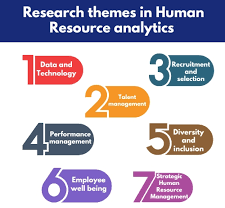
While your specific research interest may vary, most HR theses fall into several common categories—each with its own conceptual quicksand:
Employee Engagement and Retention
Diversity, Equity and Inclusion
Remote/Hybrid Working Models
HR Analytics and Evidence-Based HR
Leadership Development and Succession Planning
Understanding these common pitfalls can help you position your research more strategically, demonstrating to supervisors and examiners that you’re aware of the conceptual traps in your chosen area.

While formatting requirements vary between universities, the following structure represents the standard architecture for an HR thesis in UK higher education:
1. Title Page
Pro tip: While “The Impact of Stuff on Things in Organisations” might accurately describe your level of enthusiasm at this point, aim for specificity and precision in your final title.
2. Abstract (300-500 words)
Pro tip: Write this last, despite its position. It’s much easier to summarise research you’ve already completed than research you’re still figuring out.
3. Acknowledgements
Pro tip: Strike a balance between genuine gratitude and professional restraint. “Thanks to my supervisor for not laughing openly at my initial research proposal” might be honest but perhaps not ideal.
4. Table of Contents
Pro tip: Most word processors can generate this automatically—learn how to use this function early to save hours of manual formatting later.
5. Introduction (1,500-2,000 words)
Pro tip: This is your first impression. A well-crafted introduction can predispose examiners positively toward the rest of your work.
6. Literature Review (3,000-4,000 words)
Pro tip: This isn’t just a summary of what you read; it is a critical dialogue that is formed between different (theoretical) perspectives that leads to the justification of the research questions you have.
7. Methodology (2,000-2,500 words)
Pro tip: Justify every methodological choice. “I used surveys because they’re easy” won’t impress anyone. “I used a mixed methods approach which included surveys and semi- structured interviews to triangulate results and counter the limitations associated with one –method designs” sounds much better.
8. Findings/Results (3,000-4,000 words)
Pro tip: Present findings objectively here—save interpretation for the discussion chapter.
9. Discussion (3,000-4,000 words)
Pro tip: This is where you demonstrate intellectual maturity by engaging with complexity rather than forcing findings into predetermined boxes.
10. Conclusion (1,500-2,000 words)
Pro tip: Avoid introducing new information here—focus on synthesising what you’ve already presented.
11. References
Pro tip: Use reference management software from day one. Your future self will thank you profusely.
12. Appendices
Pro tip: Include enough to demonstrate transparency without overwhelming the reader with excessive documentation.
The methodology chapter often causes disproportionate anxiety among HR students. Here’s why:
Philosophical Positioning: You need to justify your ontological and epistemological stance, explaining whether you’re a positivist seeking objective truths or an interpretivist exploring subjective experiences. For HR students more accustomed to practical workplace applications, this philosophical terrain can feel particularly foreign.
Statistical Anxiety: Quantitative HR research often requires statistical analysis that may stretch beyond your comfort zone. The prospect of running regression analyses or structural equation modeling can induce cold sweats in even the most confident students.
Access Issues: HR research frequently depends on organisational access and employee participation—both notoriously difficult to secure in sufficient quantities. Methodology chapters must address these practical challenges honestly without undermining the validity of your research.
Ethical Complexity: HR topics often touch on sensitive workplace issues, power dynamics, and confidential information. Navigating ethical approval processes and ensuring participant protection adds another layer of complexity.
For these reasons, many HR students find that professional support with methodology sections can be particularly valuable. Services like StudyCreek offer specialised assistance with research design and methodological justification that can transform this section from a weakness to a strength.
UK universities predominantly require Harvard referencing for HR dissertations, a system that prioritises clarity and consistency. While avoiding plagiarism remains a primary motivation, Harvard referencing serves additional purposes:
Establishing Academic Credibility: Every citation properly formatted shows that you have taken part in scholarly conversation in your area of study.
Chronological Mapping: Harvard referencing, through the use of the years of publication in references within the text accomplishes the subtle communication of how ideas have evolved with time.
Facilitating Source Evaluation: The consistent presentation of publication details allows readers to quickly assess the nature and authority of your sources.
For Journal Articles:
For Books:
For Chapters in Edited Books:
For Online Resources:
For Reports:
Manual reference formatting is tedious and error-prone. Reference management software represents perhaps the single most valuable time investment for thesis writers:
Mendeley: Popular among social scientists for its intuitive interface and PDF annotation features.
Zotero: Open-source option with excellent web browser integration.
EndNote: Comprehensive but costly option favoured by many UK universities.
RefWorks: Web-based platform offered through many university subscriptions.
These tools automatically format references in Harvard style and dynamically update in-text citations when you make changes to your bibliography. What might take hours manually can be accomplished in minutes.
If reference management still feels overwhelming, services like DissertationHive specialise in formatting and checking references to ensure perfect compliance with Harvard style requirements.
Let’s address the elephant in the room: there’s a significant ethical difference between receiving legitimate academic support and submitting work that isn’t substantially your own.
Legitimate Support Includes:
Crossing the Line Involves:
The key ethical principle is straightforward: you should be able to defend every aspect of your submitted thesis in a viva voce examination. If you can’t explain your methodological choices, interpret your findings, or discuss the theoretical frameworks you’ve used, you’re in ethically dangerous territory.
Not all thesis crises are created equal. Some indicate normal academic challenges, while others suggest it might be time to seek support:
Normal Challenges:
Warning Signs:
When these warning signs persist, seeking professional support isn’t admitting defeat—it’s making a strategic decision to salvage your academic investment.
The academic assistance landscape offers various services tailored to different needs:
Thesis Coaching and Consultation
Editing and Proofreading
Statistical Analysis Support
Literature Review Assistance
Full Thesis Writing Consultation
If you decide professional support is necessary, these strategies will help you maximise the benefit while maintaining academic integrity:
1. Be Specific About Your Needs
2. Maintain Continuous Involvement
3. Keep Your Supervisor Informed
4. Allow Sufficient Time
HR theses face a unique challenge: they must balance theoretical sophistication with practical relevance. Here’s how to achieve this balance:
The Theory-Practice Bridge Model:
This model helps demonstrate both academic rigour and practical relevance—a combination highly valued in HR research.
From Maria C., CIPD-qualified HR Business Partner and MSc HRM graduate: “My breakthrough came when I stopped trying to write my thesis from beginning to end. Instead, I started with the methodology section—the concrete steps I was actually going to take—and worked outward from there. It gave me something tangible to build around.”
From James L., HR Director and PhD graduate: “I created a ‘swipe file’ of well-written sentences and paragraphs from journal articles in my field. Whenever I felt stuck, I’d review these examples—not to copy them, but to remind myself what good academic writing in HR actually looks like.”
From Priya S., L&D Specialist and recent MSc graduate: “The pomodoro technique saved my thesis. I committed to 25-minute focused writing sessions followed by 5-minute breaks. Even on my worst days, I could manage a few pomodoros, which meant I was always making some progress.”
From Robert T., Reward Analyst and MBA graduate: “I created separate documents for each chapter rather than one massive thesis file. It made the project psychologically more manageable and reduced technical issues with large files. I only combined them for the final submission.”
From Laura M., DEI Consultant and MSc HRM graduate: “My supervisor gave me game-changing advice: write the literature review as a dialogue between scholars rather than a list of who said what. Once I started visualising researchers in conversation with each other, the whole section came alive.”
Even the most motivated HR students encounter periods of thesis paralysis. Here are targeted strategies for getting unstuck:
The 5-Minute Rule
The Terrible First Draft Technique
The Reverse Outline
The Accountability Partner System
The Change of Environment Strategy
Not all UK HR master’s programmes require a viva voce examination, but many do. If you’re facing this final hurdle, these strategies will help you prepare:
1. Know Your Thesis Intimately
2. Anticipate Critical Questions
3. Practice Verbal Articulation
4. Prepare Visual Aids (If Permitted)
5. Adopt the Right Mindset
Your HR thesis represents not just an academic achievement but a potential career asset:
1. Extracting Transferable Skills for Your CV
2. Developing a Professional Portfolio
3. Publishing Opportunities
4. Network Development
Your thesis can differentiate you in the competitive HR job market—particularly if you can translate academic findings into business-relevant insights.
Composing an HR thesis is indeed a difficult task – it requires both theoretical subtlety and rigour of the method as well as practical relevance at the same time. Yet thousands of HR students successfully complete this journey each year, and you can too.
Whether you choose to tackle every aspect independently or strategically utilise professional support services like StudyCreek or DissertationHive, the key is maintaining ownership of your intellectual journey. Your thesis should, ultimately, represent your understanding, research abilities, plus your perspective regarding human resource management.
Bear in mind that your thesis is not a kind of an academic barrier but is a chance to bring something into a sphere that touches people’s working lives. HR research can lead to better organisational practices, better employee wellbeing and the future of work. That’s a contribution to make: even if the trip does involve some tears, a zillion cups of tea, and maybe some professional help on the side.
Paper Format: Number of pages: Type of work: Type of paper: Sources needed Other 1 Double spaced Writing from scratch Biology Assignment 2 Subject Biology Topic Writer’s Choice
Academic Level: Bachelor
Paper details
1 page
Lab Report from experiment. Most Missed- Lab Report 1
Introduction
1. Do not start the lab report with “in this lab…”
2. This is not a creative writing assignment! No fluffy language
3. Hypotheses need to be specific and testable. Example: “I predict that lettuce will have the least amount of growth in the presence of garlic” or “Crayfish will spend more time on gravel than sand”
Methods
1. NO LISTS!!!
2. Include which statistical analysis you used
Results
1. Make sure there is a written paragraph (at least one) and refer to all figures in this paragraph
2. Figures come after the paragraph that refers to them
3. All figures need to have a brief description beneath them
4. Be sure to report all significant p-values
Discussion
1. Do not say the null hypothesis is true or false. Either you reject it or fail to reject it.
2. Do not use the word “prove”. All conclusions from your lab are tentative, and new data can always contradict the old. Say “the data suggest…” or something of the like instead.
3. Make sure to include sources of error and then relate to the big picture
Literature Cited
1. You need to have at least TWO sources
2. At least ONE source must be primary literature (i.e. a journal article)
What to include in your results section
• The mean heights and standard deviations (I would recommend putting them in a table)
• Graphs
• Any significant p-values from the t-tests we did in class (<0.05)
High Niche Overlap Due to Allelopathic Inhibition
Name
Institution affiliation
Introduction
Allelopathy is a particular mechanism in which plant impact the development and growth of each other through the interaction of allelochemicals. Allelopathic impact of a plant may bring about positive results, however, for the most part, it is considered to affect the other plant negatively (Maarel & Franklin 2013).
Garlic is in allium family, vegetable and plant utilized far and wide. It’s rich in supplement substance as well as has a characteristic quality of battling against various bacterial and other microbial disease contamination. Lettuce plants were examined to gauge the external characteristics. I predict that the five lettuce plants (Garlic, Carrot, Celery Broccoli and Romaine) achieved some growth in the presence of garlic (Allium sativum L.) (Xu Han, 2013).
Results
(Bar graph 1) Seedling growth (mm). Moderately, the concentrations of garlic significantly increased the shoot and root lengths (Celery and Broccoli) as compared to the control treatment (garlic –Bar graph 2). Moreover, the length of the Romaine shoot and root increased more than the celery and Broccoli in the presence of the same concentration of decomposed garlic.
Bar graph 1: Showing Seedling Growth of the Lettuce Plants.
Bar Graph 2: Showing Seedling Growth of Garlic Parts.
| Avg | STD | STD error | |
| Control | 33.827 | 12.569 | 1.461 |
| Garlic (1g) | 2.307 | 5.332 | 0.620 |
| Carrots | 7.680 | 8.059 | 0.937 |
| Celery | 12.093 | 10.709 | 1.245 |
| Broccoli | 10.813 | 13.766 | 1.600 |
| Romaine | 16.920 | 17.135 | 1.992 |
| Garlic (0.5g) | 0.000 | 0.000 | 0.000 |
| Shoots (0.5g) | 10.147 | 12.967 | 1.507 |
| Roots (0.5g) | 0.573 | 2.434 | 0.283 |
The data shows root and shoot length measured in (mm) of Garlic, Carrots, Celery, Broccoli and romaine plants accompanied by average and standard error.
Discussion
The results of this data showed that the concentrations of the garlic significantly increased the shoot and root length of specific plants, whereas, it maintained the measures to the other plants. Apparently, the degree of inhibition is increased in some plants. Garlic concentration highly favors romaine plant compared to the Garlic (control experiment), Carrot, Celery, and Broccoli.
Therefore, the lettuce plants (Carrot, Celery Broccoli, and Romaine except for garlic) achieved some growth in the presence of garlic concentration. Although, the growth ratios are different with plant species. The source of errors is as the result of calculation and experimental errors. Another experiment that can be achieved by this experiment is use of allelopathic inhibition of germination by Alliaria petiolata. The relevant place where the test can be applied is in agriculture and physiological mechanisms.
References
Maarel, E. ., & Franklin, J. (2013). Vegetation ecology. Chichester, West Sussex, UK: Wiley- Blackwell.
Xu Han, Zhihui Cheng*, Huanwen Meng, Xianglong Yang and Imran Ahmad (2013). Allelopathic Effect of Decomposed Garlic (Allium sativum l.) Stalk on lettuce (l. sativa var. crispa l.) State Key Laboratory of Crop Stress Biology in Arid Areas and College of Horticulture, Northwest A&F University, Yangling, Shaanxi 712100, China Pak. J. Bot., 45(1): 225-233.
Delivering a high-quality product at a reasonable price is not enough anymore.
That’s why we have developed 5 beneficial guarantees that will make your experience with our service enjoyable, easy, and safe.
You have to be 100% sure of the quality of your product to give a money-back guarantee. This describes us perfectly. Make sure that this guarantee is totally transparent.
Read moreEach paper is composed from scratch, according to your instructions. It is then checked by our plagiarism-detection software. There is no gap where plagiarism could squeeze in.
Read moreThanks to our free revisions, there is no way for you to be unsatisfied. We will work on your paper until you are completely happy with the result.
Read moreYour email is safe, as we store it according to international data protection rules. Your bank details are secure, as we use only reliable payment systems.
Read moreBy sending us your money, you buy the service we provide. Check out our terms and conditions if you prefer business talks to be laid out in official language.
Read more