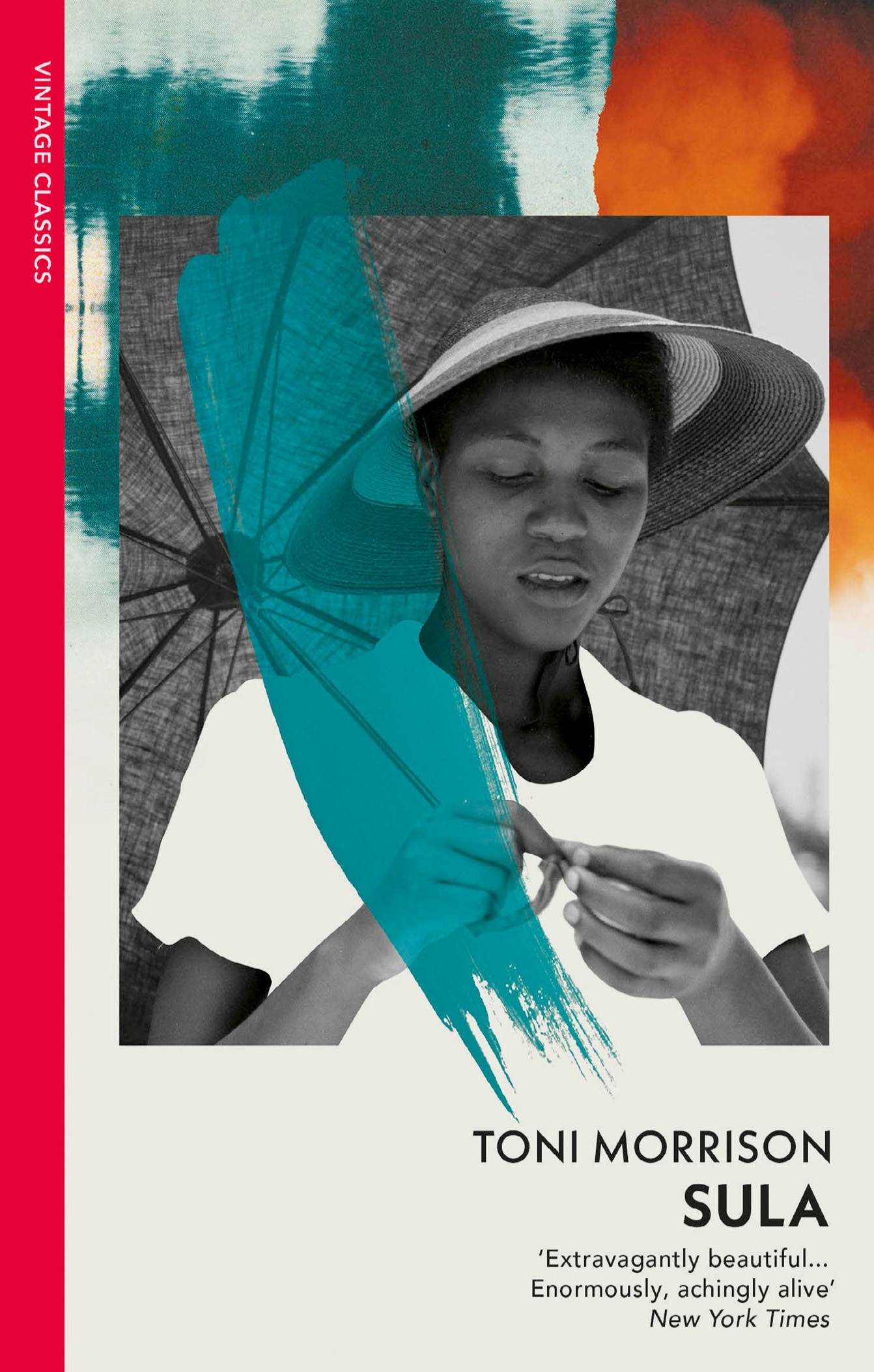
Do you ever wonder or ask yourself, can you trust the person you call your best friend and when that trust is broken, because of betrayal, abandonment and a scandalous affair with the husband to your best friend, can a friendship survive? Well, then you have solved the main conflict Toni Morrison is trying to convey in her book Sula. In this 1973 masterpiece, it does not merely deal with love and suffering but blends them together in the literary blender and hands over a cocktail that is alternately beautiful and heartbreaking.
The relationship between Nel Wright and Sula Peace is the life center of the novel written by Morrison, and it turns out that the greatest love stories do not necessarily concern romantic love. What seems to be a relationship of childish steady fidelity in the way of best friends forever, is transformed into a more intricate conflict and one that carries psychological overtones. Morrison shows their relation as the salvation and destruction, the relation so strong, that it is the ultimate cause of their joy and the purest pain.
The charm of the strategy of Morrison is that she does not glorify their friendship. It is not only sheer betrayal when Sula beds the husband of Nel, Jude, but also when two distinct styles of love collide. Nel is the agent of tradition dedication and neighbor commitment, and Sula is the image of radical individualism and authentic feelings. Their love-hate is the indication of love that is able to embrace and inflict a scar.
Morrison doesn’t believe in gentle character growth. She rather exposes her main characters into personal and generational damage. The community of Bottom itself becomes a character that has been affected by historical trauma and such personal suffering as Eva losing her leg and Hannah being burned to death are a plot device in itself and a metaphor about the strength of Black women.
The most extraordinary aspect of Sula is that, Morrison manages to mingle individual suffering and social memory. The characters never experience pain in a vacuum; their individual pain resonates with the racial experience of displacement, poverty and structural oppression as a whole population; they are African Americans. Nevertheless, Morrison does not resort to victimization stories but demonstrates how the people represented in her works turn pain into empowerment.
Sula is a thick source of analysis to students of lit. The symbolism (I mean that persistent plague of robin birds, right?), the non-linear narrative organization and the moral ambiguity as highlighted by Morrison all give endless essay-fuels. The novel urges the reader to go beyond easy morals and find complexity–a skill, which can be extremely valuable when it comes to literary criticism.
Whether you are constructing arguments about feminist themes, examining narrative strategies of Morrison, or the combined area of personal and political in African American literature, Sula delivers. The stratification of love and suffering in the novel provide numerous points of entry in analysis, hence the love in the novel being a fad among professors and a student paper gold mine.
To get exam prep and literature analysis assistance, visit StudyCreek to get detailed breakdowns of the themes Morrison used. Students who require analysis at the dissertation level can conduct research at DissertationHive.
Other scholarly facilities are StudyCorgi, EssayPro, EssayShark, and Edusson as full-service literary analysis tools.
Sula shows that the strongest love narratives do not necessarily have happy endings–sometimes they have honest ones, and those are worth so much more when it comes to making both sense of literature and reality.
Sample Assignment:
How and by whom is love expressed in the novel? In what ways is the love in the novel a ease the suffering of the characters? How is love not enough to appease the characters in light of their suffering?
Your literary analysis essay will be on the novel Sula by Toni Morrison.
Your literary analysis should be between 2 ½ and 3 pages (600 to 750 words), not including the Works Cited page, should be double spaced in Times New Roman 12-point font and must include:
A clearly articulated thesis that states, somewhere in your introduction, the assertion (position, interpretation) that your paper will prove
An introduction, a minimum of 3 body paragraphs, and a conclusion
At least two quotes from the novel itself that are integrated into your discussion
At least two citations of outside sources (such as literary criticism on the novel, preferably from articles from the MDC databases)
Topic sentences that focus the discussion in the body paragraphs
Examples, details, explanations in the body paragraphs that clearly support your thesis
Clear connections between ideas from paragraph to paragraph and within paragraphs
Proper MLA style format in the heading, in the in-text citations, and in the Works Cited page (see the template for the heading and margins in this lesson)
Works Cited page includes articles from two sources and from the novel for a minimum of three total listed sources
Standard usage, grammar, and mechanics
Sample Answer:
[Name]
Professor [Last Name]
English [Course Number]
[Date]
Love in Sula: A Beautiful, Broken Cure
Love does not figure as a simple cure of pain but as a complex, deceptively frail power in Toni Morrison’s Sula. In the novel love manifests in maternal love, passionate female friendship and the greater community yet these nurturing ties fail to heal the emotional scars within the characters. Morrison depicts love as a healing and destructive force and shows that at the end of the day, emotional connectivity is not sufficient to wash away the pain, misfortune, and estrangement of her characters.
The mother daughter relationships recorded in Sula have become one of the most disruptive forms of love in the novel, may it be the most potent, yet the most flawed. The grandmother of Sula, Eva Peace, is a brutal pragmatic matriarch who expresses love through sacrifice and violence. Her behavior like burning her own son in order to take him out of his suffering seems to indicate that love in her case is synonymous to the concept of survival rather than a more sentimental notion. Her famous declaration—“I love her. I just don’t like her” (Morrison 71)—about Sula reflects the tension between duty and affection. In the meantime, Hannah, the mother of Sula, provides a different, more emotionally detached type of love; the love that is sensual, free and, at the same time, neglectful. These competing conceptions of maternal affection cannot support Sula by giving her the nurturing that she requires, and that leads to her emotional detachment and ambivalent morals. As one scholar observes, the maternal figures in Sula “embody both the sustenance and suffocation of black womanhood” (Christian). Love in this form provides structure but not emotional security—protection, but not connection.
Friendship, particularly between Sula and Nel, offers another form of love—one that begins as salvation and ends in betrayal. Their relationship is described early on as intense and consuming: “Their friendship was as intense as it was sudden” (Morrison 52). For a time, this bond provides each girl with what their homes lack—understanding, laughter, and identity. But even this love is faulted when Sula beds Nel’s husband, destroying the bond between them. The betrayal by Sula reflects the vulnerability of the human bond even a deepest one. According to Deborah E. McDowell, Morrison “uses the female friendship to dramatize the costs of emotional dependency in a hostile world” (McDowell). In other words, love between friends offers refuge but cannot always survive betrayal or individual suffering. In old age, Nel discovers that the only one whom she really missed was Sula and not her husband and shows the incomparable depth of this relationship, and the sorrow of its loss.
Even the Bottom community is indicative of a form of community love–even though it is made out of tradition, hardship and common hurt. The town people participate in communal performance and in helping each other, and even the gossip between them is a kind of intimacy. However this is conditional and frequently corrective love. Sula, as an example, is alienated because of being so rebellious by going against the societal convention and sex, thus, a convenient blame to whatever problems the town is suffering. As Morrison writes, being accused of everything: a child falling off of a tree and bad weather, they could do everything they wanted to because their belief that Sula was evil gave them a possibility (Morrison 118). The love of the community is restricted to only those who fit it, and there is no real comfort to those on the periphery. The love of the town can be nothing but warm because it is incapable of fully accepting the complexity of its members nor will it protect them against misery.
Finally, love is not denounced by Morrison, on the contrary, it runs like a thread throughout the lives of her characters but she does doubt whether love could mend every wounding. Even in the self-sacrificing love of Eva, the incarnation of failed sisterhood between Sula and Nel, or the ratings standpoint of the Bottom, love usual struggles against trauma, treason, and nonconformity. Even in the moment in which she dies alone, Sula is still dreaming of being the part of something and she is still believing in love: it was a good cry, loud and long and with no bottom and no top but just circles and circles of sorrow (Morrison 174). This picture demonstrates the main idea of Morrison the idea of love which being round as life is, it is not whole, but still beautiful, and not enough in case of great suffering.
By using Sula, Morrison forces the reader to face the boundaries of love: not to close it, but to get to know its position in this hustling world of suffering. Love is not sufficient but necessary in its effort.
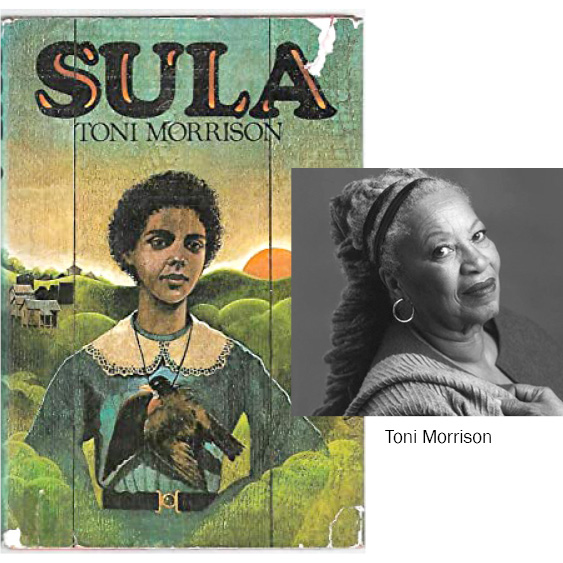
Works Cited
Christian, Barbara. “Novelistic Vision of Toni Morrison.” Black Feminist Criticism: Perspectives on Black Women Writers, Pergamon Press, 1985.
McDowell, Deborah E. “Boundaries: Toni Morrison’s Sula.” Modern Critical Interpretations: Toni Morrison’s Sula, edited by Harold Bloom, Chelsea House, 1999.
Morrison, Toni. Sula. Vintage International, 2004.
Delivering a high-quality product at a reasonable price is not enough anymore.
That’s why we have developed 5 beneficial guarantees that will make your experience with our service enjoyable, easy, and safe.
You have to be 100% sure of the quality of your product to give a money-back guarantee. This describes us perfectly. Make sure that this guarantee is totally transparent.
Read moreEach paper is composed from scratch, according to your instructions. It is then checked by our plagiarism-detection software. There is no gap where plagiarism could squeeze in.
Read moreThanks to our free revisions, there is no way for you to be unsatisfied. We will work on your paper until you are completely happy with the result.
Read moreYour email is safe, as we store it according to international data protection rules. Your bank details are secure, as we use only reliable payment systems.
Read moreBy sending us your money, you buy the service we provide. Check out our terms and conditions if you prefer business talks to be laid out in official language.
Read more