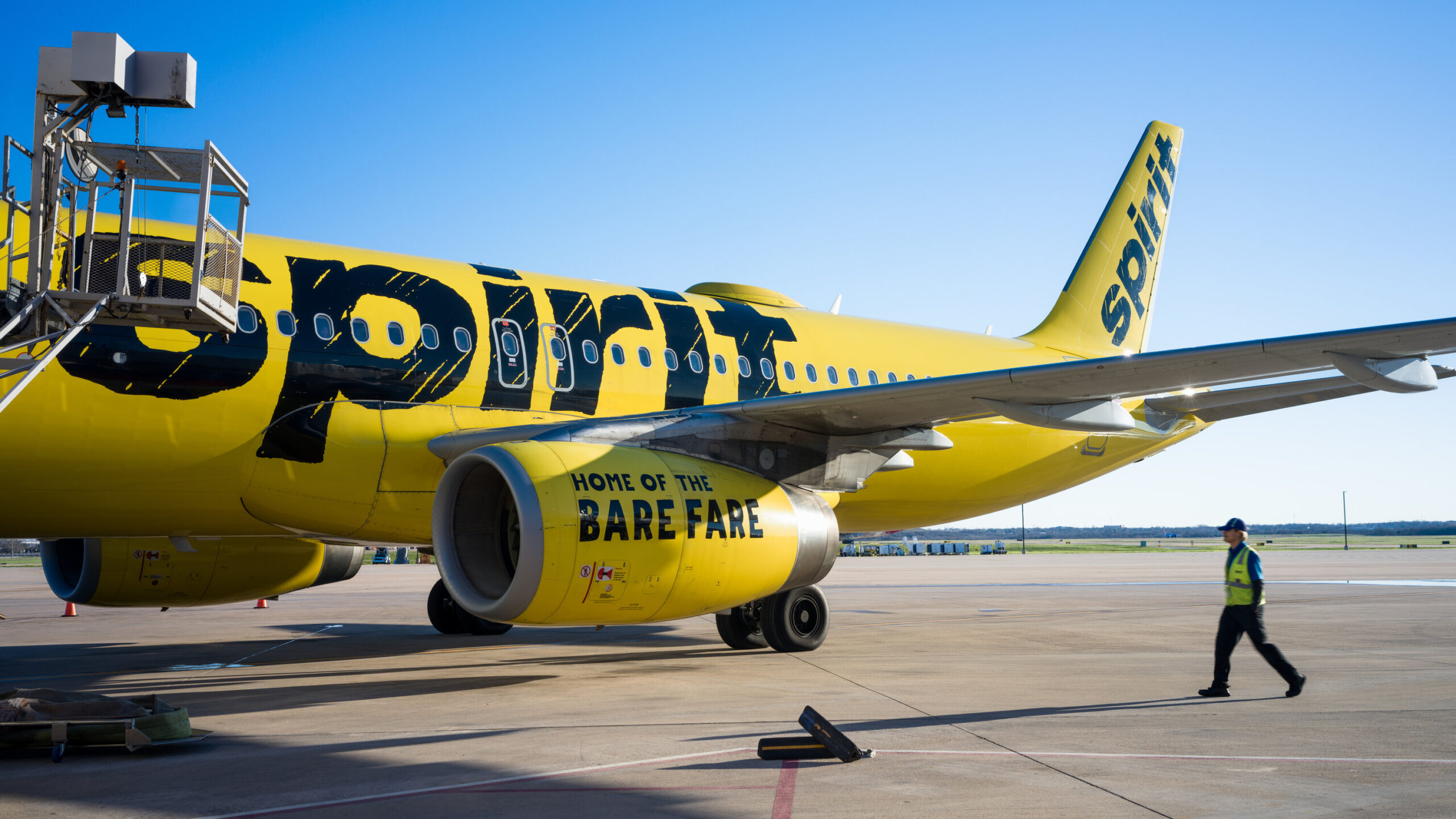
Coming out of bankruptcy in March 2025, Spirit Airlines found themselves staring into a sobering reality: by the end of 2024, they had incurred losses to the tune of 1.2 billion dollars, nearly two times as many as the losses through the previous year. The situation at Spirit poses interesting case study to marketing students in their analysis of corporate turnarounds, and whether a round of operational adjustments is sufficient to repair core issues in a business model, or whether more dramatic change is needed.
Spirit’s troubles weren’t just about bad luck. In 2024, the airline was already operating at a margin of negative 22.5 percent, implying major structural problems in addition to the normal volatility of the airline industry. The ultra-low-cost carrier business model that at one time was seen as a differentiator subsequently turned out to be the Achilles heel of Spirit as competitors started to price at par, yet with better service.
Their classic move of offering rock-bottom base fares and then picking passengers apart by making them pay nickels and dimes to do everything from choose a seat to carry a carry-on baggage was a genius idea, until it stopped being so. Satisfaction levels with customers dropped off a cliff and the “gotcha” pricing approach was a liability in modern times with increased customer experience dictating customer loyalty.
The turnaround strategy described by Spirit aims at understanding that the improvement of procedures alone will not be sufficient. It has also abandoned the price conscious customers and has targeted the more affluent travelers with estimates that this shift will bring 13 percent more revenue per passenger. It is not only operational efficiency but also a paradigm shift in the business.
The airline successfully carried out financial restructuring through which it reduced funded debt of about 795 million US dollars and the old investors made 350 million US dollars equity deposits. These actions offer breathing space, however engineering debt offers no gain unless business is in a position to offer sustainable returns.
The experiences of Spirit explain why process improvement is seldom sufficient to rescue struggling businesses. The operational efficiency of the airline industry is noncompetitive advantage; it is a condition of entry (the razor thin margins of the industry). As the current year unfolds, it is important that Spirit focuses on strategy to improve passenger experience and optimize its network and operations; this needs to be accompanied by strategic repositioning.
Customer retention and not merely acquisition is the driver of profitability, as the company plans to redesign its loyalty program with the view of approaching its customers. This shift from transactional to relationship-based marketing represents a fundamental change in how Spirit views its customer base.
A number of major marketing concepts are illustrated by the case of Spirit. First, the race-to-the-bottom in prices cannot reach the bottom, there is no bottom, and there can be only up. Second, it is not possible to separate customer experience and operational strategy; each touch point has a certain influence on brand perception.
Most importantly, Spirit demonstrates that operational excellence as well as strategic repositioning are the keys to successful turnarounds. Process improvements provide the foundation, but market repositioning creates the growth engine. The airline’s shift toward premium economy passengers while maintaining cost discipline exemplifies this dual approach.
Can process improvement alone save Spirit? Absolutely not. But can strategic repositioning succeed without operational excellence? Also no. Spirit’s recovery depends on executing both simultaneously—streamlining operations while fundamentally changing how customers perceive and interact with the brand.
For comprehensive business turnaround analysis, explore StudyCreek for detailed corporate strategy breakdowns. Students developing advanced case study research can access scholarly perspectives through DissertationHive.
Additional academic support for marketing and business strategy case studies is available through StudyCorgi, EssayPro, EssayShark, and Edusson.
Remember: sometimes you need to change altitude before you can change direction—and Spirit’s banking on both.
Sample Assignment:
Is process improvement alone a sufficient response to Spirit’s declining profits?
Sample Answer:
Spirit Airlines: Process Improvement, Empathy, and Strategic Change
[Student Name]
[Course]
Professor: [Instructor’s Name]
[Date]
Spirit Airlines has associated itself with an ultra-low-cost model, but recent profit KOs have highlighted the problems that go beyond inefficiencies of operations. Process improvement is indeed a key element of Spirit strategy, it does not, however, constitute an adequate answer to material financial problems the company has to deal with. In order to thrive in a competitive aviation business environment, Spirit would be required to implement wider changes in its organization that would involve a culture shift, improvements to customer experience, and programs inspired by internal empathy.
Process improvement e.g. straightforward functions, delays reduction, and scheduling enhancements are essential in the airline industry and particularly to a cost-driven airline. Short-term savings and more effective resource allocation may become the result of these enhancements. Nevertheless, process improvement is not enough to correct the problem of long-term unprofitability. All these factors broken brand loyalty at a customer level, including poor customer satisfaction with the company, reputation of its services, and low staff engagement levels resulting in many consumers making a U-Turn even when prices go down to Spirit.
Customer perception and experience in addition to operational measures serve as the instruments of measuring airline performance. When the promise is posted on a low note, then customers would be more likely to choose a competitor with a superior reputation even at a higher price. Thus, on top of using Spirit to invest in process optimization, it also has to be concerned with the more abstract aspects of service and employee relationships to create long-term effect.
In order to experience sustainable growth and higher profitability, Spirit ought to initiate changes in the following three aspects:
Customer Experience Strategy:
Spirit needs to transform its customer experience by enhancing on board comfort, emulative pricing, easy access and respectful service of the customer. Small amendments to the flying process can be helpful like more friendly check-in processes or easier baggage rules.
Brand Repositioning:
The present branding of Spirit as a “no-frills” carrier in most cases means to consumers that the airline is a carrier that does not deliver some services. An updated brand image of focusing on value without putting dignity at stake may be able to change the voice of the people, reaching and gaining more people.
Employee Engagement Programs:
Spirit ought to pay into themes like employee training, reward schemes, and feedback systems. Motivated employees can become more willing to provide an improved customer experience and remain dedicated to the brand objectives as empowered ones.
Empathy is something that should be combined with all the levels of Spirit operations. To the employees, this implies listening to the front line workers, engaging them in the decision making process, and providing growth opportunities. Being mentally supportive, viewing work-life balance, and recognizing employee achievements would lift them up and improve their retention.
The way Spirit can embrace the idea of empathy is by retraining its employees through soft skills, advanced complaint management systems and making communication easier when flights are disrupted. When a consumer feels appreciated and listened to, he/she can endure financial limitations. Customer loyalty can be built through showing empathy especially in stressful travel situations, and negative perception toward brand perception can be minimized.
Would it become different with empathy? Yes. Emotions also take priorities over prices in service-oriented industries such as air travel. Empathetic airlines are bound to carry repeat customers and a good word of mouth and in this competitive airline market this is essential.
Spirit ought to use the following measurable outcomes to measure the success of its efforts to improve its processes and its culture:
Customer Satisfaction Scores (CSAT or Net Promoter Score):
These measures assess customer satisfaction with travel and the possibility of revisiting Spirit or referring it to other persons.
Employee Retention and Engagement Rates:
Surveys and retention rates can be used to monitor internal satisfaction, so that changes and internal culture shifts that are empathy-driven can be measured.
On-Time Performance and Operational Efficiency:
These are primary indicators of the process efficiency, and prevent even more customer frustration due to cancellations and delays.
Revenue per Available Seat Mile (RASM):
An increase in this economic indicator demonstrates an increase in profitability per seat, which means that strategy worked out well.
Complaint Resolution Time:
The fewer the number of hours to address customer complaints, the more responsive the service, and much better customer relations.
All these outcomes are connected to customer understanding and performance of the business processes, providing Spirit insights which it can, in turn, act upon to improve strategy.
Conclusion
Spirit Airlines should understand that efficiency in operations is only a part of a much larger picture. The airline should focus its brand repositioning, internal culture changes, and the use of empathy, accompanied by the improvement of processes to stay profitable and competitive. In this way, Spirit will be able to develop a more sustainable model that will attract and retain both customers and employees, which will restore its reputation and profitability.
Delivering a high-quality product at a reasonable price is not enough anymore.
That’s why we have developed 5 beneficial guarantees that will make your experience with our service enjoyable, easy, and safe.
You have to be 100% sure of the quality of your product to give a money-back guarantee. This describes us perfectly. Make sure that this guarantee is totally transparent.
Read moreEach paper is composed from scratch, according to your instructions. It is then checked by our plagiarism-detection software. There is no gap where plagiarism could squeeze in.
Read moreThanks to our free revisions, there is no way for you to be unsatisfied. We will work on your paper until you are completely happy with the result.
Read moreYour email is safe, as we store it according to international data protection rules. Your bank details are secure, as we use only reliable payment systems.
Read moreBy sending us your money, you buy the service we provide. Check out our terms and conditions if you prefer business talks to be laid out in official language.
Read more