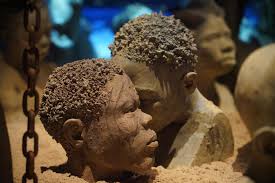
Discover the key events that shaped slavery in the United States, with timelines, analysis, resources, and 20+ student-friendly FAQs for deeper learning.
Slavery in the United States is one of the most powerful and painful chapters in American history. It wasn’t just an economic system — it was a social, political, and moral crisis that spanned over two centuries, impacting every corner of American life. From the arrival of the first enslaved Africans in 1619 to the ratification of the Thirteenth Amendment in 1865, the institution of slavery defined the country’s trajectory.
This article takes students through five significant moments that shaped slavery’s expansion and eventual destruction. We also take a deeper dive into the Dred Scott Decision of 1857, a Supreme Court ruling that shook the nation and hastened the onset of the Civil War.
For further study, we’ve added helpful links to trusted academic resources like Study Creek and Dissertation Hive, which support student research, assignments, and dissertations.

Date: February 12, 1793
Summary: This law allowed slaveholders to recapture escaped slaves from free states. It imposed penalties on anyone helping them escape.
Why It Matters: It infringed upon state rights, expanded federal power, and ignited protest in free states.
Date: March 3, 1820
Summary: Balanced power by admitting Missouri as a slave state and Maine as a free state. Slavery was banned north of the 36°30′ latitude line.
Why It Matters: Temporarily reduced tensions but ultimately deepened the divide between North and South.
Date: September 1850
Summary: A legislative package including the Fugitive Slave Law and the admission of California as a free state.
Why It Matters: Angered abolitionists and led to more aggressive enforcement of slavery laws.
Date: March 6, 1857
Summary: Declared that African Americans were not U.S. citizens and that Congress could not ban slavery in U.S. territories.
Why It Matters: Invalidated decades of legislation and inflamed sectional tensions, pushing the nation closer to war.
Date: January 1, 1863
Summary: Abraham Lincoln’s executive order freeing slaves in Confederate-held areas.
Why It Matters: Changed the Civil War’s purpose to include ending slavery and discouraged foreign support for the Confederacy.

The Dred Scott Decision is widely regarded as one of the most harmful rulings in U.S. legal history. Dred Scott, an enslaved African American, sued for his freedom after living in free territories. The Supreme Court, led by Chief Justice Roger B. Taney, ruled that:
African Americans could not be citizens of the United States.
Congress had no authority to regulate slavery in the territories.
Dr. Paul Finkelman noted that the ruling favored pro-slavery forces and undermined the principle of federalism.
Don E. Fehrenbacher highlighted how the ruling shattered earlier compromises and pushed the country toward civil conflict.
For detailed research, visit:
Reversed decades of anti-slavery legislation.
Increased Northern resistance and Republican support.
Elevated Abraham Lincoln’s political profile.
Marked a constitutional crisis that required war to resolve.
While the Fugitive Slave Acts and legislative compromises defined slavery’s legal standing, the Dred Scott case was the turning point. By closing the door on any peaceful legislative solution, the Supreme Court inadvertently forced the nation toward war. It underscored the deep-rooted racism in American law and made abolition an unavoidable political reality.
Looking to explore more? Here are some excellent resources:

When did slavery officially end in the U.S.?
→ In 1865, through the Thirteenth Amendment.
What was the Emancipation Proclamation’s purpose?
→ To free slaves in Confederate states and shift the war’s focus.
Who was Dred Scott?
→ A slave who sued for freedom and lost in a landmark Supreme Court case.
Why is the Dred Scott Decision important?
→ It denied Black citizenship and allowed slavery to expand.
What is the Missouri Compromise?
→ A law balancing slave and free states and limiting slavery’s spread.
What was the impact of the Fugitive Slave Act?
→ It criminalized helping runaways and deepened the North-South divide.
What led to the Civil War?
→ Multiple causes, but slavery and the Dred Scott Decision were central.
What was the Underground Railroad?
→ A secret escape network for enslaved people.
Did all Northern states oppose slavery?
→ Many did, but some were economically linked to slavery.
Was Abraham Lincoln always anti-slavery?
→ His views evolved, but he opposed the spread of slavery.
What is the Thirteenth Amendment?
→ The law that abolished slavery.
Was the Emancipation Proclamation symbolic?
→ It had limited reach but strong symbolic and political power.
Can students write a dissertation on slavery?
→ Yes! See Dissertation Hive for guidance.
How can I cite sources on slavery?
→ Use APA or MLA format, depending on your school’s preference.
Where can I find primary sources on slavery?
→ Try the Library of Congress and National Archives.
Are there video documentaries on Dred Scott?
→ Yes, many are available on PBS and YouTube’s history channels.
What were slave codes?
→ Laws that controlled enslaved people’s lives.
How did enslaved people resist slavery?
→ Through escape, rebellion, sabotage, and education.
Who was Harriet Tubman?
→ A former slave and conductor on the Underground Railroad.
Is racism still a legacy of slavery?
→ Yes, systemic inequalities still exist today.
What is sectionalism?
→ Loyalty to regional interests over national unity.
Why did the South defend slavery?
→ Economic dependence on plantation agriculture.
What happened to Dred Scott after the ruling?
→ He was later freed by his owner’s family.
Did the Dred Scott ruling affect all African Americans?
→ Yes, it declared none could be citizens.
Where can I get help with my U.S. history assignment?
→ Visit Study Creek’s student help section.

Slavery in the United States wasn’t a single act or era—it was a complex system supported and challenged by laws, court rulings, protests, and war. Understanding major turning points like the Fugitive Slave Acts, Missouri Compromise, and especially the Dred Scott Decision, gives students the tools to understand not just the past, but also the foundations of current civil rights struggles.
Use this guide as a springboard for deeper research. And remember, platforms like Study Creek and Dissertation Hive are excellent partners for your academic success.
Slavery was initiated in North America in 1619 and lasted until the passage and ratification of the Fifteenth Amendment to the US Constitution in 1870. During the 251 intervening years, there were numerous events, laws, and compromises that directly impacted slaves, slaveholders, freemen, abolitionists, politicians, and lawmakers.
In this assignment, you will gain a greater understanding of how slavery took over the entire nation. You will have an opportunity to examine the growth and demise of this institution.
Using your research and analysis of the Argosy University online library resources, the Internet, and the readings for this module, complete the following:
Identify five major events, laws, compromises, or proclamations associated with slavery in the American colonies and, later, the United States. Be sure to select five items other than the initiation of slavery in 1619 and the passage and ratification of the Thirteenth Amendment.
Select any one of these five identified items. Research at least two scholarly articles that provide additional details beyond your textbook about the one item you have selected.
Write a paper that addresses the following:
Prepare a timeline of the five significant events, laws, compromises, or proclamations you have chosen. The timeline must identify elements such as the date, details of the event, law, etc.
Explain why each of the five identified items is significant. Include the social and political impact of each item in your explanation.
Describe the specific item you selected for further research in detail.
Explain why you consider this event, law, compromise, or proclamation as the most significant.
Be sure to support your statements with scholarly references on a separate reference page.
Write a 4-5-page paper in Word format. Apply APA standards to citation of sources
Student Name: [Your Name]
Course: [Course Name]
Professor: [Professor Name]
Date: [Date]
The Growth and Demise of Slavery in the United States
Introduction
Slavery in North America, introduced in 1619, evolved into a deeply entrenched institution by the 19th century. Its persistence was shaped by a series of events, laws, compromises, and proclamations that fueled national division. Although slavery officially ended with the Thirteenth Amendment in 1865, its path to abolition was marked by decades of legal and political conflict. This paper presents five key moments in the history of American slavery, culminating in a detailed exploration of the Fugitive Slave Act of 1850—a law that significantly influenced sectional tensions in the United States.
Timeline of Significant Events Related to Slavery
The Missouri Compromise (1820)
Date: March 3, 1820
Details: An agreement admitting Missouri as a slave state and Maine as a free state, while prohibiting slavery north of the 36°30′ line in the Louisiana Territory.
The Nat Turner Rebellion (1831)
Date: August 21–23, 1831
Details: A violent slave rebellion in Virginia led by Nat Turner, resulting in the deaths of over 50 whites and prompting severe restrictions on slaves and free blacks.
The Compromise of 1850 and the Fugitive Slave Act
Date: September 18, 1850
Details: A legislative package that included the controversial Fugitive Slave Act, which required the return of runaway slaves and penalized officials who did not enforce the law.
The Dred Scott Decision (1857)
Date: March 6, 1857
Details: A Supreme Court ruling that declared African Americans could not be U.S. citizens and that Congress had no authority to ban slavery in the territories.
The Emancipation Proclamation (1863)
Date: January 1, 1863
Details: Issued by President Abraham Lincoln, this executive order freed all slaves in Confederate-held territories and redefined the Civil War as a struggle for human liberty.
Significance of Each Event
Missouri Compromise (1820):
This compromise preserved the balance between slave and free states, delaying secessionist conflict. However, it also deepened sectional divides by institutionalizing geographic boundaries for slavery. Politically, it marked the beginning of legislative efforts to manage the expansion of slavery.
Nat Turner Rebellion (1831):
The rebellion shocked the South, leading to widespread fear of slave uprisings. It prompted states like Virginia to enact harsher laws against black literacy and movement. Socially, it reinforced white supremacy and escalated tension between pro-slavery and anti-slavery factions.
Fugitive Slave Act (1850):
This law criminalized assistance to runaway slaves and stripped alleged fugitives of the right to a jury trial. It outraged abolitionists and increased resistance in the North, deepening the sectional divide and pushing the nation closer to war.
Dred Scott Decision (1857):
This ruling denied African Americans citizenship and invalidated the Missouri Compromise. It legitimized slavery’s expansion and invalidated decades of legislative attempts to contain it. The decision outraged the North and energized the Republican Party.
Emancipation Proclamation (1863):
Although limited in scope, this declaration symbolized a moral turning point in the Civil War. It gave Union forces a cause beyond preserving the Union and paved the way for the eventual abolition of slavery nationwide.
In-Depth Analysis: The Fugitive Slave Act of 1850
The Fugitive Slave Act of 1850 was a centerpiece of the Compromise of 1850 and one of the most controversial laws of the antebellum era. Unlike its 1793 predecessor, the 1850 law imposed stricter penalties on individuals aiding runaways and required law enforcement officials, even in free states, to participate in the capture and return of alleged fugitive slaves.
Scholarly sources such as Finkelman (2012) and Masur (2009) emphasize how the law inflamed sectional tensions. Finkelman argues that the act “nationalized” slavery by extending its enforcement into free states, effectively compelling northerners to become agents of the slave system. Masur highlights the widespread Northern backlash, including the formation of vigilance committees and the passing of “personal liberty laws” by several Northern states to undermine the federal statute.
The law’s psychological impact was also profound. Many African Americans fled to Canada in fear of being falsely identified and deported. The Act helped radicalize Northern attitudes toward slavery, shifting moderate abolitionists toward more militant opposition and laying the groundwork for the Civil War.
Why the Fugitive Slave Act Was Most Significant
Among the five highlighted events, the Fugitive Slave Act of 1850 stands out as the most significant due to its direct infringement on civil liberties and its role in inflaming national conflict. It exposed the moral contradictions in U.S. law by forcing citizens to participate in slavery, even if they lived in free states. The law energized the abolitionist movement, intensified sectional conflict, and contributed to the collapse of the Whig Party, leading to the rise of the Republican Party and Abraham Lincoln’s eventual election. By attempting to preserve the Union through compromise, it inadvertently accelerated the march toward disunion.
Conclusion
Slavery’s trajectory in the United States was neither linear nor uncontested. From legislative compromises to Supreme Court decisions and violent uprisings, a multitude of events shaped its persistence and ultimate demise. Among these, the Fugitive Slave Act of 1850 remains particularly critical due to its far-reaching implications on law, politics, and the national conscience. Understanding these pivotal moments offers crucial insight into the deep scars slavery left on the American legal and social fabric.
References
Finkelman, P. (2012). Slavery and the Founders: Race and Liberty in the Age of Jefferson (2nd ed.). Routledge.
Masur, L. P. (2009). The Civil War: A Concise History. Oxford University Press.
McPherson, J. M. (2003). Battle Cry of Freedom: The Civil War Era. Oxford University Press.
Oakes, J. (2013). Freedom National: The Destruction of Slavery in the United States, 1861–1865. W. W. Norton & Company.
Delivering a high-quality product at a reasonable price is not enough anymore.
That’s why we have developed 5 beneficial guarantees that will make your experience with our service enjoyable, easy, and safe.
You have to be 100% sure of the quality of your product to give a money-back guarantee. This describes us perfectly. Make sure that this guarantee is totally transparent.
Read moreEach paper is composed from scratch, according to your instructions. It is then checked by our plagiarism-detection software. There is no gap where plagiarism could squeeze in.
Read moreThanks to our free revisions, there is no way for you to be unsatisfied. We will work on your paper until you are completely happy with the result.
Read moreYour email is safe, as we store it according to international data protection rules. Your bank details are secure, as we use only reliable payment systems.
Read moreBy sending us your money, you buy the service we provide. Check out our terms and conditions if you prefer business talks to be laid out in official language.
Read more