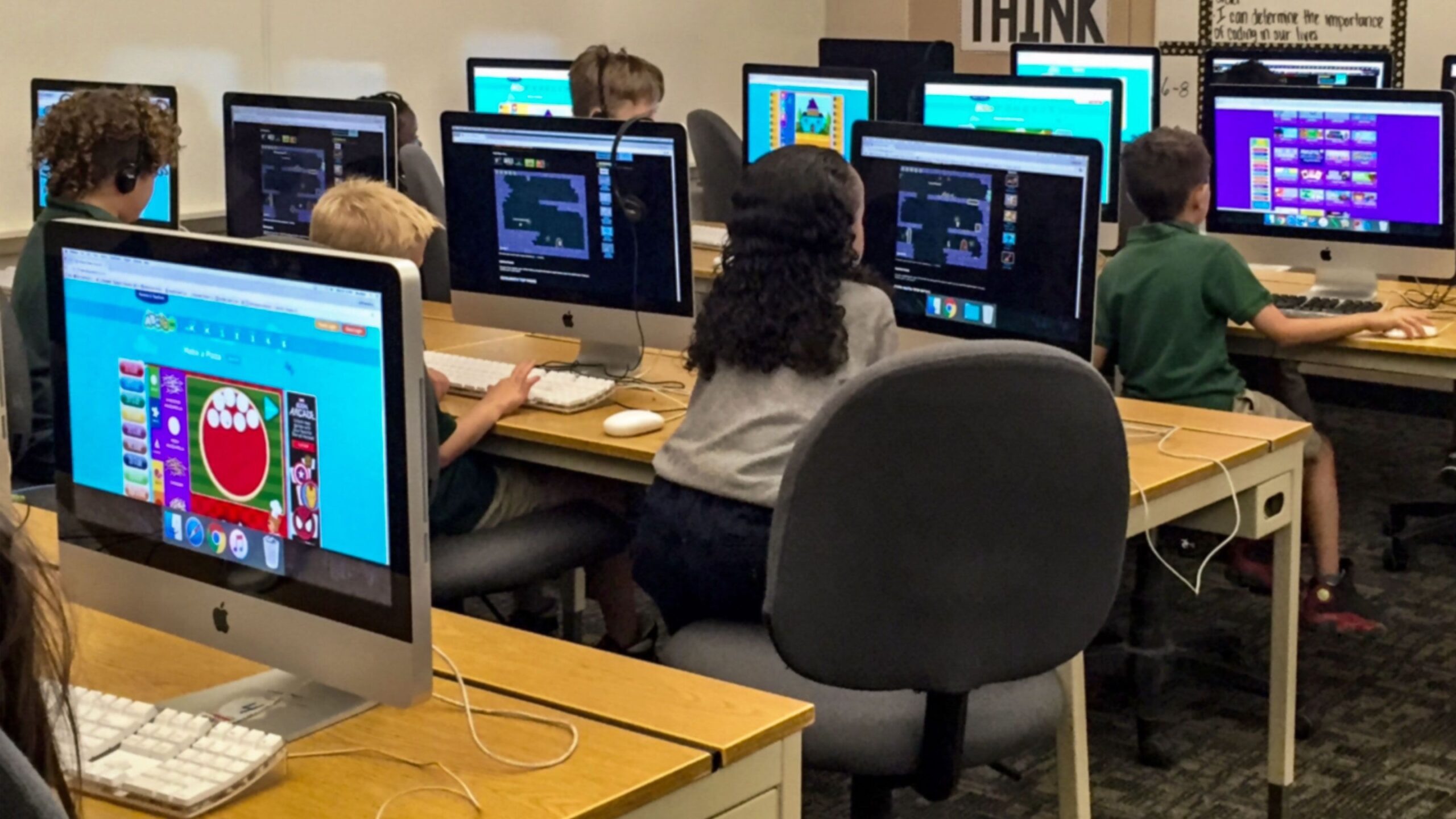
The modern digital-first economy constantly promotes coding skills among students as key elements for obtaining career success in the future. Educational institutions now include programming education at an accelerated pace throughout their elementary school to university levels. A critical matter arises concerning whether students need to invest their learning time in such complicated skills. A thorough assessment concerning the diverse advantages and challenges of coding lessons exists for every student level in the educational spectrum.

Understanding the concept at hand requires the definition of the term coding. Computer programming which is also called coding constitutes the development of commands that machines can execute. Specialist programming languages such as Python and JavaScript together with C++ and others serve as the medium for writing these instructions that a computer can understand and execute.
Coding is essentially a method of communication between humans and machines. Through specific syntax and logical structures, coders create everything from mobile applications and websites to software programs and video games.

The amount of job openings for coding experts continues to rise rapidly. Software developer jobs show an anticipated 22% growth between 2020 and 2030 according to data from the U.S. Bureau of Labor Statistics while most jobs’ growth remains average. Programmers who know coding have the option to work in these sectors:
These positions typically offer competitive salaries, with entry-level software developers earning an average of $75,000-$95,000 annually in the United States.
Coding is fundamentally about problem-solving and logical thinking. Research published in the Journal of Educational Psychology indicates that students who learn to code demonstrate measurable improvements in:
These cognitive benefits extend beyond the computer screen, transferring to other academic subjects and everyday problem-solving scenarios.
In our increasingly digital world, understanding how technology works provides students with a distinct advantage. Coding education fosters digital literacy that helps students:
For entrepreneurially-minded students, coding knowledge opens doors to creating their own digital products and services. With relatively minimal startup costs compared to traditional businesses, students can:
Many successful tech startups began with a student’s coding project that addressed an unmet need.
Contrary to popular perception, coding is highly creative. Students can express themselves through:
This creative dimension makes coding particularly engaging for students who might not otherwise be interested in STEM fields.

Despite the hype, not all future careers will require coding skills. Many professionals in healthcare, education, skilled trades, arts, and numerous other fields can succeed without ever writing a line of code. As Harvard Business Review has noted in their workforce analyses, focusing exclusively on coding may divert attention from other valuable skills.
Learning to code effectively requires significant time and dedication. For students already struggling with their current academic workload, adding programming courses may create undue stress. The complexity of coding concepts like:
can be particularly challenging for beginners and may discourage students without adequate support.
The technological landscape evolves rapidly, making some coding languages and skills obsolete within years. What students learn today might not be relevant by the time they enter the workforce. As natural language processing and AI-assisted programming tools like GitHub Copilot continue to advance, the nature of coding itself is changing dramatically.
Extended screen time has well-documented negative health impacts, including:
These health concerns are particularly relevant for young students whose bodies are still developing.
Every hour spent learning to code is an hour not spent developing other valuable skills or engaging in other enriching activities. Students might benefit more from:
Educational institutions must carefully consider this opportunity cost when designing curricula.
Rather than viewing coding education as an all-or-nothing proposition, a more balanced approach might better serve students’ diverse needs and interests.
According to educational researchers at Stanford Graduate School of Education, introducing basic coding concepts through playful, visual programming environments like Scratch is appropriate for elementary students. This builds foundational computational thinking without overwhelming young learners.
As students progress through middle and high school, those with continued interest can gradually transition to text-based languages and more complex projects.
Schools might consider offering coding as one of several elective pathways rather than a universal requirement. This approach respects student autonomy while still providing opportunities for those interested in programming.
Rather than teaching coding in isolation, integrating programming concepts across the curriculum can be more effective. For example:
This interdisciplinary approach helps students see coding as a tool for creative problem-solving rather than an isolated technical skill.
The underlying logical and problem-solving skills of computational thinking may be more universally valuable than specific coding syntax. Schools can emphasize these transferable cognitive skills while introducing coding concepts.
While not every student needs to become a proficient programmer, certain students may particularly benefit from coding education:
For students who do pursue coding education, certain supports can maximize their chances of success:
StudyCreek offers resources that can supplement formal coding education, providing additional examples, tutorials, and practice opportunities for students at various levels.
The decision about whether students should learn to code shouldn’t be reduced to a simple yes or no. Instead, educational stakeholders—including parents, teachers, administrators, and students themselves—should thoughtfully consider:
The application of coding education with specificunte to individual student needs will help students acquire relevant professional capabilities for their future careers. Programming success will come to some but others will achieve value through non-technical skills in their specific career domains.
Producing a generation of coders should not be the primary educational aim since students need to acquire flexible critical thinking skills to handle complex circumstances even if they never write code.
Delivering a high-quality product at a reasonable price is not enough anymore.
That’s why we have developed 5 beneficial guarantees that will make your experience with our service enjoyable, easy, and safe.
You have to be 100% sure of the quality of your product to give a money-back guarantee. This describes us perfectly. Make sure that this guarantee is totally transparent.
Read moreEach paper is composed from scratch, according to your instructions. It is then checked by our plagiarism-detection software. There is no gap where plagiarism could squeeze in.
Read moreThanks to our free revisions, there is no way for you to be unsatisfied. We will work on your paper until you are completely happy with the result.
Read moreYour email is safe, as we store it according to international data protection rules. Your bank details are secure, as we use only reliable payment systems.
Read moreBy sending us your money, you buy the service we provide. Check out our terms and conditions if you prefer business talks to be laid out in official language.
Read more