
Intercultural competence is no longer just a soft skill—it has become a crucial asset in today’s globalized world. It serves as the foundation for effective communication, impactful leadership, and long-term professional development. Whether you’re a student preparing for an international career or a professional navigating multicultural teams, being aware of your own cultural sensitivity can be a significant advantage. Understanding how you respond to diversity is essential for thriving in cross-cultural environments.
But what exactly can it reveal? Let’s explore six enlightening dimensions of the INCA model and the one hidden weakness that can seriously hinder your growth if left unaddressed.
After undertaking my INCA assessment, I found myself having strengths on Respect of Otherness and Empathy where I scored highly on my capability to interact respectfully with alternate views. This identifies with my learning backgrounds and exposure to multicultural settings. Nevertheless, I discovered that Behavioral Flexibility and Tolerance of Ambiguity was below the expectation. These findings cause me to think about myself and my struggle with ambiguous intercultural situations especially where nonverbal signs or actions may vary widely when compared to my personal standards.
Such a reflection corresponds to the scholarly findings of Byram, Nichols and Stevens (2001), according to which intercultural competence is not a set condition. It has to be developed continuously with purposeful exposure and reflective practice. This rise is promoted by such platforms as StudyCreek.com and DissertationHive.com, which provide intercultural communication-related materials, assistance with coursework, and writing services to students in globalized academic environments.
Part 2: Diagonizing 3 Critical incidents using cultural dimensions
Critical Incident 1: Direct/Indirect approach towards communication Directness vs. Indirectness in Communication
When making a presentation to the international students of the group, I provided a direct feedback to one of the Japanese group members. They seemed withdrawn afterward, which confused me. Hofstede’s cultural dimensions help explain this. Japan ranks high in High Context Communication, where meaning is often implied rather than explicitly stated (Hall, 1976).
I have a low context, direct culture that was opposite of what they were expecting. The Ting-Toomey literature (1999), supports this fact by adding force to require face-sensitive communication in such situations to maintain harmony.
Critical Incident 2: Orientation to time and Group Tasks

Being a cross-cultural team, a Latin American colleague missed several deadlines and I and I deemed that as being irresponsible. Nevertheless, as per the dimension of Time Orientation by Hofstede, most Latin American cultures are polychronic i.e. they emphasize on relations over strict timetables. The study conducted by Hall (1983) supports the notion that misunderstanding of temporal norms may cause conflict within multicultural teams. This should be done in a culturally competent way, that is, adaptive time management strategies are used instead of imposing the notion of laziness.
Critical Incident 3: Individualism and Collectivism in Leadership
One thing I realize is that during a session where I was leading a group of students, I favorited an individual recognition that made one of my Chinese colleagues felt some form of uneasiness. China ranks high in Collectivism, in which group achievement is more important than individual performance (Hofstede Insights, 2023).Accordingly, supporting literature by Triandis (1995) demonstrates that culturally competent leaders should change motivational policies to comply with collectivist culture values of group-orientedness.
The INCA survey does not only inform you of what you are good in, but also opens your eyes to what you need to do in order to achieve success in multicultural spheres. And the biggest of errors? Not taking into account your blind spots. Those who need an expert academic assistance in intercultural competence promotion, reflection papers writing, or critical incidents analysis are welcome to use the services of StudyCreek.com and DissertationHive.com. Such platforms provide specific directions so that you not only realize your academic ambitions but you also excel in varied world.
References
Byram, M., Nichols, A., & Stevens, D. (2001).Development Of Intercultural Competence in Practice. Multilingual Matters.
Hall, E. T. (1976). Beyond Culture. Anchor Books.
Hofstede Insights. (2023). Country Comparison. https://www.hofstede-insights.com
Ting-Toomey, S. (1999).Communicating Across Cultures. The Guilford Press.
Triandis, H. C. (1995).Individualism and Collectivism. Westview Press.
SAMPLE QUESTION
Part 1:
Complete the INCA survey and develop a one-page reflection summarizing your ideas and your results. (Include your Intercultural Competence Scoresheet)
Part 2:
Select 3 critical incidents and analyze them. Frame your analyses of each incident using the cultural dimensions studied in class. Your analysis should contain at least three scholarly references that pertain directly to the incident (can be pulled from class materials). Your analysis should be complete and supported by the literature not an opinion. You will be evaluated on how well you can forma an argument, that is, present a statement and support it with credible sources.
Complete both parts in a formal written paper using APA format. Use headings to mark each part: Part 1 and Part 2. Use subheadings to indicate the discussion of each critical incident. Please review the requirements for all written assignments on page 3 of the syllabus.
INCA is an acronym for Intercultural Competency Assessment. The purpose of the INCA survey is for you to examine your intercultural awareness and assess your cultural sensitivity. This activity is designed to help you become aware of your own attitude towards cultural diversity. The dimensions of cultural competence measured by the INCA survey are:1) Tolerance of ambiguity, 2) Behavioral flexibility, 3) Communicative awareness, 4) Knowledge discovery, 5) Respect for Otherness, and 6) Empathy.
ANSWER
Title: Intercultural Insights: Reflections and Critical Incidents in Cultural Competence Development
Name:
Course: Intercultural Communication in Human Resources
Instructor: [Instructor’s Name]
Date:
In today’s HR world, intercultural competence is absolutely essential. As our teams grow more diverse, it’s crucial for HR professionals to be adaptable, empathetic, and open-minded. The INCA Survey (Intercultural Competence Assessment) serves as a reflective tool that evaluates six key competencies: tolerance of ambiguity, behavioral flexibility, communicative awareness, knowledge discovery, respect for otherness, and empathy. Going through this assessment really opened my eyes to my strengths and the areas where I can improve as I gear up to collaborate with international teams.
Looking at my INCA Competence Scoresheet, I was pleased to see that I scored well in respect for otherness and empathy. This suggests that I generally approach different cultures with an open heart and a willingness to understand. These qualities are closely tied to essential HR functions like employee relations and conflict resolution, where being culturally sensitive is key (Byram et al., 2001).
On the flip side, my results showed a moderate score in tolerance of ambiguity and behavioral flexibility. This indicates that I might find it challenging to navigate uncertain or unstructured cultural environments. This is particularly important in HR roles, especially on a global scale, where ambiguity can stem from varying communication styles, differing work norms, or unfamiliar customs. As Ting-Toomey (1999) highlights, effective intercultural communication demands a strong tolerance for ambiguity and the ability to adapt swiftly.
The survey also underscored the significance of knowledge discovery—actively seeking to learn about other cultures through firsthand experiences and inquiries. While I did score reasonably well in this area, I’ve come to realize that my approach to cultural learning has been somewhat passive. Deardorff (2006) points out that intercultural competence is a lifelong journey, one that HR professionals need to nurture through active engagement with diverse communities and experiences.
In short, the INCA survey has really helped me map out ways to boost my cultural intelligence, particularly when it comes to handling ambiguity and adapting my behavior. These reflections are not just personal takeaways; they’re also essential insights for HR professionals who are navigating the complexities of global workplaces.
During a team project with a classmate from South Korea, I gave some direct feedback on their section of the presentation, thinking it would spark a constructive conversation. Instead, they seemed uncomfortable and a bit demotivated afterward. Looking back, this situation highlights a clash in our communication styles and the concept of power distance.
According to Hofstede’s dimensions, South Korea is a high-context culture that values hierarchy and tends to communicate indirectly (Hofstede Insights, 2023). My straightforward approach, which is typical in low-context Western cultures, might have come off as rude or confrontational. Hall (1976) points out that in high-context societies, maintaining group harmony often takes precedence over individual criticism. This misunderstanding emphasizes the importance of being communicatively aware, a crucial aspect of the INCA framework that helps HR professionals tailor their messages to fit cultural norms.
To improve the situation, I changed my feedback style to focus on positive framing and group-oriented suggestions, which really helped enhance our collaboration. This experience reinforced the idea that cultural intelligence, as discussed by Ang and Van Dyne (2008), is essential for effective leadership and team communication.
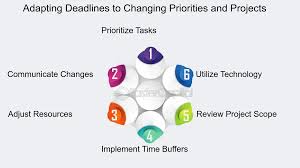
In another intercultural team setting, I collaborated with a classmate from Brazil who frequently turned in assignments later than expected. At first, I interpreted this as a sign of irresponsibility. However, I soon realized it stemmed from a cultural misunderstanding regarding time orientation.
Referring to Hall’s polychronic and monochronic time framework (1983), many Latin American cultures, including Brazil, tend to operate in a polychronic manner, where multitasking and flexibility are the norms. This perspective on time can differ significantly from the more rigid, monochronic approach often found in Western cultures, where deadlines are strictly adhered to. Understanding this helped me appreciate the different cultural attitudes toward time and improved our teamwork.
I started to build in some buffer time and encouraged open conversations about our timelines. Trompenaars and Hampden-Turner (1998) emphasize that understanding these cultural viewpoints is crucial for global managers and HR leaders. This also ties directly into behavioral flexibility, which is an INCA dimension that HR professionals need to keep developing to thrive in multinational settings.
While leading a group in a student organization, I made it a point to publicly acknowledge individual members for their exceptional contributions. Most people appreciated the recognition, but I noticed one student from China seemed quite uncomfortable. This caught me off guard until I delved deeper into the concepts of individualism versus collectivism in different cultures.
China is known for its strong collectivist culture, where the focus is on group success rather than individual accolades (Hofstede Insights, 2023). Triandis (1995) points out that in collectivist societies, public recognition can make individuals uneasy because it highlights them and can disrupt the harmony of the group. This experience revealed a gap in my leadership approach, as I hadn’t fully respected the idea of otherness, which is one of the INCA pillars.
To improve, I shifted my focus to celebrating team achievements instead of spotlighting individual efforts during group discussions. This change not only fostered better team cohesion but also underscored the importance of empathy and cultural adaptability in leadership—qualities that are vital for HR professionals working with diverse teams.
This exercise really highlighted just how crucial intercultural competence is for those of us in Human Resources. The INCA survey opened my eyes to my personal strengths and the areas where I need to grow, especially when it comes to navigating ambiguity and adapting my behavior in different cultural contexts. The critical incidents we discussed showed that even the best intentions can lead to misunderstandings if we don’t take cultural differences into account.
In today’s world, Human Resource management is increasingly taking place in a multicultural environment where empathy, effective communication, and adaptability are essential—not just nice-to-haves. As Byram et al. (2001) pointed out, intercultural competence isn’t something you either have or don’t have; it’s a skill that can be developed through education, experience, and thoughtful reflection.
Ang, S., & Van Dyne, L. (2008). Handbook of Cultural Intelligence: Theory, Measurement, and Applications. M.E. Sharpe.
Byram, M., Nichols, A., & Stevens, D. (2001). Developing Intercultural Competence in Practice. Multilingual Matters.
Deardorff, D. K. (2006). Identification and assessment of intercultural competence as a student outcome of internationalization. Journal of Studies in International Education, 10(3), 241–266. Hall, E. T. (1976).
Beyond Culture. Anchor Books. Hall, E. T. (1983). The Dance of Life: The Other Dimension of Time. Anchor Books.
Hofstede Insights. (2023). Country comparison. https://www.hofstede-insights.com
Ting-Toomey, S. (1999). Communicating Across Cultures. The Guilford Press.
Triandis, H. C. (1995). Individualism and Collectivism. Westview Press.
Trompenaars, F., & Hampden-Turner, C. (1998). Riding the Waves of Culture: Understanding Diversity in Global Business. McGraw-Hill.
Delivering a high-quality product at a reasonable price is not enough anymore.
That’s why we have developed 5 beneficial guarantees that will make your experience with our service enjoyable, easy, and safe.
You have to be 100% sure of the quality of your product to give a money-back guarantee. This describes us perfectly. Make sure that this guarantee is totally transparent.
Read moreEach paper is composed from scratch, according to your instructions. It is then checked by our plagiarism-detection software. There is no gap where plagiarism could squeeze in.
Read moreThanks to our free revisions, there is no way for you to be unsatisfied. We will work on your paper until you are completely happy with the result.
Read moreYour email is safe, as we store it according to international data protection rules. Your bank details are secure, as we use only reliable payment systems.
Read moreBy sending us your money, you buy the service we provide. Check out our terms and conditions if you prefer business talks to be laid out in official language.
Read more