Discover how to strengthen arguments in research paper writing by shifting your focus toward advanced peer-level structural alignment and rigorous editing. Learn why top researchers trust Studycreek.com to transform basic drafts into polished, high-impact academic publications that command authority.
You’re done with the hard part. The statistics are solid, the evaluation of the literature is thorough, and you give honest consideration to your thesis. So why does it read like it’s almost convincing instead of undeniable? Learning how to strengthen arguments in research paper writing is rarely about having better ideas — it’s about closing the gap between what you know and what you’ve actually proven on the page.
Here’s what separates a passing paper from a paper that earns top marks: raw writing is easy. Anyone can string sentences together. What’s rare is structural rigor — the kind of tight, evidence-locked reasoning that survives a skeptical reader’s scrutiny. Most students focus entirely on what they want to say and never test whether their argument actually holds up against a reader trying to poke holes in it.
This guide walks through five concrete ways on how to strengthen arguments in research paper, from the sentence level up to the overall structure. And because even strong arguments lose power when buried under clunky prose, we’ll also cover where professional editing — the kind offered at Studycreek.com — fits into the process of turning a solid draft into a publication-ready one.

The bulletproof thesis announcement has three homes: it is unique, competitive, and totally supported through the following. Most weak arguments fail on one of these, not all three — which means diagnosing the problem is usually faster than students expect.
The most common failure point is the logical leap: a claim followed by evidence that’s related but doesn’t actually prove the specific point being made. A paper might cite a statistic about industry-wide trends, then conclude something specific about one company’s strategy — without bridging how the general data supports the specific claim. Readers notice this gap even when they can’t immediately articulate why the paragraph feels unconvincing.
The second failure is weak evidence integration — dropping in a quote or data point and moving on, rather than explaining what it means in the context of your argument. Evidence doesn’t speak for itself. If you want to know how to strengthen arguments in research paper, this is usually the first place to look: every piece of evidence needs a sentence of analysis attached to it, explaining exactly what it proves and why it matters here.
Mapping data cleanly to claims — line by line, almost like a checklist — is one of the fastest ways to reinforce a research argument before you’ve written a single new word. You don’t include content; You’re tightening up what’s already there.
Strong arguments don’t ignore their weaknesses – they confront them before anyone else. Taking a problem, competing argument, or contradictory evidence and then explaining why your work still holds up is one of the most reliable ways to strengthen a thesis statement .
Most students bypass this because it seems to give weak position. There is a choice: an argument that lives its counter-argument is tons extra persuasive than one that pretends that there is no counter-argument.
This is also where a second pair of eyes matters most. It’s genuinely difficult to spot the holes in your own logic — you already believe your conclusion, so the gaps feel invisible to you. Editors at Studycreek.com work as an objective outside reader specifically to flag where your argument needs a counter-point addressed before a real examiner finds it first.

A not uncommon pattern in weak articles: “Study determined X. Study Khen Y. Study discovered Z” paragraph after paragraph. That’s just, not an issue now. Approaches to reversing that ratio by strengthening evidence-based absolute arguments — less summaries, more studies.
For each piece of evidence, ask: So what? What does this honestly show, and how does it relate to my particular claim? Useful languages A kind of test sentences for 2 analysis sentences. If your paragraphs are proof-heavy and analysis-soft, you really have the most direct lever for growth.
Vague qualifications — “many researchers believe,” “it can be argued,” “some evidence shows” — quietly remove authority from the claim. In academic writing, building stronger arguments generally comes down to replacing hedged, bland language with precise, source-accurate language .
Compare: “Many studies show X-Y association” as opposed to “A meta-analysis of 40 studies in 2023 observed a 23% increase in Y after X”. The second version is not always more competitive — it is more defensible because it is sufficient and specific enough to specifically assert that there is no room for ambiguity .
Even airtight logic can feel disjointed if the connective tissue between paragraphs is missing. Transitions aren’t decorative — they’re where you tell the reader how one point leads to the next, which is essential for how to improve argument structure in research writing.
Each paragraph should open by signaling its relationship to what came before: building on it, complicating it, or pivoting from it. Without that signal, readers have to do the structural work themselves — and a reader doing extra work is a reader losing confidence in your paper.
This is where good arguments either land or fall flat. You can have flawless logic and still lose the reader if the prose is clunky, repetitive, or reads like a rough draft instead of a finished academic document. Polishing arguments for academic impact is its own skill — distinct from constructing the argument in the first place.
This is the stage where professional enhancement earns its place in the methodology.
Studycreek.Com emphasizes just this kind of progress: taking a structurally sound draft and refining the language, going with the flow and voice until it reads with the confidence of a published paper rather than a student assignment. It’s not about changing your argument — it’s about making sure the version on the page does full justice to the thinking behind it.
AI writing tools and quick grammar checkers are good at one thing: generating facts and catching typos. What they consistently miss is contextual nuance — understanding why a particular phrasing fits your discipline’s conventions, why a transition needs to do more work in a literature review than in a results section, and why a claim that sounds fine in isolation actually undercuts the paragraph around it.
This is the layer where strengthening academic arguments through editing stops being optional and starts being standard practice. Professional researchers don’t submit first drafts. Graduate students preparing for the workplace — where research-backed writing remains a core, evaluated skill across fields like consulting, policy, and analytics, as outlined in Workvix.com guide to workplace research trends — learn early that polishing is part of the job, not a sign of inadequate writing.
Studycreek.Com’s change process primarily targets gaps that self-correction tends to leave: tightening the mechanics, removing multiple sentences entered over two draft periods, and checking alignment against your unique journal or college rubric. The goal is not to rewrite your surprise — to ensure that nothing in the prose runs quietly into contradiction with the argument you have already made .
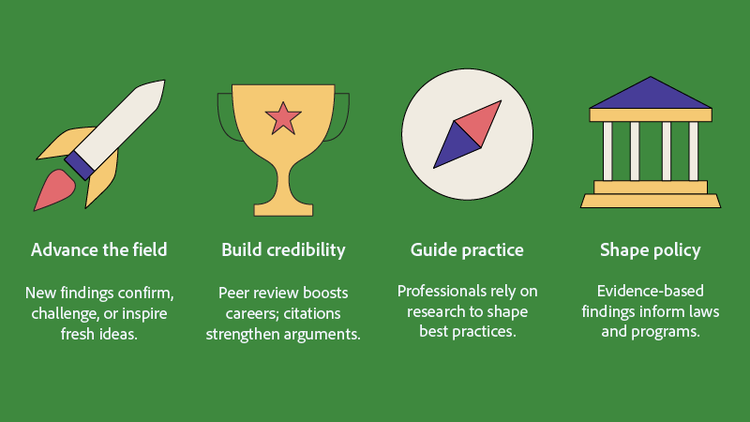
Five factors should emerge that strengthen your research paper argument: master the rebuttal immediately, lean your evidence-to-analysis ratio for evaluation, replace vague language with specific specifications, create functional transitions between paragraphs, varnish the final prose until it first fits.
Most students get the first four right with practice.
The fifth — recognizing when your own eyes are too close to the draft to catch what’s actually on the page — is where outside editing changes outcomes. Before you submit, consider having a second reader who isn’t you go through it line by line. If you’d rather have that done by people who do it for a living, Studycreek.com is built for exactly this stage of the process — turning a solid draft into one that reads with the authority it deserves.
Delivering a high-quality product at a reasonable price is not enough anymore.
That’s why we have developed 5 beneficial guarantees that will make your experience with our service enjoyable, easy, and safe.
You have to be 100% sure of the quality of your product to give a money-back guarantee. This describes us perfectly. Make sure that this guarantee is totally transparent.
Read moreEach paper is composed from scratch, according to your instructions. It is then checked by our plagiarism-detection software. There is no gap where plagiarism could squeeze in.
Read moreThanks to our free revisions, there is no way for you to be unsatisfied. We will work on your paper until you are completely happy with the result.
Read moreYour email is safe, as we store it according to international data protection rules. Your bank details are secure, as we use only reliable payment systems.
Read moreBy sending us your money, you buy the service we provide. Check out our terms and conditions if you prefer business talks to be laid out in official language.
Read more