Learn 10 effective methods of how healthcare policy and patient safety define quality care, eliminate medical errors and build stronger healthcare systems. Find out the impact of regulations and the importance of policy knowledge to healthcare professionals and students.
The healthcare systems deal with complicated environments where the decisions at the policy level have a direct impact on patient outcomes. Healthcare policy and patient safety are two inseparable factors, both regarding the necessary standards of infection control and the need to conduct reporting and address the workforce. Healthcare delivery does not just rely on clinical skills but also well crafted policies that define the safe practices across institutions. With the continued development in the healthcare sector, it is important to note that healthcare policy and patient safety has become critical to healthcare professionals, administrators, and even students.
The policy of healthcare and patient safety impacts the development of care and its delivery, monitoring, and improvement. Policies shape out criteria that safeguard the patients, professional conduct and also accountability within the healthcare organizations. Without robust policies, the risks related to patient safety are increased, and this gives way to avoidable mistakes, unfavorable outcomes, and the escalation of healthcare expenses. In this article, the authors discuss the interaction between healthcare policy and patient safety, its importance, and its contribution to enhancing the quality of care in healthcare systems.
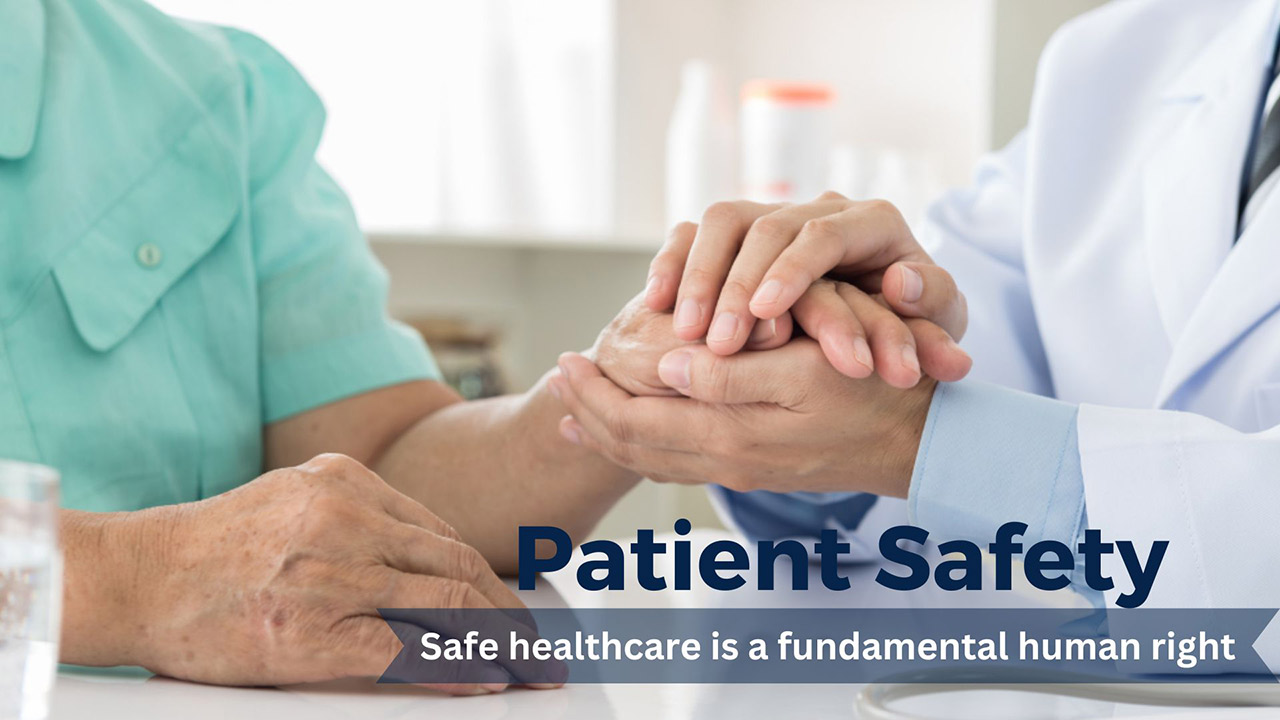
Healthcare policy and patient safety are defined as the laws, regulations, guidelines, and institutional structures that should be used to help keep patients safe and guarantee uninterrupted quality care. Federal, state, and organizational policies that regulate the provision of healthcare are referred to as healthcare policy whereas preventing errors, injuries, and adverse events that occur during care are referred to as patient safety.
Healthcare policy and patient safety together reflect in the organization of systems that encourage accountability and standardization. These policies regulate the practice of clinical activities, set up safety practices, and outline the acceptable professional behavior. In the absence of a common sense of healthcare policy and patient safety, the healthcare systems will remain fragmented, and unsafe practices are likely to occur.
Healthcare policy and patient safety can be considered one of the most important areas that have contributed to the decrease of medical errors. Standard operating procedures, reporting mechanisms, and safety checks are enforced through policies to ensure that the risks are detected before they cause damage. All the policy-driven interventions aiming to increase patient safety include administration of medications, surgical checklists, and infection control protocols.
Healthcare policy and patient safety systems mandate healthcare organizations to monitor mistakes, assess underlying causes and provide remedial measures. This process makes mistakes into learning opportunities and this contributes to continuous quality improvement. In the absence of safety standards that are influenced by policies, mistakes are not reported and are not corrected.
The healthcare policy and patient safety on the federal level are influenced by agencies that create the national standards. Regulations impact on compliance requirements, quality reporting, and reimbursement. Such policies guarantee the safety standards of medical organizations to the minimum to secure the safety of patients and employees.
Transparency is also supported by the federal healthcare policy and patient safety regulations which require reporting of adverse events as well as performance indicators. Such responsibility motivates medical institutions to focus on the safety and quality enhancement programs. Federal regulations do not apply to a company on a voluntary basis; they are an essential part and parcel of operational sustainability.
Healthcare policy and patient safety standards applied at the state level complement federal standards by responding to the local healthcare requirements. States control the licensure of professionals, scope of work, staffing ratio and facilities. To ensure that the healthcare institutions are compliant with the federal and state regulations, their internal policies need to be aligned with them.
The state healthcare policy and patient safety have direct impacts on the practice of healthcare in the everyday clinical environment. As an illustration, nurse staffing legislation affects workload and fatigue, which are the two factors directly connected to patient safety outcomes. Lack of integration of state regulations into their policies by institutions would lead to legal implications and poor patient care.
Policy healthcare and patient safety can be best implemented into institutional policies that have influence on organizational culture. Good safety culture promotes free communication, collaboration, and reporting of errors free of any punishment. Transparency policies enable the healthcare practitioners to raise the voice of concern with respect to safety.
Safety is a collective responsibility when it is entrenched in organizational values, and the healthcare policy and patient safety are integrated. Safety policies are supported by leadership commitment which makes them important and be able to be implemented across the departments in a consistent way. Health facilities that are strong in safety culture have improved patient outcomes and staff satisfaction.
Nurses are extremely vital in the development of healthcare policy and safety levels since they are the direct caretakers of patients. Their first-hand experience is a good source of their understanding of system weak points and safety threats as well as the effectiveness of policies. Nurses with healthcare policy and patient safety knowledge are in a better position to champion evidence-based changes.
Nurses contribute to the healthcare policy and patient safety at institutional and wider scopes through policy development, quality improvement committees and professional organizations. The education of nurses is facing the issue of policy literacy more and more as a way to equip nurses to become leaders and advocates of safer healthcare systems.
Healthcare policy and patient safety involve education as one of the underlining aspects. Medical policies require continuous training, competency testing, and continuing education in order to keep healthcare practitioners to safe standards of practice. Such requirements assist in keeping the practitioners abreast with the changing evidence and technology.
The interprofessional education is also supported by healthcare policy and initiatives to enhance patient safety, which enhances collaboration and communication between healthcare teams. Properly trained specialists will be more inclined to work with safety measures, be able to identify risks, and react to undesirable events.
Technology is invading healthcare policy and patient safety. The application and utilization of electronic health records, clinical decision support system, and reporting platforms are guided by policies. These technologies improve patient safety through the minimization of documentation errors, better communication, and evidence-based decisions.
Nevertheless, there are also technology risks. The healthcare policy and the structure of patient safety measures deal with these risks by providing the standards of data security, system usability, and error prevention. The right policies make sure that technology is a tool of safety but not a cause of harm.
Ethical standards of beneficence, nonmaleficence and justice are fundamental to health care policy and patient safety. Policies safeguard the rights of patients and facilitate informed consent, as well as equitable access to safe care. Ethical factors are applied in policy-making, especially where the situation is high-risk or resource-constrained.
Accountability measures are legally founded on the healthcare policy and patient safety. Lawsuits, fines, and a tarnished image may all be caused by the failure to act as per the safety regulations. These implications are crucial to understanding how to move through complicated ethical and legal settings in a responsible manner by the healthcare professionals.
To the healthcare student and healthcare professional, it is no longer a choice to learn the healthcare policy and the safety of patients. Knowledge on policy can positively influence clinical decision-making, development of leadership, and accountability in the profession. Employers are increasingly appreciating professionals that are able to maneuver regulatory worlds as well as play a role in the enhancement of quality through policies.
Individual students who are interested in academic assistance with their healthcare policy and patient safety can find professional guidance and organized materials using the services of such platforms as StudyCreek. Reliable scholarly support enables students to acquire complicated policy ideas and ensure academic honesty and quality. Find out more at studycreek.com.
Patient safety and healthcare policy do not just affect the health outcomes of specific institutions, but impact the national health. Policies that enhance healthcare costs also decrease them through avoiding mistakes, readmission, and enhancing the health of the populations. Effective safety standards also help to develop confidence with the healthcare systems among the people.
Companies that put their healthcare policy and patient safety as their priorities are in a better position to embrace change, risk management and sustainable care. The policymakers, healthcare leaders, and professionals should collaborate in order to achieve continuous improvement.
Acquiring the skills in healthcare policy and patient safety will demand the availability of trustworthy academic and professional sources. Students are interested in learning about the concepts of policies, but at the same time, professionals can be interested in technical or operational assistance concerning healthcare systems and infrastructure. Healthcare operations, as well as policy implementation, are supplemented by external service providers as in the case of workvix.com.
Safe, effective, and ethical healthcare delivery is based on healthcare policy and patient safety. These frameworks safeguard patients and regulate the practice of professionals through regulations, institutional policies, education and technology. With the further development of the healthcare system, the role of healthcare policy and patient safety will also increase.
To students and professionals, learning about healthcare policy and patient safety is a career development strategy and patient care that is worth the investment. Healthcare stakeholders can have a role to play in policy, enrich safety culture, and enhance outcomes in healthcare systems with the right knowledge, support, and resources.

Discussion 5: Topic: Influencing Healthcare Policy
Nurs: 507
Why is it important that health professionals share a common understanding of safety standards and practice for all stakeholders?
What are policy implications within an institution related to federal and state regulations?
Format/Style/APA/ Citations (20%)
2-3 paragraph
Discussion 5: How to Impact Healthcare Policy.
To guarantee universal and quality care delivery to the concerned stakeholders such as patients, providers and healthcare organizations, there must be a common understanding of safety standards and professional practice by all the health professionals. In the case of a consistent interpretation of safety standards and their implementation, the threat of mistakes, negative incidents, and differences in care is minimized.
This universal structure facilitates interdisciplinary working, responsibility and open communication that are essential to patient safety. In addition, a culture of safety is reinforced by common standards of safety, in which professionals in healthcare are not only concerned about their personal practice but also about the overall performance of the system (Agency for healthcare Research and Quality [AHRQ], 2023). This congruence is notably crucial in complicated healthcare settings where various experts play their roles in patient care.
Federal and state regulations are critical policy implications in institutions that operate in the healthcare sector because they provide minimum standards regarding safety, quality, and ethical practice. Institutional policies are influenced by federal regulations like Centers of Medicare and Medicaid Services (CMS) which consists of reimbursement issues, patient safety, and reporting policies. State regulations also influence licensure, scope of practice and staffing requirements necessitating institutions to adjust internal policies to stay in compliance.
When the institutional policies are not aligned to these regulations, failure may lead to legal consequences, fund deprivation and poor patient outcomes. Thus, nurses and leaders of healthcare become the pivotal participants in policy formulation and advocacy, as they must make sure that institutional policies can comply with the regulatory demands and promote the practice that can be considered safe and evidence-based (American Nurses Association [ANA], 2022).
References
Agency for Healthcare Research and Quality. (2023). Patient safety and quality improvement. https://www.ahrq.gov
American Nurses Association. (2022). Nursing: Scope and standards of practice (4th ed.). ANA Publishing.
Delivering a high-quality product at a reasonable price is not enough anymore.
That’s why we have developed 5 beneficial guarantees that will make your experience with our service enjoyable, easy, and safe.
You have to be 100% sure of the quality of your product to give a money-back guarantee. This describes us perfectly. Make sure that this guarantee is totally transparent.
Read moreEach paper is composed from scratch, according to your instructions. It is then checked by our plagiarism-detection software. There is no gap where plagiarism could squeeze in.
Read moreThanks to our free revisions, there is no way for you to be unsatisfied. We will work on your paper until you are completely happy with the result.
Read moreYour email is safe, as we store it according to international data protection rules. Your bank details are secure, as we use only reliable payment systems.
Read moreBy sending us your money, you buy the service we provide. Check out our terms and conditions if you prefer business talks to be laid out in official language.
Read more