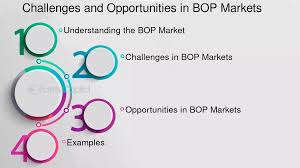
In today’s fast-changing global healthcare scene, General Electric (GE) Healthcare has had to rethink how it does business, especially in emerging markets like India. The company’s drive for affordable medical innovations, particularly with the creation and distribution of budget-friendly Electroencephalography (EEG) machines, showcases a fascinating blend of strategic thinking, flexible marketing, and the ability to tackle challenges in ever-shifting environments. While there have been some impressive wins, GE has also encountered significant hurdles—both from within and outside the organization—that have influenced its strategic journey. This article dives into five key insights about GE Healthcare’s strategy for entering BOP markets, providing valuable takeaways for business students and HR professionals alike.
Two major external trends led GE Healthcare to rethink how it develops and markets its products:
Growing Need for Affordable Medical Technology: Millions of people in base of pyramid (BOP) markets don’t have access to advanced diagnostic tools, which has sparked a strong demand for affordable healthcare solutions. This situation has created an urgent need for innovations that are specifically designed for low-resource settings.
Global Health Equity Movement: The increasing global dialogue about health equity and access to care has underscored the necessity of providing affordable diagnostics to underserved communities, shaping GE’s strategic choices.
These trends have made it clear that cost-effective innovation is essential and reinforced the belief that profit and purpose can go hand in hand—an important principle highlighted by StudyCreek.com and DissertationHive.com, where strategy and impact come together in practical business education.
Despite a clear vision, GE Healthcare encountered internal obstacles:
Legacy Processes and Cost Structures: Traditional manufacturing and pricing models just didn’t align with the needs of the Bottom of the Pyramid (BOP). GE had to make a significant shift, moving away from high-margin products to embrace leaner, more cost-effective innovations. This was a big cultural and operational change for the company.
Resistance to Change: Internal resistance from management and engineers who were accustomed to premium markets slowed the rollout of low-cost models.
These barriers delayed execution and hindered organizational agility, a topic explored in depth through strategic HR case studies at DissertationHive.com.

GE also struggled with external factors in the Indian healthcare market:
Navigating Fragmented Healthcare Infrastructure: The absence of a cohesive healthcare delivery system has made it really tough to distribute and service medical devices effectively.
Price Sensitivity and Trust Issues: Even when technology is affordable, rural hospitals and clinics often approach it with skepticism, especially if they’re not familiar with global brands or are hesitant about untested technologies.
To tackle these challenges, GE could:
Forge Local Partnerships with NGOs and state-run hospitals to increase trust and ease distribution.
Invest in Community Engagement and Education to build confidence in technology use and after-sales support.
GE adopted several key steps that align with principles of strategic planning and thinking:
Localization of Design and Manufacturing: GE India created smaller R&D hubs that worked directly with local communities to customize technology.
Lean Innovation Model: GE employed the “reverse innovation” model, which involves creating products for emerging markets and adapting them for developed ones.
These actions underscore GE’s commitment to adaptive strategy, demonstrating how structured planning combined with open-minded leadership drives success—skills emphasized in business simulations on StudyCreek.com.
GE’s BOP strategies not only opened new markets but also influenced its global value chain:
Innovation Feedback Loops: In India, low-cost innovations sparked fresh solutions for budget-conscious sectors in developed nations, opening up global cost-saving opportunities.
Operational Efficiency: The frugal engineering approach boosted overall product development efficiency throughout the company.
This dual-market strategy not only enhanced social impact but also improved business performance, solidifying GE’s significance in global healthcare and presenting a compelling model for international business students and HR leaders.
GE Healthcare’s venture into India’s BOP market is a fascinating blend of strategic successes and important lessons learned, making it a valuable case study for future strategists and HR professionals. By reflecting on these experiences—and utilizing resources like StudyCreek and DissertationHive—students can gain insights into crafting globally relevant strategies that promote both innovation and inclusion.
SAMPLE QUESTION
ANSWER
Title: Strategic Innovation in Bottom-of-the-Pyramid Markets: A Case Study of GE Healthcare’s EEG Device in India
Name:
Course: Human Resource Management
Instructor: [Instructor’s Name]
Date:
As the world strives for inclusive healthcare, General Electric (GE) Healthcare has made a significant pivot in its approach to innovation, particularly focusing on Bottom-of-the-Pyramid (BOP) markets in developing nations like India. This paper delves into the strategic necessities, the internal and external challenges, and the operational innovations that GE Healthcare embraced while rolling out an affordable Electroencephalography (EEG) machine. This case study not only showcases the real-world applications of strategic thinking and planning but also provides valuable insights for human resource (HR) students, helping them grasp how business strategies can align with market dynamics and organizational strengths.
Two major external trends led GE Healthcare to rethink its strategy for the BOP market:
Growing Need for Affordable Healthcare Solutions
With more than 70% of India’s population living in rural or underserved areas, the demand for affordable diagnostic tools, such as EEG machines, surged significantly (Prahalad, 2005). Traditional high-cost medical devices were simply out of reach for these communities, driving GE Healthcare to create innovative, cost-effective alternatives designed for challenging environments.
The call from global organizations and governments to bridge the health disparity gap has resulted in a stronger focus on inclusive innovation (Khanna et al., 2012). This shift urged medical technology companies like GE to look beyond developed markets and explore value-based models in low-resource settings.
These trends opened up a chance for GE to reshape its approach to research, development, and delivery—aligning healthcare innovation with the needs of emerging markets.
Despite recognizing the market opportunity, GE Healthcare encountered internal organizational challenges:
Rigid Cost Structures and Traditional R&D Models
GE’s original product development and pricing strategies were structured for premium markets. Adapting to BOP markets required a complete overhaul of the traditional innovation model.
The company had to shift gears from focusing on high-margin engineering to embracing frugal innovation—creating affordable and efficient medical technology while still maintaining quality (Govindarajan & Trimble, 2012).
Engineers and mid-level managers who were used to high-end solutions were understandably hesitant about scaling back features to meet the affordability standards for the base of the pyramid (BOP). This skepticism slowed down innovation and made early-stage execution more challenging. It became crucial for leadership to share a clear vision, emphasize the significance of the BOP strategy, and realign internal performance metrics with the new market objectives.
These internal challenges highlighted the necessity for agile organizational behavior and HR-driven change management to facilitate global strategic transformations.
External Barriers in the Indian Market and Strategic Responses
While entering the Indian healthcare market, GE Healthcare also encountered significant external barriers:
India’s healthcare system really struggles with consistent standards, particularly in rural areas. This inconsistency has made it tough for GE to roll out and maintain their devices effectively (World Health Organization, 2010). On top of that, issues like unreliable electricity, a shortage of trained personnel, and poor road access have only added to the challenges.
A lot of healthcare professionals in rural regions are wary of adopting new devices from multinational companies. Their hesitance stems from worries about how well these devices will work, how easy they are to maintain, and the level of support they can expect. The market had strong price sensitivity and preferred familiar solutions, regardless of their technological inferiority.
Building Local Partnerships: GE teamed up with NGOs and local governments to roll out community health programs and distribute machines through reliable networks. This approach helped to lower perceived risks and boost acceptance of the devices.
Training and Education Initiatives: By introducing training programs in rural areas and conducting educational outreach, GE fostered a solid knowledge base among technicians and healthcare providers, making them more comfortable with the new technology.
These flexible strategies enabled GE to embed itself more thoroughly in the market while also cultivating customer trust and enhancing brand recognition.
To successfully navigate these intricate environments, GE Healthcare implemented a series of strategic steps that align with key planning principles:
Reverse Innovation Strategy: Rather than simply modifying high-end products for low-income markets, GE took a different approach by designing products in India specifically for Indian users. They later adapted these innovations for more developed markets (Immelt, Govindarajan & Trimble, 2009). This grassroots innovation showcases a commitment to long-term thinking and a focus on customer needs.
Decentralized R&D Centers: GE set up local R&D units in Bangalore, bringing them closer to the end-users. These centers prioritized rapid prototyping, iterative testing, and incorporating local feedback. This decentralized strategy enhanced their agility and ability to respond to changing market conditions.
These initiatives embody the essential aspects of strategic thinking: assessing the external environment, utilizing organizational strengths, and aligning resources with a forward-looking vision.
GE Healthcare’s BOP strategy not only opened new markets but also enriched its global value chain:
Innovation for Cost-Efficiency: Technologies developed for BOP markets often found use in cost-conscious sectors of developed markets.
Take portable EEGs, for instance. They’ve been utilized in rural clinics and emergency situations across the U.S., demonstrating their versatility across different markets. When it comes to operational resilience and flexibility, the lean engineering practices and localized supply chains developed in India have significantly boosted GE’s global supply chain efficiency. They’ve even set the stage for cost-effective production methods in other areas.
From a human resources standpoint, this approach has fostered cross-border talent mobility, encouraged knowledge sharing, and led to the creation of culturally responsive training modules. These are all essential components for maintaining an organization that is both globally integrated and locally attuned.
GE Healthcare’s initiative to provide affordable EEG solutions in India’s bottom-of-the-pyramid market is a fantastic example of how strategic innovation can make a real difference. It highlights the need for internal alignment and the ability to adapt in challenging environments. By tackling both structural and perceptual hurdles, the company developed a product and a business model that serve both emerging and developed markets effectively. For HR students and aspiring business leaders, this case underscores the critical link between internal strengths and external opportunities, demonstrating how strategic thinking can help tackle deeply rooted market challenges.
Govindarajan, V., & Trimble, C. (2012). Reverse innovation: Create far from home, win everywhere. Harvard Business Review Press.
Immelt, J. R., Govindarajan, V., & Trimble, C. (2009). How GE is disrupting itself. Harvard Business Review, 87(10), 56-65.
Khanna, T., Palepu, K. G., & Sinha, J. (2012). Strategies that fit emerging markets. Harvard Business Review, 90(6), 106–115.
Prahalad, C. K. (2005). The fortune at the bottom of the pyramid: Eradicating poverty through profits. Wharton School Publishing.
World Health Organization. (2010). Health systems in India. https://www.who.int/india/health-topics/health-systems
Delivering a high-quality product at a reasonable price is not enough anymore.
That’s why we have developed 5 beneficial guarantees that will make your experience with our service enjoyable, easy, and safe.
You have to be 100% sure of the quality of your product to give a money-back guarantee. This describes us perfectly. Make sure that this guarantee is totally transparent.
Read moreEach paper is composed from scratch, according to your instructions. It is then checked by our plagiarism-detection software. There is no gap where plagiarism could squeeze in.
Read moreThanks to our free revisions, there is no way for you to be unsatisfied. We will work on your paper until you are completely happy with the result.
Read moreYour email is safe, as we store it according to international data protection rules. Your bank details are secure, as we use only reliable payment systems.
Read moreBy sending us your money, you buy the service we provide. Check out our terms and conditions if you prefer business talks to be laid out in official language.
Read more