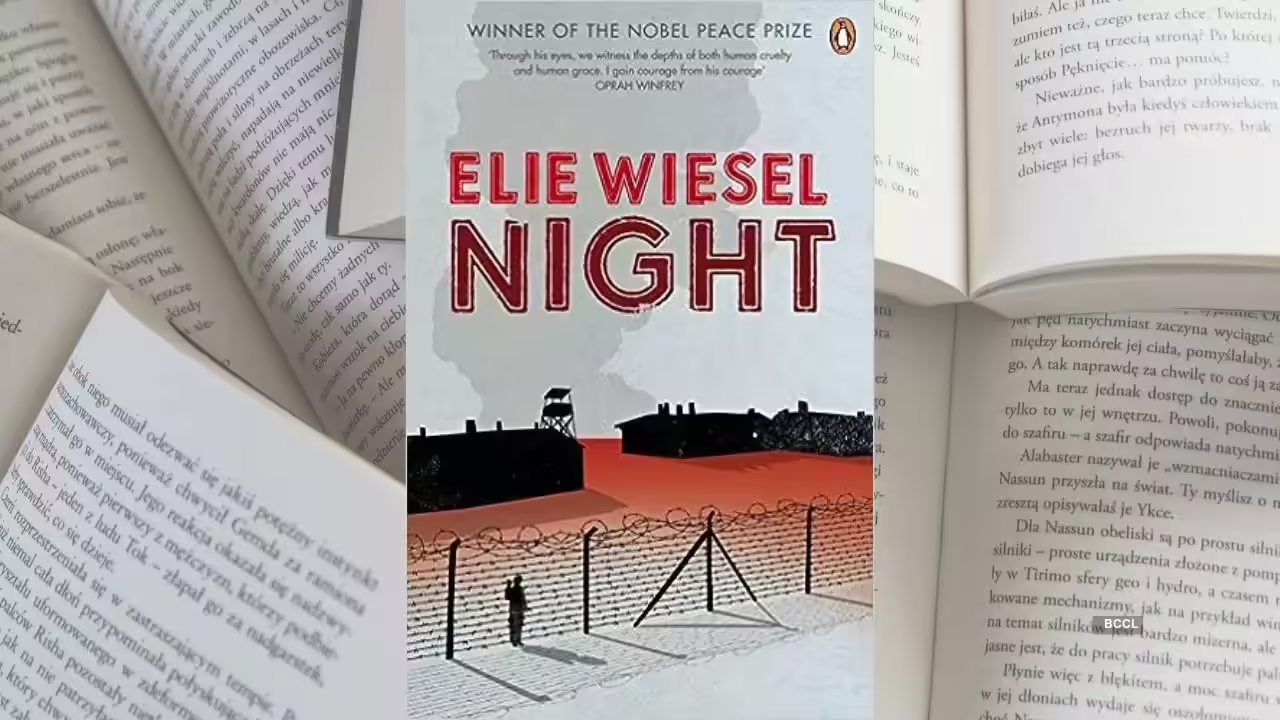
Night by Elie Wiesel is not a book, it is testimony, warning, and a reflective meditation on the power of evil and survival of mankind. First published in the year 1960, this thin memoir bears the burden of one of the most somber chapters in history. It presents special analytical difficulties to the literature student: How shall literary techniques in such a text be analyzed, when the text is an account of real suffering? What do you talk about regarding narrative structure when the story that you are narrating is that of survival against peculiar odds?
The memoir by Wiesel documents his journey as a teenage Jew devout in faith to a Holocaust survivor who has lost faith, family, and innocence. The narrative is simultaneously highly intimate and vastly larger than that of an individual; it is the story of one boy, yet it tells of a greater thing, the way all people respond to great unexplainable cruelty.
This journey is reflected in the structure of the book: the book opens with the coziness of family and religiosity, turns into a nightmare of deportation and the horror of concentration camps, and closes with what looks like emptiness, rather than liberation. It is a back-to-front coming-of-age tale – the narrator, rather than growing wiser and mature, will lose those certainties which once structured his world.
As the prevailing metaphor of the book, the name “Night” becomes a symbol of physical darkness in the camps, but it also symbolizes the spiritual and moral one that came upon the European continent. Wiesel incorporates night imagery all through, expressing the loss of God, hope, and humankind.
The style, which Wiesel uses in his writings, is streamlined and can even appear clinical. This is not literary minimalism as a style cold effect–this is the voice of the one who has finished what cannot be described elaborately. Incidentally, sometimes restrained horror conveys itself best.
The nature of central conflict is not the opposition of the good and evil characters but the rivalry between Wiesel and God. It is shown in his struggles with faith that give the memoir its emotional backbone and offers incredible theological questions regarding suffering, divine justice, and the purpose of life.
Wiesel illustrates the principle of systematic dehumanization not only on victims but also on those who perpetrate it and those who are its witnesses. It is not only the camps that kill bodies but souls also.
The memoir discusses the psyche of surviving and the ethical judgment to understand and testify. The existence of the book is occasioned by the fact that Wiesel was resolved to shatter his ten-year silence on what he underwent.
The strained interactions between Eliezer and his father are made the focal point of the story which exemplifies the closeness that keeps humans alive and the horrible instances that desperate situations can subject human beings to.
As you study Night, keep in mind that this is not a fiction novel; this is testimony. It is not your task to judge the literary decisions of Wiesel but to see how Wiesel employs the techniques of literature in his description of historical truth and the experience of the human condition.
For comprehensive analysis support, resources like StudyCreek offer frameworks for memoir analysis. Students seeking specialized research assistance can explore DissertationHive, while additional academic help is available through StudyCorgi, EssayPro, EssayShark, and Edusson.
Night is a reminder that the greatest purpose of literature is neither to entertain nor to earn our living, but it is to testify, to give memories, and to uphold a human standing in a world of unutterable evil.
Read the novel” Night by Elie Wiesel” and answer the questions. Do a paragraph to answer each question. MLA format.
What does Eliezer mean when he writes that he feels free after his father’s death? Is he free of responsibility? Or is he free to go under, to drift into death? Explain
Could something like the Holocaust happen today? Discuss more recent genocides, such
as the situation in Rwanda in the 1990s and the ongoing conflict in Sudan.
Does Night teach us anything about how we can react to these atrocities?
Elucidating Suffering and Survival in Night by Elie Wiesel
Student Name
Instructor Name
Course Title
Date
Institution
The phrase quoted by Eliezer in Night, who proclaims that, the day his father died, he felt “free”, indicates not some sort of emotional liberation, but a crushing circumstance of psychological alienation. During their stay in the concentration camps, the identity and goal of Eliezer are fixed in his obligation to protect his father. His death is a great tragedy but gets rid of this burden and puts Eliezer in a shocking state of loss of any will left to survive. He is not a free man; he is in the state of spiritual breakdown. The death symbolizes the end of familial obligation and the beginning of a haunting, hollow existence (Wiesel 112). This “freedom” is a tragic irony – freedom not to live, but to drift toward death.
The Holocaust has been referred to a unique atrocity, but the current history has revealed that atrocities are still possible to this date. In 1994, the Rwandan Genocide realized the massacre of about 800,000 Tutsi by extremist Hutus within a span of only 100 days. In a similar manner, in Darfur, Sudan, since early 2000s, government-supported armed groups have perpetrated genocide against non-Arab populations that has claimed hundreds of thousands of lives. These incidences sound similar to the holocaust which used dehumanizing propaganda, ethnic scapegoating, and political authority to commit mass murder. When such horrors continue to take place even though the world swore not to repeat the Holocaust ever again, we have to know that genocide is still a very real prospect in case hate is not contained (Gourevitch 1998; Totten 2010).
The Night by Wiesel is not merely a memory of incomprehensible misery but a warning. It shows that in justice, silence and indifference are unholy allies to the evil one. The book leaves its readers with a dilemma concerning the implications (or rather consequences) of apathy, urging the younger generations to witness and contradict injustice. It serves as a reminder that the inaction of humanity against the Nazis allowed the holocaust to happen. In contemporary situations, with Wiesel, the message seeks to empower individuals of the world, policymakers, and the community to take measures during persecution and genocide. The reason is that as Elie Wiesel himself pointed out in his Nobel Prize speech, as he put it, neutrality is on the side of the oppressor, not the victim (Wiesel, Nobel Lecture). Night thus remains a powerful tool for moral awareness and civic responsibility.
Gourevitch, Philip. We Wish to Inform You That Tomorrow We Will Be Killed with Our Families: Stories from Rwanda. Farrar, Straus and Giroux, 1998.
Totten, Samuel. An Oral and Documentary History of the Darfur Genocide. Praeger, 2010.
Wiesel, Elie. Night. Translated by Marion Wiesel, Hill and Wang, 2006.
Wiesel, Elie. “Nobel Lecture.” NobelPrize.org, 11 Dec. 1986, https://www.nobelprize.org/prizes/peace/1986/wiesel/lecture/.
Delivering a high-quality product at a reasonable price is not enough anymore.
That’s why we have developed 5 beneficial guarantees that will make your experience with our service enjoyable, easy, and safe.
You have to be 100% sure of the quality of your product to give a money-back guarantee. This describes us perfectly. Make sure that this guarantee is totally transparent.
Read moreEach paper is composed from scratch, according to your instructions. It is then checked by our plagiarism-detection software. There is no gap where plagiarism could squeeze in.
Read moreThanks to our free revisions, there is no way for you to be unsatisfied. We will work on your paper until you are completely happy with the result.
Read moreYour email is safe, as we store it according to international data protection rules. Your bank details are secure, as we use only reliable payment systems.
Read moreBy sending us your money, you buy the service we provide. Check out our terms and conditions if you prefer business talks to be laid out in official language.
Read more