
In case you are presently staring at a copy of Kevin Kelly’s “Better Than Human” and you wonder “Should I dissect this thing or should I be getting ready to survive the robot apocalypse?”, relax and take a deep breath. Kelly is not simply theorizing about how current technology might evolve, but he is also teaching a course in how to convince people to buy into a certain idea of the future by engaging with them on a friendly level: talking about our inevitable future as cyborgs.
Kelly’s central argument defies expectations: instead of lamenting job displacement by AI, he argues that automation will create new types of human work, making us “better than human” through collaboration with machines. It’s optimistic futurism that reads like a career counselor trying to convince you that getting replaced by a robot is actually a promotion.
Ethos (Credibility): Kelly asserts authority by claiming to be the founding executive editor of the Wired magazine and a predictor of technology. He’s not just some random person with opinions about AI—he’s professionally paid to have opinions about AI, which in academic terms makes him exponentially more credible.
Pathos (Emotional Appeal): Kelly does not go down the path of playing on technological unemployment fears but the language of aspiration. He presents automation as a solution to monotony and release of human beings to engage in creative and interpersonal activities. It feels manipulative, but in the positive way that makes you feel good about being possibly outdated.
Logos (Logical Framework): Kelly structures his argument through historical patterns, demonstrating how previous technological revolutions created more jobs than they eliminated. His logic follows a clear progression: establish pattern, apply to current situation, project future outcomes. It’s inductive reasoning that would make Aristotle proud (assuming Aristotle wasn’t replaced by an AI philosopher-bot).
What makes Kelly’s essay particularly fascinating for literary analysis is his handling of uncertainty. He is confident in his predictions of future events in present tense stating the impossibility of actual prediction. Authoritative speculation is an elegant effort at such rhetorical balancing that must be lifted, without doubt, by literature students to their argumentative essays.
The prose style of Kelly shows the way the technical ideas can be explained without being patronizing and losing intellectual intensity. His metaphors and comparisons personalise abstract AI concepts, which is important in academic writing in all fields.
Kelly’s work exemplifies contemporary argumentative writing that addresses technological anxiety through reasoned optimism. For students analyzing persuasive techniques in modern essays, StudyCreek offers excellent frameworks for examining futurist rhetoric and technological discourse.
Looking at this essay, look at how Kelly addresses counterarguments, how he uses historical precedence, and how he is able to keep the reader interested in reading about possibly uncomfortable subjects. See how deliberately he uses inclusive expressions like we and us and establishes unity between the writer and the reader.
To support a wholistic analysis, the guides to analyze contemporary argumentative texts, and technological discourse can be found in DissertationHive, StudyCorgi, EssayPro, EssayShark, and Edusson.
And bear in mind: this ability to recognize how writers build positive arguments in questioning future unknowns is not just a lesson in literature. Plus, if Kelly’s right about human-machine collaboration, you’re basically training for your future career as a cyborg literary analyst.
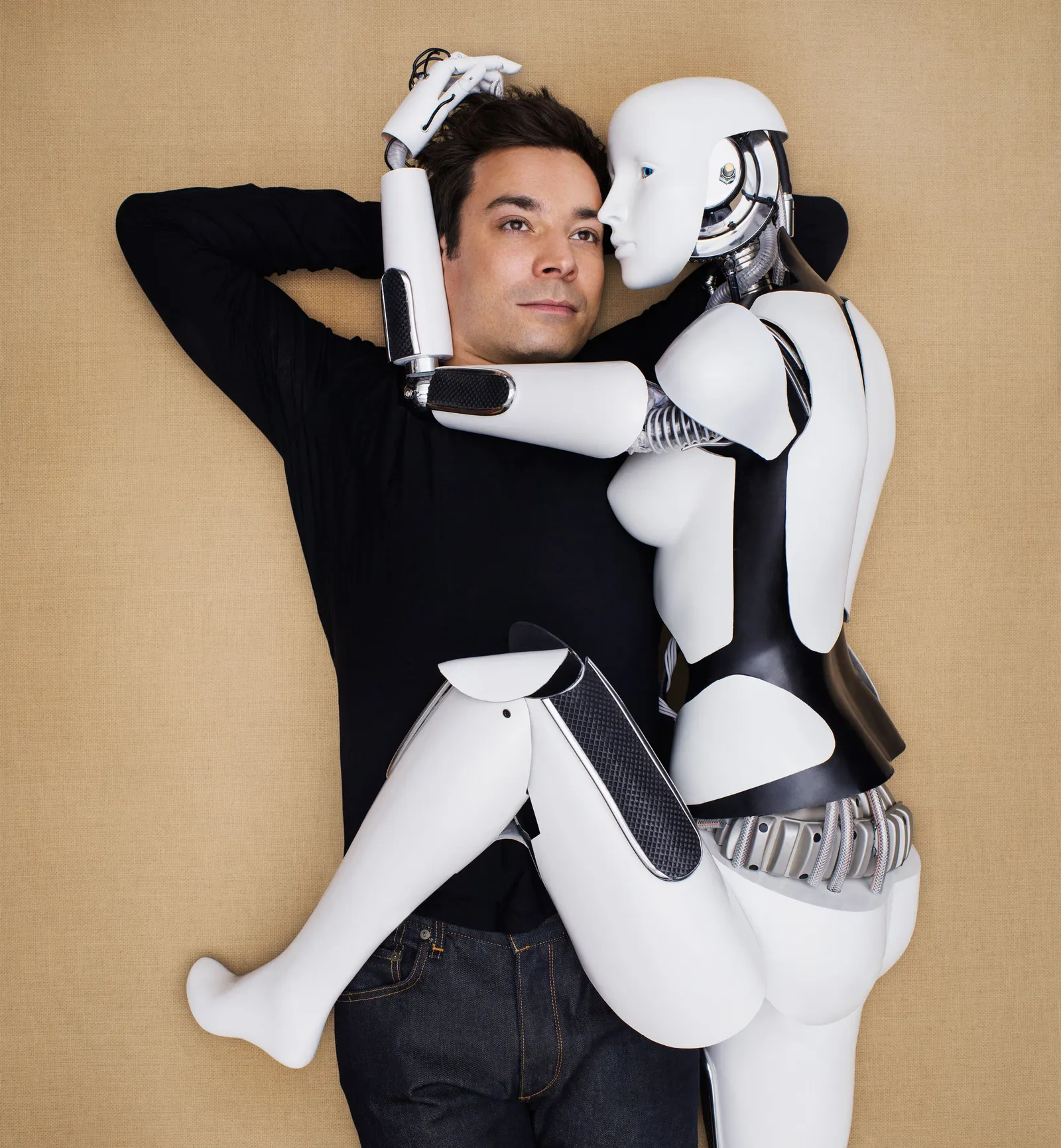
Write an argument in which you summarize Kevin Kelly’s essay “Better than Human” and respond to his essay with your own “I say.” Note that quoting (giving evidence) is a key element in this paper. Your paper should include the following parts.
– Introduction: Your first paragraph should introduce the writer, state the title of the essay and give a brief summary statement about Kelly’s essay. When introducing the writer, make sure you include basic information — a sentence — about Kelly. To find out basic information about Kelly, see the biographical information about him on the first page of his essay. Note that Kevin Kelly identifies as a man. Your introduction should conclude with your thesis: a summary of your “I say” in relation to your “They Say.”
– “They Say”: Write an extended summary of Kevin Kelly’s essay, “Better than Human.” This paragraph should give a more developed summary of Kelly’s essay, making sure that you inhabit the worldview of the author (play the “believing game”). Make sure you use signal verbs and that you use quotes correctly and appropriately. Your introduction and your “they say” sections should together be about 1.5 pages.
– “I Say”: Write your response to the arguments made in Kevin Kelly’s essay, “Better than Human.” You can use additional essays as support for your ideas, or you can include your own ideas. Regardless of how you do it, this section (“I say”) should put forward your own argument in response to Kelly. Make sure you use quotes correctly and appropriately. Make sure you use a direct, no-nonsense formula to signal agreement/disagreement/combination.
– Your paper should end with a short concluding paragraph that includes your “return sentence” and a re-statement of your thesis (do not simply repeat your thesis word-for-word). Your “I say” and your concluding paragraph should together be about 1.5 pages.
[Your Full Name]
[Course Title or Number]
[Instructor’s Name]
[Date – e.g., June 16, 2025]
Introduction
Kevin Kelly is a tech superstar, an executive editor of Wired magazine and one of the brightest minds in the realm of technology, who has always been interested in how human beings can integrate technology into their lives. In the essay Better than Human, Kelly examines how the presence of artificial intelligence (AI) and robotics are growing and highlights that people should not fight this shift, but rather accept it. It is a vision where machines are not taking us over but rather compelling us to grow, to develop and seeking new purpose in co-operation.
When others might be afraid of automation or get intimidated by the capabilities of AI, Kelly is convinced that people will be driven into more creative, complex, and emotionally rewarding jobs as robots will gradually replace the old ones. In this paper, I will summarize Kelly’s major arguments and then respond by both agreeing with his optimism and complicating it: while I share Kelly’s belief in human adaptability, I argue that he underestimates the socioeconomic and ethical risks that come with accelerated automation.
They Say: Kevin Kelly’s Vision of a Robotic Future
In “Better than Human,” Kevin Kelly argues that the emergence of artificial intelligence and robots is not something to be feared but embraced as a necessary and even inspiring next step in human progress. He compares technological advancement to the evolutionary process, where adaptation—not resistance—is the key to survival. “This is not a race against the machines,” Kelly writes. “If we race against them, we lose. This is a race with the machines.” Tedious, repetitive or dangerous jobs can be passed onto robots and humans do more creative, empathetic and intellectual work, is what Kelly perceives as an opportunity in automation.
Kelly explains that, in every case, the technology has destroyed less employment than it has generated, putting to rest the argument that robots may eventually replace all the tasks that humans perform. For example, he notes how the rise of the automobile destroyed the horse-and-buggy industry but gave rise to millions of new jobs in transportation, manufacturing, and urban planning. He argues that machines are best at doing tasks we cannot fully define—those “cognitive” roles that require repetition but not deep understanding—while humans excel in areas requiring intuition, moral reasoning, and flexible thinking.
One of the main points in the essay by Kelly is that the machines will help us to stretch our mental capacity just like calculators help us to process math or Google help us to remember more. Instead of turning us redundant, the technology is only going to compel us to be more human by nudging us to embrace our specific qualities such as empathy, ethics, and creativity.
He gives the example of chess: when the machines proved invincible, there appeared such a game as the centaur chess where people and machines team up and where the best outcomes are achieved when the two engage in cooperation. Ultimately, Kelly calls for a “co-evolution” with technology, one where we train machines, and in doing so, train ourselves into more adaptive, meaningful roles.
I Say: Agreeing, With Caution
It is refreshing to be optimistic, as Kevin Kelly is, in an automation-obsessed and doomsday-obsessed world. I support his main idea: human beings should adjust themselves, not oppose. This is evidenced by history; technological changes have been a driving force in innovation of new forms of creativity and employment. Nevertheless, as Kelly ignores short and medium-term inequalities that disfavor marginalized populations, workers engaged in routine labor, and underwhelmed communities, he is trapped in a cycle of ignorance.
The argument by Kelly that with the invention of more intelligent machines, we should invent different kinds of work that we and only we can do is compelling but the premises are that everyone is able to access education, retraining and opportunities. The truth is that millions of employees in industries such as trucking, manufacturing and retail are at risk of displacement by AI and robotics today and there are no obvious roles to transition into.
The vision of utopia that Kelly sees can someday become real, yet the path heading towards it might be littered with financial disparities and social upheavals. As economist Daron Acemoglu warns, automation that prioritizes profit over shared prosperity can lead to “jobless growth,” where productivity rises but wages and employment stagnate.
Moreover, Kelly’s faith in “co-evolution” overlooks how AI is often developed and deployed without democratic oversight. Many powerful AI systems are created by corporations that prioritize market value over ethical considerations. Facial recognition software, biased algorithms, and surveillance tech are all examples of tools that may increase efficiency but harm civil liberties. If we are to race with machines, as Kelly suggests, then we must also regulate the direction of that race—something his essay does not adequately address.
That said, I agree with Kelly’s emphasis on human uniqueness. However intelligent an automatized system will be, it will never possess empathy, moral sense, and emotional intelligence. Care-giving, story telling and cross-cultural awareness jobs will probably continue to be careers of man and not machines in the long term. Still, to step into Kellys future, we require no more than inspiration, but also policies that will guarantee equitable transition, educational systems promoting lifelong learning, and ethical frameworks of technology development. The right to work with machines and collaborate with the rest is not supposed to be a privilege of a privileged few, this needs to be a right that everyone enjoys.
Conclusion
I support Kevin Kelly in his views as revealed in Better than Human as a firm sense of ability and human creativity; a belief in future co-evolution between human and machine and the general belief that things change through human diligence and invention. But this vision can only succeed when we must also deal with the very real threats to inequality, displacement, and unrooted technological progress.
Do robots force us to be more human? Yes, but only when we take an active role in defining the world in which we live and robots assist us in creating it. Allowing AI to help humanity to the full extent of its own potential means not only being ready to innovate but also insisting that innovation works towards greater human good.
Delivering a high-quality product at a reasonable price is not enough anymore.
That’s why we have developed 5 beneficial guarantees that will make your experience with our service enjoyable, easy, and safe.
You have to be 100% sure of the quality of your product to give a money-back guarantee. This describes us perfectly. Make sure that this guarantee is totally transparent.
Read moreEach paper is composed from scratch, according to your instructions. It is then checked by our plagiarism-detection software. There is no gap where plagiarism could squeeze in.
Read moreThanks to our free revisions, there is no way for you to be unsatisfied. We will work on your paper until you are completely happy with the result.
Read moreYour email is safe, as we store it according to international data protection rules. Your bank details are secure, as we use only reliable payment systems.
Read moreBy sending us your money, you buy the service we provide. Check out our terms and conditions if you prefer business talks to be laid out in official language.
Read more