
Diversity in family systems is a critical concept for students of human resources, sociology, and education to understand. Families are the first social context in which individuals develop values, emotional intelligence, and interpersonal skills—traits that later influence organizational behavior and workplace relationships. However, not all families are the same. Some are shaped by nurturing support systems, while others navigate serious structural and socioeconomic challenges. These differences create diverse life experiences that people inevitably bring into the professional sphere.
The family is a natural social system which is in various forms in different parts of the world. It is very much ingrained in any society influenced by the cultural, religious, and historical factors. It may be a nuclear, an extended family, a single-parent family or a blended family, but the structure does not only mirrors personal choices, but rather the values of a society (Bronfenbrenner, 1979). To HR professionals, it becomes a critical knowledge in coming up with inclusive policies at workplace that take into consideration different culture heritages and family requirements.
The second strong feature of African American family structure lies in the fact that the concept of family is defined in a broad term. Such families are usually composed of the network of mothers, fathers, children, extended families, close friends, and members of the community. The network is supportive in terms of: providing emotional, financial and social support particularly when faced with crisis (Hill, 1972). Employees of such family setups may appreciate teamwork, helping and embracing the community- fair attributes that will enrich the working dynamics of employees. StudyCreek.com resources may assist students with writing their essays or dissertations that examine familial systems in terms of cultural resilience.

Human beings in families do not simply live together; there is an intricate emotional, psychological, and social relationship connected between the people in a family. These strong roots can encourage commonality, loyalty, and stability but could lead to stress or tension during times of family direness. Knowledge of this connectivity is essential to the HR students who in future will be required to deal with employee wellness, family leave, policies and work life balance initiatives.
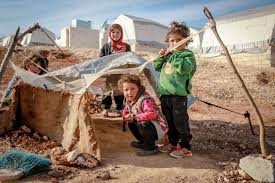
Among the most heartbreaking realities, one must say that nonwhite minorities, single mothers, children of under the age of 18, and the elderly people are the most vulnerable aspects to being poor (U.S. Census Bureau, 2023). Such groups will also experience higher structural obstacles like disparity in access to healthcare, education, and employment opportunities. The HR professionals should be careful when ensuring that issues of social-economic status affect the performances of the employees and the opportunities available to them.
It can be significantly changed by establishing fair recruitment policies, salary scale, and employee benefits. There are such socioeconomic dynamics that are interesting to be explored in an essay format or during a capstone project and students can find all the assistance they need in their professional activities with DissertationHive.com.
The four insights surrounding the nature of families, cultural strengths, emotional connections, and systemic inequities provide the students with a down-to-earth perspective regarding the combination of family life and professional growth. Educators, HR leaders and policymakers of the future should realize the wealth and accompanying challenges of family diversity, to establish inclusive, caring and resilient workplace. You can advance your learning and academic writing to new heights by tapping into our professional network of professional writers over at StudyCreek and DissertationHive; your guide to being a successful academic writer.
SAMPLE QUESTION
7. A _________ is a natural social system that occurs in a wide variety of forms and represents different cultural heritages.
☐ family
☐ monarchy
☐ hierarchy
☐ none of these apply
8. African American family members are often made up of__________
☐ mothers, fathers, children, and a wide network of kin, close friends, and community members
☐ nephews and nieces only
☐ neighbors only
☐ none of these apply
9. People in families are intimately _______.
☐ ignored
☐ connected
☐ forgotten
☐ none of these apply
10. The people most vulnerable to living in _______ are nonwhite minorities, single mothers, children under 18 and the elderly.
☐ wealth
☐ poverty
☐ mansions
☐ none of these apply
ANSWER
Title: Family Diversity and Social Realities: 4 Critical Insights HR Professionals Must Understand
Name:
Course: Human resource management and society
The name will be [Insert Instructor in Capital letters]
Date:
In a changing environment of Human resource management, it is important to know how families are diverse and what are the dynamics of these family systems. Every person is brought up in a family setting which determines their values, mode of communication, and resilience which will help determine his/her behavior in the workplace and in his/her expectations. Not only are the HR professionals required to identify family systems as cultural building blocks but also to learn the social realities, both enabling and tasking, that influence the work force.
This essay discusses four important concepts; family as a social structure, the African American family systems, family emotional relationships, and poverty among the vulnerable populations. All of them hold valuable lessons to HR students and future practitioners who want to make their work environments inclusive, equitable, and supportive.
A family is a natural social system that occurs in numerous forms and reflects diverse cultural heritages. It is the first social unit where individuals learn about roles, responsibilities, norms, and emotional connections (Bowen, 1978).
Unlike other institutions like monarchies, hierarchies, which in most cases are forced institutions, family develops well through time and varies depending on colonial, social and economic environment that it inhabits.
To Human Resource students, the concept is essential when developing benefits or welfare structures to employees. As an example, HR policies have to be sensitive to various forms of family units nowadays, such as a sole parent family, a family of LGBTQ+ people, and multigenerational families. The acknowledgment that there are numerous forms of the concept of family other than the classic nuclear one enables organizations to be more accommodating to what relevant to employees in real life.

The African Americans have a tendency to have mothers, fathers, children, and a huge circle of relatives, friends, and neighbors (Hill, 1972). The deep-seated resilience and group-survival tactics that this extended structure displays is particularly apparent as the desired reaction to systemic discrimination as well as economic distress.
It is important that HR professionals know about this expanded definition of family. It tells us why people of such backgrounds could be more concerned with community activities, be more responsible in taking care of non-immediate family members, or attach greater importance to team spirit and mutual help. Universal leave policies, inclusive terms of work and culturally competent staff
respect can emanate through the consideration of these family commitments in the assistance programs (EAPs).
Overlooking such structures can push away good employees or even cause inequity. Rather, HR policies must recognize that what happens in the lives of the employees outside the scope of work severely impacts their productivity and involvement in the workplace.
Members of a family are closely linked together; this is on an emotional, psychological, and social level. This kind of connectedness creates a support and identity but may create an added complexity when family structures are pressurized (Walsh, 2003). The principle of emotional connectivity provides HR professionals with an insight into employee behavior, especially when such employees are in a personal crisis, e.g. when they have an illness in the family, in the case of divorce, or when they face difficulties with caregiving.
HR leaders ought to promote such work culture with flexibility and compassion. To give an example, employee attachment can contribute to separation anxiety when returning to work and needs after parental or a part of the time off or they can pursue work-life balance that can enable them to keep a hand in caregiving.
Also, emotional intelligence and conflict training can help managers interpret personal problems as performance and vise versa. The respect to the fact that the person has both personal and professional life is the main point of contemporary human-oriented HR practice.
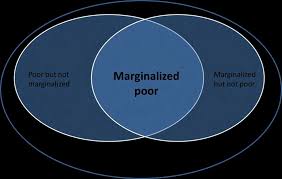
Among the saddest, yet the most important facts, there is the reality that the nonwhite minorities, single mothers, children under the age of 18, and the elderly, are most susceptible to poverty (U.S. Census Bureau, 2023). Poverty determines the rate of education, nutrition, health, shelter, and employment, which are among the key contributors to employability and working efficiency.
The students of HR need to know how the systemic inequality influences the composition and behavior of the workforce. The European Union also requires equity-based practices to be developed around hiring policies, training programs, as well as compensation practices to overcome such disparities. Example, in order to alleviate some of these challenges that these vulnerable groups of people have, employers can provide scholarships, professional advancement among the poor workers, childcare, and equitable payment standards.
Moreover, DEI (Diversity, Equity, and Inclusion) efforts should be made cognizant of such issues. Poverty-stricken workers can come with tremendous persistence and spirit, as well as with higher levels of burnout or dealing with financial pressure. Providing financial wellness solutions, mental health support, and impartial promotion opportunities are some of the contributions to more equal corporate culture.
Appreciation of the complexities regarding family diversity in sociology is not merely a requirement to HR professionals, but it is part of their official obligation. Considering family as a natural and adaptive type of social system and realizing the communal power of African American families, the emotional bonding in families, and social and economic weakness in lower statuses of certain groups, all those facts take part in creating equity and inclusion HR strategy.
The workforce becomes more diverse, and HR students should be prepared to identify and address these family-related facts in their understanding and sensitivity as well as in their strategic approach. By utilizing this information, emerging HR leaders will be in a position to establish workplaces that promote the overall well-being of employees, minimize structural obstacles, and also improve the performance of the organization.
Bowen, M. (1978). Clinical application of family therapy. Jason Aronson.
Hill, R.B. (1972). The Black Family Strengths. Emerson hall publishers.
U.S. Census Bureau. (2023) Income and poverty in the United States: 2022.
https://www.census.gov/library/publications/2023/demo/p60-279.html
Walsh, F. (2003). Family resilience: A model of clinical practice. Family Process, 42(1), 1-18. https:// doi: 10.1111/j.1545-5300. 2003.00001.x
Delivering a high-quality product at a reasonable price is not enough anymore.
That’s why we have developed 5 beneficial guarantees that will make your experience with our service enjoyable, easy, and safe.
You have to be 100% sure of the quality of your product to give a money-back guarantee. This describes us perfectly. Make sure that this guarantee is totally transparent.
Read moreEach paper is composed from scratch, according to your instructions. It is then checked by our plagiarism-detection software. There is no gap where plagiarism could squeeze in.
Read moreThanks to our free revisions, there is no way for you to be unsatisfied. We will work on your paper until you are completely happy with the result.
Read moreYour email is safe, as we store it according to international data protection rules. Your bank details are secure, as we use only reliable payment systems.
Read moreBy sending us your money, you buy the service we provide. Check out our terms and conditions if you prefer business talks to be laid out in official language.
Read more