
In today’s competitive workplace, employee motivation is not just a nice-to-have—it’s a strategic imperative. For HR students studying motivational theories, Flight 001 offers an engaging real-world case. Using insights from the Motivating Employees transcript, this article analyzes critical employee motivation gaps at Flight 001 through the lens of Maslow’s Hierarchy of Needs, Expectancy and Equity Theories, and Herzberg’s Two-Factor Theory. Students and professionals looking to master practical HR strategies can explore more at StudyCreek.com and get personalized academic help at DissertationHive.com.
Maslow’s theory breaks down human motivation into five key needs: physiological, safety, belongingness, esteem, and self-actualization. Shank’s former boss really dropped the ball on a few of these—especially when it came to esteem and belongingness. There was no recognition or respect for individual contributions, which created a toxic atmosphere where employees felt undervalued. Plus, the lack of teamwork stifled trust and connection among the staff.
To turn things around, Flight 001’s leadership should implement employee recognition programs, encourage inclusive team-building activities, and provide regular feedback that highlights achievements. By addressing these needs, they can help rebuild trust and inspire employees to engage more fully in their roles.
Expectancy Theory argues that motivation is driven by the belief that effort leads to performance and performance leads to reward. Equity Theory, on the other hand, emphasizes fairness in reward distribution.
If the folks at Flight 001 feel like they’re not being paid enough, it could lead to them putting in less effort, becoming disengaged, or even looking for jobs elsewhere. They might feel there’s a mismatch between what they contribute and what they earn compared to their colleagues.
To tackle this, managers need to create a sense of fairness by carrying out clear pay audits, making necessary adjustments to salaries, and ensuring that performance is directly tied to meaningful rewards. Even things like promotions, awards, or a simple shout-out can go a long way in making employees feel appreciated and treated fairly.
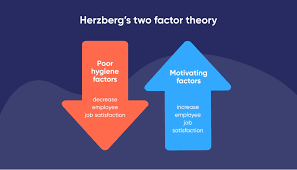
Herzberg’s theory breaks down factors into hygiene elements (which help avoid dissatisfaction) and motivators (which encourage satisfaction). From what employees are saying, it looks like several hygiene factors at Flight 001 are being addressed:
While these measures can help reduce dissatisfaction, they don’t always spark motivation. Motivating factors like recognition, opportunities for advancement, and engaging work are somewhat limited. One potential motivator is job variety, where team members take on different roles, but it’s not being utilized to its full potential.
To genuinely enhance motivation, Flight 001 should focus on offering career development opportunities, creating pathways for personal growth, and assigning meaningful responsibilities that allow team members to see the impact of their work.
The challenges surrounding employee motivation at Flight 001 highlight deeper organizational issues that HR students need to grasp. When psychological needs aren’t met or fairness is absent, performance tends to decline. To see these theories in action and receive expert academic support, check out StudyCreek.com or get personalized help at DissertationHive.com.
Flight 001’s experience illustrates that when organizations prioritize motivation, they not only boost morale—they pave the way for long-term success.
SAMPLE QUESTION
Title: Analyzing Employee Motivation at Flight 001: A Human Resources Report
Name:
Instructor: [Insert Instructor’s Name]
Course: Human Resource Management
Date:
In the fast-paced world we work in today, grasping what drives employee motivation is key to achieving success in any organization. Take Flight 001, a retail company focused on travel, for instance; it serves as a fascinating example for exploring how motivation theories play out in real life. This report, crafted from a Human Resources consultancy viewpoint, draws on insights from the Motivating Employees transcript to delve into the motivational strengths and weaknesses at Flight 001. We’ll specifically evaluate the organization using Maslow’s Hierarchy of Needs, Expectancy and Equity Theories, and Herzberg’s Two-Factor Theory, and offer some recommendations to boost employee motivation.
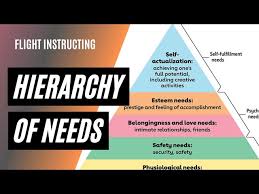
Maslow’s Hierarchy of Needs outlines five levels: physiological, safety, love and belonging, esteem, and self-actualization (Maslow, 1943). From the transcript, it’s clear that Shank’s previous boss didn’t quite meet the needs for belongingness and esteem.
The need for belonging, which encompasses having positive relationships and feeling like part of a team, was clearly unmet due to ineffective leadership and a lack of camaraderie. The atmosphere was described as toxic and overly critical, which really hurt employee unity.
Similarly, esteem needs were also neglected. Shank and his team didn’t receive recognition for their hard work, and leadership failed to acknowledge their contributions. The absence of praise or opportunities for career growth left employees feeling undervalued and demoralized.
To tackle these unmet needs, Flight 001 should focus on fostering a more inclusive culture. Initiatives like team-building activities, mentorship programs, and regular feedback sessions can help strengthen that sense of belonging. Plus, introducing employee recognition programs and creating pathways for leadership development can address esteem needs and boost motivation.
Expectancy Theory, introduced by Victor Vroom, suggests that motivation stems from an individual’s belief that their effort will lead to performance, which in turn will yield a desired reward (Vroom, 1964). If employees at Flight 001 feel they’re underpaid, the connection between their effort and the reward starts to weaken, which can lead to a drop in motivation. They might either lower their performance or mentally check out from their jobs.
Equity Theory, proposed by Adams (1965), indicates that employees assess their input/output ratio and compare it with that of others. If Flight 001 associates feel they’re earning less than their coworkers or industry counterparts, they may perceive this as unfair treatment, which can breed resentment or even lead to turnover.
To boost motivation, managers need to focus on making rewards fair and visible. Regularly checking salary benchmarks and providing performance-based bonuses can really help level the playing field. Plus, being open about promotion opportunities and how performance ties into pay can enhance employees’ expectations.
Herzberg’s Two-Factor Theory divides workplace elements into hygiene factors (which help avoid dissatisfaction) and motivators (which encourage satisfaction) (Herzberg, Mausner, & Snyderman, 1959).
From the transcript, it seems that several hygiene factors are being met at Flight 001:
Workplace Design and Culture: Employees have positive things to say about the store’s layout and engaging design. A well-organized and inviting physical space helps keep dissatisfaction at bay.
Interpersonal Relationships: Team members appreciate their coworkers, showing that strong peer relationships are in place—a key hygiene factor.
Organizational Policies: Flight 001’s business model promotes autonomy and trust, indicating a level of employee empowerment that contributes to a sense of fairness and consistency in company policies.
On the flip side, motivator factors seem to be lacking:
Recognition: There’s not much evidence of formal recognition for high performance, which is crucial for fostering intrinsic motivation.
Growth and Advancement: Employees haven’t mentioned any opportunities for promotion or skill development, which suggests a gap in career growth incentives.
When it comes to the work itself, the retail environment can be quite appealing, especially for those who love to travel. However, there’s definitely room for improvement in how individual roles connect with personal goals and achievements.
To make things better, Flight 001 should consider rolling out individual development plans, introducing performance-based rewards, and offering constructive feedback. It’s also important for managers to hand over more responsibilities and celebrate both the little victories and the big milestones.
Flight 001 paints a somewhat mixed picture of employee motivation. While the company excels at fostering a friendly and enjoyable workplace, there are still some deeper psychological needs—like recognition, fairness, and self-esteem—that aren’t being fully addressed. By leveraging Maslow’s Hierarchy, Expectancy and Equity Theories, and Herzberg’s Two-Factor Theory, managers can pinpoint practical steps to boost morale and productivity.
HR students can gain valuable insights from this case, especially regarding how traditional motivation theories remain relevant in today’s retail landscape. For those looking to explore real-world HR situations further, visiting StudyCreek.com for customized study guides and DissertationHive.com for personalized writing assistance is highly recommended.
Adams, J. S. (1965). Inequity in social exchange. In L. Berkowitz (Ed.), Advances in Experimental Social Psychology (Vol. 2, pp. 267–299). Academic Press.
Herzberg, F., Mausner, B., & Snyderman, B. B. (1959). The motivation to work (2nd ed.). Wiley.
Maslow, A. H. (1943). A theory of human motivation. Psychological Review, 50(4), 370–396. Vroom, V. H. (1964)Work and Motivation. Wiley.
Delivering a high-quality product at a reasonable price is not enough anymore.
That’s why we have developed 5 beneficial guarantees that will make your experience with our service enjoyable, easy, and safe.
You have to be 100% sure of the quality of your product to give a money-back guarantee. This describes us perfectly. Make sure that this guarantee is totally transparent.
Read moreEach paper is composed from scratch, according to your instructions. It is then checked by our plagiarism-detection software. There is no gap where plagiarism could squeeze in.
Read moreThanks to our free revisions, there is no way for you to be unsatisfied. We will work on your paper until you are completely happy with the result.
Read moreYour email is safe, as we store it according to international data protection rules. Your bank details are secure, as we use only reliable payment systems.
Read moreBy sending us your money, you buy the service we provide. Check out our terms and conditions if you prefer business talks to be laid out in official language.
Read more