Reports of movie theaters’ death have been greatly exaggerated—but they’re definitely on life support. The industry that once dominated entertainment is now competing against an enemy that offers the ultimate value proposition: watching movies in your underwear without paying $15 for popcorn. It’s like trying to sell ice to Eskimos, except the Eskimos have Netflix.
Netflix did not only modify the way we watch movies, but they have altered when, where, and what we watch. They made binge-watching not a bad habit, but a phenomenon. Their strategy? Make theaters irrelevant by making home viewing irresistible.
Disney+ weaponized childhood memories and Marvel obsessions. They didn’t just launch a streaming service—they launched an emotional assault on your wallet. When they began dropping big movies straight on streaming, theaters were the non-invited to the party friend.
Amazon’s approach is beautifully simple: bundle video streaming with free shipping and call it a day. They’re not just competing for your entertainment budget—they’re competing for your entire lifestyle.
HBO Max positioned itself as the sophisticated choice for discerning viewers. They’re the streaming service that went to film school and won’t let you forget it.
Apple TV+ has limitless funds and top quality productions. They are the new kid on the block who arrives dressed like he/she just stepped out of Vogue and everyone feels naked.
Cinema theaters did not die, they are changing. The pandemic instead heightened the processes that already took place: the adoption of the shorter theatrical windows, day and date releases, and the growth of the premium home viewing services. Nonetheless, theaters have what streaming does not: interaction and cinema immersion.
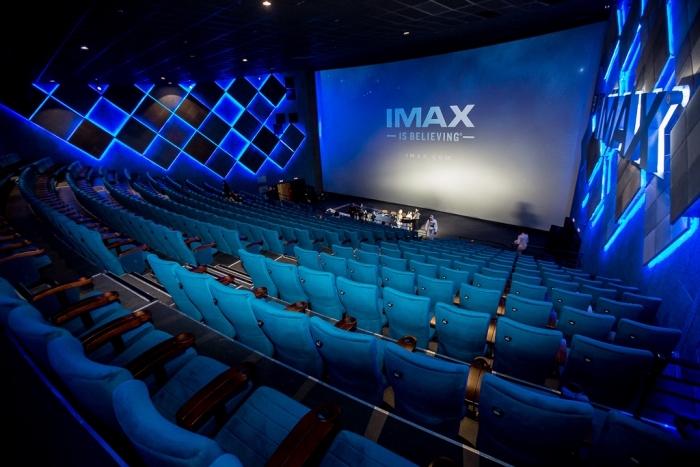
Theaters are shifting towards production of experiences and not showing movies. With IMAX, 4DX, plush recliners, and dine-in theaters, the way of watching a movie becomes not consumption, but experience. It is the difference of transforming your Honda Civic into a Tesla, all the same purpose, all the different experience.
AMC’s A-List and Regal’s Unlimited programs offer subscription models that compete directly with streaming prices. The message? For the price of one streaming service, you can see unlimited movies in theaters.
Special viewing, film festivals, and live events (sports, music concerts and gaming tournaments) diversify revenue. Theaters are no longer movie venues but entertainment venues.
The customer experience is enhanced through mobile ordering, reserved seating, as well as, stronger concession offerings. You can not surpass streaming convenience, at the least, stay par.
Cooperation on exclusive releases with studios and long windows introduces the sense of urgency. The lack of fear to miss out is an excellent motivator.
Survival of the movie theater industry will be possible only through the redefinition of value propositions. They are not selling movie tickets, they are selling experiences you can not get at home.
For marketing students analyzing this entertainment industry battle, resources like StudyCreek provide comprehensive frameworks for disruption analysis. For specialized research support, DissertationHive offers academic assistance. Additional help is available through StudyCorgi, EssayPro, EssayShark, and Edusson.
Movie theaters serve as a self-reinforcing lesson about the fact that it is not simply about survival by adapting, but it is more about adapting and staying relevant in a dynamic world which keeps on changing the rules.
What strategic actions do you propose for theater operators to increase the appeal of the theater setting to attract the audiences needed for improved performance under existing industry conditions?
Tactical Marketing Decisions on Theater Operators: Improving Appeal in a Shifting Industry
Student Name
Course Title
Instructor’s Name
Date
Institution
Emerging consumer habits, digital streaming, and post-pandemic changes in the way people consume entertainment have posed a big challenge to the traditional theater business in the past few years. Operators of theaters need to use new marketing techniques to stay afloat and mobile and attract more visitors to their places. The present paper addresses various moves that are capable of rejuvenating the theater environment and enhancing its popularity under current business circumstances.
Contemporary customers keep themselves attracted to the products that would provide beyond the basic product. To give them an advantage, theater operators may separate themselves by providing immersive and unforgettable views, which cannot be achieved at home. To give an example, luxury seats, fine food concession, thematic evenings, and pre-theater fun can turn the moviegoing experience into a social and sensual adventure (Pine & Gilmore, 1998). By branding theaters as experience places of interest, they will be able to reach to entertainment lovers and lifestyle minded audiences.
To make them more relevant and motivate interest, theater chains are advised to use analytics of customer data in targeted marketing. The high-value behaviour can be captured by the operators through loyalty programs, app-based ticketing, and online profiles. This information can be used to make individual promotions, movies suggestions, and message schedules. Research proves that personalization enhances satisfaction in consumers and their likelihood of visiting a place (Kotler & Keller, 2016). Easy access to tickets or discounts to the favorite genre of the patron is also an example of such behavior, which creates loyalty and improves the customer experience.
Theaters can be connected with local businesses, schools, and cultural organizations to strengthen their relationship with the communities once again. Charity screenings, student film nights, and educational matinees are good motivators of local interaction and attract different groups of people. Besides, the theaters should partner with streaming solutions to release exclusive theatrical releases and become the sole location where one can access the best content (Johnson, 2022). Cost-sharing and joint promotion Cost-sharing and joint promotion can be done as well through strategic alliances which increases the scope of marketing.
Today, consumers move in physical and virtual environments in quest of entertainment. Operators of theaters should employ the omnichannel strategy of expanded connection between online and offline channels. This encompasses mobile-friendly websites, online reservation, real-time seat reservation, social media marketing, and influencers collaborations. Not only does digital integration increase convenience, but also creates brand awareness in a new generation where speed and access are a priority (Smith & Zook, 2016).
Lastly, movie houses must consider diversified programming to target a niche population and foot traffic. Beside popular movies, the shows might feature live performances of concerts, Esports events, TED-like talks or local film festivals. Occurrences corresponding to the interest or the community trends contribute towards the creation of a cult following and diverse consumers. In the era of increasing competition between streaming and other platforms, the key differentiators can be seen in content and having something unique and exclusive (PwC, 2023).
With the constantly changing entertainment industry, standard theaters have to be creative to stay afloat. With experiential value, data for personalization, localized partnership, digital approach, and content diversification, theatre operators can reclaim the cognitively divided audiences of this day and age. Such marketing strategies provide a guide to sustainable growth and enhanced performance in a very competitive industry.
Johnson, M. (2022). Cinema’s Comeback: The New Role of Exclusive Theatrical Releases. Entertainment Weekly Press.
Kotler, P., & Keller, K. L. (2016). Marketing management (15th ed.). Pearson Education.
Pine, B. J., & Gilmore, J. H. (1998). Welcome to the experience economy. Harvard Business Review, 76(4), 97–105.
PwC. (2023). Global Entertainment & Media Outlook 2023–2027. PricewaterhouseCoopers.
Smith, P. R., & Zook, Z. (2016). Marketing communications: Integrating offline and online with social media (6th ed.). Kogan Page Publishers.
Delivering a high-quality product at a reasonable price is not enough anymore.
That’s why we have developed 5 beneficial guarantees that will make your experience with our service enjoyable, easy, and safe.
You have to be 100% sure of the quality of your product to give a money-back guarantee. This describes us perfectly. Make sure that this guarantee is totally transparent.
Read moreEach paper is composed from scratch, according to your instructions. It is then checked by our plagiarism-detection software. There is no gap where plagiarism could squeeze in.
Read moreThanks to our free revisions, there is no way for you to be unsatisfied. We will work on your paper until you are completely happy with the result.
Read moreYour email is safe, as we store it according to international data protection rules. Your bank details are secure, as we use only reliable payment systems.
Read moreBy sending us your money, you buy the service we provide. Check out our terms and conditions if you prefer business talks to be laid out in official language.
Read more