Discover the different types of research designs in social science, when to use them, and how to choose the right one for your academic success.
Social science is more than just studying people — it’s about understanding society, behavior, culture, politics, and interactions. To carry out effective social science research, choosing the right research design is essential.
From sociology to psychology and anthropology to political science, students often struggle with the question: “Which research design should I use, and when?” That’s exactly what this article answers — in a friendly, detailed, and practical way.
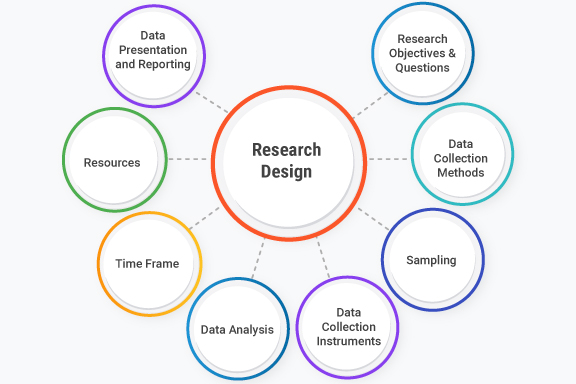
A research design is the structured plan a researcher follows when collecting, analyzing, and interpreting data. It acts as a roadmap for your entire study. According to APA guidelines, a good research design ensures that the evidence obtained enables you to effectively address the research problem logically and as unambiguously as possible.
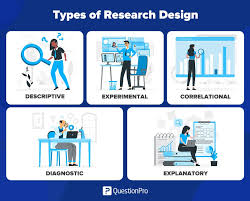
These are used when you want to measure or quantify variables and test relationships using numerical data.
Purpose: Describe trends or characteristics.
Example: A study on unemployment rates among recent graduates.
When to Use: Early stages of research, surveys, or when analyzing secondary data.
Purpose: Measure the relationship between two variables.
Example: The relationship between screen time and depression.
When to Use: When exploring associations without implying causation.
Purpose: Establish cause and effect through manipulation and control.
Example: Testing whether an anti-bullying program reduces violence in schools.
When to Use: In tightly controlled environments with random assignment.
Purpose: Similar to experimental but without full control or randomization.
Example: Studying the effect of school feeding programs on attendance.
When to Use: When full control is unethical or impossible.
These focus on understanding people’s experiences, emotions, and meanings.
Purpose: Deep dive into a single case.
Example: Analyzing a political leader’s rise to power.
When to Use: When rich, detailed insights are needed.
Purpose: Study cultures and societies via immersion.
Example: Living among nomadic tribes to study their family structure.
When to Use: When you want to understand culture from the inside.
Purpose: Explore lived experiences.
Example: Examining how survivors experience post-traumatic growth.
When to Use: When focusing on individual perceptions and meanings.
Purpose: Build new theories from the ground up using data.
Example: Exploring why students drop out of university to create a model.
When to Use: When no pre-existing theory explains a phenomenon.
These combine both qualitative and quantitative methods to give a fuller picture.
Steps: Quantitative first, then qualitative.
Example: Survey students about mental health, then interview a few.
Best For: Explaining statistical results more deeply.
Steps: Qualitative first, then quantitative.
Best For: Developing tools, theories, or hypotheses.
Steps: Both at the same time.
Best For: Validating findings across two data types.
Your Research Question: Is it “what,” “why,” or “how”?
Data Availability: Can you collect large samples or just interview a few people?
Time & Budget: Quantitative may require more resources.
Ethical Considerations: Can you randomly assign people to conditions?
Institutional Requirements: Check your university or department rules.
| Study Title | Ideal Design | Why? |
|---|---|---|
| “Effects of social media on teenage sleep” | Correlational | Measures relationship |
| “How cultural beliefs affect childbirth in Kenya” | Ethnographic | Requires cultural immersion |
| “Gender bias in hiring among HR managers” | Experimental | Allows manipulation of resumes |
| “Understanding peer pressure among first-year students” | Case Study or Grounded Theory | Needs depth |
Research Design Decision Trees (Search on ResearchGate or Academia.edu)
Choosing a design before defining a research question.
Using qualitative tools in a quantitative design.
Failing to justify their design choice in proposals.
Copy-pasting designs from past papers without tailoring to topic.
Free Download: Research Design Planner for Students – PDF
Includes checklists, timelines, and design comparison charts!

1. What is the easiest research design to use as a student?
Answer: Descriptive research is often considered the easiest. It involves collecting information through surveys or observations without manipulating variables. It’s ideal for beginners because it focuses on “what is” rather than “why” or “how.”
2. Can I mix qualitative and quantitative in one project?
Answer: Yes, that’s called a mixed-methods design. It allows you to explore a topic in depth and also quantify it. This approach provides a more complete picture of your research problem.
3. What’s the difference between case study and ethnography?
Answer: A case study focuses on a specific individual, group, or event, while ethnography immerses the researcher in a culture or social setting for an extended time. Ethnography is broader and more culturally focused.
4. When should I use a phenomenological design?
Answer: Use phenomenology when you want to explore how people experience a specific event or situation, such as grief, trauma, or spiritual awakening.
5. Is experimental research suitable for all social sciences?
Answer: Not always. Experimental research works best in psychology or education, where variables can be controlled. It may not suit fields like anthropology or sociology that deal with complex social systems.
6. How do I know if my research is descriptive or explanatory?
Answer: If your goal is to describe what exists (e.g., how many students use e-books), it’s descriptive. If you’re explaining why something happens (e.g., why students prefer e-books over textbooks), it’s explanatory.
7. What software can I use to analyze qualitative data?
Answer: NVivo, ATLAS.ti, and MAXQDA are excellent for analyzing interviews, transcripts, and open-ended survey data. They help you code, categorize, and identify themes.
8. Can I use secondary data in a correlational study?
Answer: Yes, as long as the data includes the variables you want to compare. Many students use data from sources like World Bank, KNBS, or government databases for this.
9. How do I cite a research design in APA format?
Answer: You don’t cite the design itself, but you can cite sources that explain or justify it. For example:
Creswell, J. W. (2014). Research Design: Qualitative, Quantitative, and Mixed Methods Approaches.
10. Is it okay to change my design halfway through the project?
Answer: It’s possible, but not recommended unless absolutely necessary. If you must, clearly document the reason for the change and consult your supervisor.
11. How do I write a justification for my chosen design?
Answer: Explain how your research question aligns with the design, cite academic sources, and mention practical reasons like time, ethics, and data availability.
12. What does triangulation mean in mixed-methods?
Answer: Triangulation is using multiple methods or sources to validate findings. For example, combining survey results with interview data to strengthen your conclusions.
13. How do I avoid bias in qualitative research?
Answer: Be reflexive (acknowledge your own biases), use multiple data sources, and allow participants to review your interpretations if possible.
14. Can I use a survey in a qualitative study?
Answer: Yes, but only if the survey includes open-ended questions. These allow participants to share detailed responses rather than just choosing from fixed options.
15. What makes grounded theory different from other designs?
Answer: Grounded theory develops a new theory from the data itself, rather than starting with a hypothesis. It’s useful for under-researched or emerging topics.
16. What should I include in my research design chapter?
Answer: Include your research questions, design type, justification, data collection methods, sampling technique, ethical considerations, and analysis plan.
17. Is it necessary to pretest my survey tool?
Answer: Yes! A pilot test helps you identify confusing questions, measure timing, and adjust for clarity before collecting actual data.
18. What if I can’t randomly assign participants?
Answer: Use a quasi-experimental design, which allows for comparisons even without random assignment. Just make sure to account for possible bias in your analysis.
19. Are case studies considered weak research?
Answer: Not at all. Case studies offer depth and rich insights. They are especially respected when properly designed and clearly limited in scope.
20. Can I publish research done with a simple design?
Answer: Yes. As long as your design matches your research goals, is ethically sound, and contributes new insights, even simple descriptive studies can be published.
21. What is theoretical sampling?
Answer: It’s a method in grounded theory where you choose participants based on emerging findings, not fixed criteria, to help build your theory.
22. How do I choose between exploratory and explanatory research?
Answer: Choose exploratory when your topic is new or unclear. Go for explanatory when you already have a theory or model and want to test or explain it.
23. What ethical approvals do I need for field research?
Answer: You typically need approval from an ethics review board (IRB or ERC). This ensures participant safety, informed consent, and data confidentiality.
24. Can I use my class project as a published paper?
Answer: Yes, if it meets academic standards and gets supervisor approval. You may need to refine your topic, analysis, and formatting before submission.
25. Where can I get help choosing my design?
Answer: Visit academic support platforms like Study Creek, consult your research supervisor, or check Dissertation Hive for personalized guidance.

Choosing the right research design in social science can make or break your academic project. It’s not just a formality — it’s a foundation for reliable, impactful, and meaningful results. Whether you’re writing your final-year thesis, preparing a proposal, or conducting fieldwork, the right design ensures your work stands out and meets academic standards.
Need help? Don’t hesitate to visit Study Creek for guidance, or reach out to Dissertation Hive for custom research mentorship. You’re not alone on this journey — and now you’re one step closer to a solid, successful research paper!
What are the different types of research designs used in social science, and when are they appropStudent Academic Details
(Kindly fill in the fields below)
Name: ________________________________________
Student ID: ___________________________________
Course Title/Unit: _____________________________
Lecturer’s Name: ______________________________
Department: ___________________________________
Institution/University: _________________________
Date of Submission: ____________________________
Assignment Title: _____________________________
Research designs are essential blueprints that guide how social scientists conduct investigations. In social science, where human behavior, societies, and institutions are studied, choosing the right research design determines the quality, relevance, and credibility of the findings. Research designs help answer “how,” “what,” “when,” “why,” and “who” types of questions, and they vary depending on the nature of the study—whether exploratory, descriptive, explanatory, or evaluative.
This paper explores the different types of research designs commonly used in social sciences, including qualitative, quantitative, and mixed-methods designs. It further explains when and why each type is appropriate.
Quantitative research designs are focused on numbers, measurements, and statistics. These designs are most appropriate when the researcher wants to test a hypothesis, measure variables, or establish causal relationships.
Purpose: To describe characteristics of a population or phenomenon.
Example: A survey on voting behavior across age groups.
Tools: Surveys, questionnaires, census data.
When Appropriate: When the goal is to understand “what” exists in a population (e.g., demographic patterns).
Purpose: To examine the relationship between two or more variables.
Example: Investigating the link between education level and income.
Limitations: Cannot determine cause-effect relationships.
When Appropriate: When exploring possible associations (e.g., does stress correlate with job performance?).
Purpose: To determine cause-and-effect relationships.
Features: Random assignment, control and experimental groups.
Example: Studying the impact of a new teaching method on student performance.
When Appropriate: When the researcher can manipulate variables in a controlled setting.
Purpose: Similar to experimental but lacks random assignment.
Example: Comparing academic performance in schools with and without ICT labs.
When Appropriate: When random assignment is unethical or impractical.
Qualitative designs are focused on meanings, experiences, and interpretations. These are suitable for in-depth exploration of social issues where context and human behavior are central.
Purpose: To conduct an in-depth analysis of a single unit (individual, group, institution).
Example: A case study of refugee integration in Nairobi.
When Appropriate: When a detailed, context-specific analysis is needed.
Purpose: To study cultures and communities through immersion and participant observation.
Example: Observing rituals in indigenous Kenyan communities.
When Appropriate: When seeking cultural insights over time.
Purpose: To explore how individuals experience a specific phenomenon.
Example: Experiences of domestic violence survivors.
When Appropriate: When understanding subjective human experiences is the goal.
Purpose: To develop theory based on data collected from participants.
Example: Building a theory of youth unemployment causes from field interviews.
When Appropriate: When the study aims to generate a new theory from qualitative data.
Mixed-methods combine qualitative and quantitative approaches to capitalize on the strengths of both.
Process: Collect quantitative data first, followed by qualitative to explain results.
Example: Survey on teacher burnout followed by interviews to understand causes.
When Appropriate: When you need numbers for scope but also depth for explanation.
Process: Start with qualitative to explore a concept, then use quantitative to test it.
Example: Interviews to discover new learning challenges, then a survey to test their prevalence.
When Appropriate: When concepts are poorly understood or under-researched.
Process: Collect both data types simultaneously and compare findings.
Example: Conducting focus groups and distributing surveys at the same time.
When Appropriate: When aiming for result validation and confirmation through data comparison.
Nature of the Research Problem: Is it exploratory, descriptive, or explanatory?
Availability of Resources: Time, funding, and personnel may determine design choice.
Ethical Considerations: Can you randomly assign participants, or would that be unethical?
Research Objectives: Is the goal to explore, describe, predict, or explain?
Audience and Use of Results: Will the findings inform policy, theory, or intervention?
| Design Type | Nature | Data Type | Strength | Limitation |
|---|---|---|---|---|
| Experimental | Quantitative | Numerical | Causal relationships | Artificial setting |
| Case Study | Qualitative | Descriptive | In-depth detail | Not generalizable |
| Mixed-Methods | Combined | Both | Comprehensive view | Time and resource-heavy |
| Ethnographic | Qualitative | Cultural Text | Cultural immersion | Long-term commitment |
In social science, selecting the correct research design is crucial because it determines the clarity, relevance, and integrity of the study. Each research design—whether qualitative, quantitative, or mixed-method—has its own strengths, limitations, and appropriate use cases. A clear understanding of these types ensures that social science students and researchers approach their investigations in a systematic, ethical, and insightful manner.
Creswell, J. W. (2014). Research Design: Qualitative, Quantitative, and Mixed Methods Approaches (4th ed.). SAGE Publications.
Babbie, E. R. (2020). The Practice of Social Research (15th ed.). Cengage Learning.
Neuman, W. L. (2011). Social Research Methods: Qualitative and Quantitative Approaches. Pearson Education.
Delivering a high-quality product at a reasonable price is not enough anymore.
That’s why we have developed 5 beneficial guarantees that will make your experience with our service enjoyable, easy, and safe.
You have to be 100% sure of the quality of your product to give a money-back guarantee. This describes us perfectly. Make sure that this guarantee is totally transparent.
Read moreEach paper is composed from scratch, according to your instructions. It is then checked by our plagiarism-detection software. There is no gap where plagiarism could squeeze in.
Read moreThanks to our free revisions, there is no way for you to be unsatisfied. We will work on your paper until you are completely happy with the result.
Read moreYour email is safe, as we store it according to international data protection rules. Your bank details are secure, as we use only reliable payment systems.
Read moreBy sending us your money, you buy the service we provide. Check out our terms and conditions if you prefer business talks to be laid out in official language.
Read more