Strategy is at the heart of Julia Robertson’s entrepreneurial journey to finance her final year at Tech University. While leasing a food booth at football games may appear simple, her approach reveals a deeper business model shaped by profit optimization, operational limitations, and financial decision-making. Julia’s initiative presents a compelling case study for students interested in applying real-world concepts such as linear programming, budgeting, and risk analysis. Below, we examine her strategic planning through four critical lenses—offering valuable insights for learners navigating the intersection of academic theory and entrepreneurial practice.
The objective of Julia is to optimize profits, not to violate space, cost and demand. Some of her decision variables involve the amount of pizza slices (P), hot dogs (H) as well as barbecue sandwiches (B) that she can sell. The 16 shelves that the ovens provide (3 ft x 4ft = 1,728 in 2 per shelf) contain per oven cycle 27,648 in 2, or 55,296 in 2 when two ovens are used per game.
Pizza: 14-inch = 154 in² per pizza → 8 slices
Hot dog: 16 in²
Sandwich: 25 in²
Pizza: $6 per pizza ($0.75 per slice)
Hot dog: $0.45
Sandwich: $0.90
Selling prices:
Slice of pizza: 1.50 punch
Hot dog: 1.50
Sandwich: $2.25
Space: Total food space 4 <= 55,296 in square
Budget: less than or equal to 1,500 dollars initial cost
Demand: P H + B, H 2B
Maximize Profit = (1.50 – 0.75)P + (1.50 – 0.45)H + (2.25 – 0.90)B – $1,000 (booth fee) – $100 (oven per game)
This linear programming model can be solved using Excel Solver or any LP software, offering students a hands-on application of classroom theory. For more academic support and advanced linear programming help, visit StudyCreek.com or explore academic consulting at dissertationhive.com.

Julia has 1,500 dollars which will only suffice on her food and equipment requirements in the first game. These funds may enable her to expand her production pipeline and maximize her profits; since she could borrow an extra amount of 300 usd-500 usd. With her future investment in mind, one-time loan with a low interest rate can be a good idea, especially as far as their demand forecasts are possible However, any unexpected downturn (weather, attendance, or supply issues) could increase her financial vulnerability.
Hiring a friend could enhance operational efficiency, especially during the high-traffic prep and selling times. This decision depends on whether the increased speed and service improve sales enough to offset the added $100 expense. If an extra 100 items are sold because of faster service, the investment would likely pay off. Otherwise, it eats into already thin margins.
The model Julia offers is based on forecasted demand, stable attendance rate and business flow. The slightest deviation, e.g. not as many sales as projected, wastage of food or even equipment failure, may result in a huge dip in the profits. The important tools of dealing with such risks are sensitivity analysis and scenario planning. An important concept presented in operations research and finance is the uncertainty modeling. In order to learn more on risks management and optimization models in business, students can refer to professional materials on DissertationHive.com and full-range materials on studyCreek.com.
A Smart Hustle with Real-World Trade-Offs Julia’s business idea blends entrepreneurial grit with academic strategy. Her success depends on balancing cost, capacity, demand, and risk—all areas rich with real-world lessons. This case shows how students can apply theoretical models to practical scenarios, empowering them to make informed decisions—even amid uncertainty.
For students eager to turn their ideas into income or master financial modeling, let StudyCreek and DissertationHive be your academic partners in success.
Below is a sample question:
Julia Robertson is a senior at Tech, and she’s investigating different ways to finance her final year at school. She is considering leasing a food booth outside the Tech stadium at home football games. Tech sells out every home game, and Julia knows, from attending the games herself, that everyone eats a lot of food. She has to pay $1,000 per game for a booth, and the booths are not very large.
Vendors can sell either food or drinks on Tech property, but not both. Only the Tech athletic department concession stands can sell both inside the stadium. She thinks slices of cheese pizza, hot dogs, and barbecue sandwiches are the most popular food items among fans and so these are the items she would sell.
Most food items are sold during the hour before the game starts and during half time; thus it will not be possible for Julia to prepare the food while she is selling it. She must prepare the food ahead of time and then store it in a warming oven. For $600 she can lease a warming oven for the six-game home season. The oven has 16 shelves, and each shelf is 3 feet by 4 feet. She plans to fill the oven with the three food items before the game and then again before half time.
Julia has negotiated with a local pizza delivery company to deliver 14-inch cheese pizzas twice each game-2 hours before the game and right after the opening kickoff. Each pizza will cost her $6 and will include 8 slices. She estimates it will cost her $0.45 for each hot dog and $0.90 for each barbecue sandwich if she makes the barbecue herself the night before.
She measured a hot dog and found it takes up about 16 square inches of space, whereas a barbecue sandwich takes up about 25 square inches. She plans to sell a slice of pizza and a hot dog for $1.50 apiece and a barbecue sandwich for $2.25. She has $1,500 in cash available to purchase and prepare the food items for the first home game, for the remaining five games she will purchase her ingredients with money she has made from the previous game.
Julia has talked to some students and vendors who have sold food at previous football games at Tech as well as at other universities. From this she has discovered that she can expect to sell at least as many slices of pizza as hot dogs and barbecue sandwiches combined. She also anticipates that she will probably sell at least twice as many hot dogs as barbecue sandwiches. She believes that she will sell everything she can stock and develop a customer base for the season if she follows these general guidelines for demand.
If Julia clears at least $1,000 in profit for each game after paying all her expenses, she believes it will be worth leasing the booth.
Instructions
Address each of the issues A-D according to the instructions given.
(A) Formulate and solve a Linear Programming Model for this case.
(B) Evaluate the prospect of borrowing money before the first game.
(C) Evaluate the prospect of paying a friend $100/game to assist.
(D) Analyze the impact of uncertainties on the model.
Below is the answer to the sample question:
Title: Strategic Decision-Making in Student Entrepreneurship: A Linear Programming Approach to Julia Robertson’s Food Booth Venture
Name:
Course:
Instructor:
Date:
In the dynamic learning environments today, it has been the case that students are engaged in entrepreneurial activities so as to sustain their studies. This case study unravels the scenario where Julia Robertson wanted to fund her final year in Tech University by leasing out a food booth outside the football stadium. Her strategy is an interesting chance to use business analytics, financial planning and strategic human resource knowledge. The discussion centers in four broad areas: (A) Linear Programming model development, (B) financing through loans, (C) operational staffing support, and (D) uncertainty management. These factors are not only critical for Julia’s business but also offer lessons for HR students interested in project evaluation, resource allocation, and decision-making under constraints.
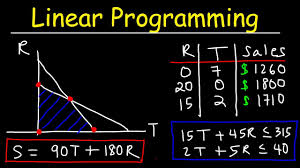
Julia’s goal is to maximize profit while working within space, budget, and demand constraints. Let:
P = number of pizza slices
H = number of hot dogs
B = number of barbecue sandwiches
Costs and Revenues:
Pizza: 1 slice = cost = $0.75 price = $1.50 profit = 1.35
Hot dog = eff 0.45, price 1.50, profit 1.05
BBQ sandwich = 0.90 cost, 2.25 price 1.35 profit
Constraints:
Space constraint:
Space occupied in oven = 16 shelves 3 ft 4 ft 144 in 2 = 27648 in per cycle X 2 = 55296 in 2 used per game
Pizza (14inch): 154 in2
per pizza / 8 slices = 1 / 8 in 2 = 0.156 sq in per slice = 15600 / 8 = 19.25 in 2 per slice
Hot dog = 16 in²
BBQ = 25 in²
So:
19.25 + 16 + 25 ≤ 55 , 296
19.25P+16H+25B≤55,296
Budget constraint:
Pizza: $0.75 per slice
Hot dog: $0.45
BBQ: $0.90
Total food cost + booth fee ($1,000) + oven per-game lease ($100) ≤ $1,500 So:
0.75 + 0.45 + 0.90 + 1100 ≤ 1500 ⇒ 0.75 + 0.45 + 0.90 ≤ 400
0.75P+0.45H+0.90B+1100≤1500⇒0.75P+0.45H+0.90B≤400
Demand constraints:
≥ + P≥H+B (pizza ≥ others)
≥ 2 H≥2B (twice as many hot dogs as BBQ)
Objective Function (Profit):
Maximize:
Profit = 0.75 + 1.05 + 1.35 − 1100
Profit=0.75P+1.05H+1.35B−1100 This model can be solved using Excel Solver or similar tools. For HR students, this represents how analytical tools can support HR and financial decisions in real-world small business settings—applying quantitative methods to human and financial resource allocation.
Julia begins with $1,500 that can hardly cover her start-up expenses. By taking a loan of an extra 300-500 dollars, she will be able to raise inventory and thus be able, maybe, to satisfy demand which allows her to maximize profits.
Benefits:
Enables stocking to oven capacity
Could result in higher sales and customer satisfaction
Allows greater flexibility in supplier options
Risks:
Uncertainty in demand could lead to unsold inventory
Added financial burden if profits are lower than expected
From an HR perspective, financial planning is essential in entrepreneurship. Borrowing may be viable if supported by a reliable demand forecast and contingency plans.
Time constraints are high during peak selling periods. Hiring a friend for $100/game could improve operations by:
Reducing customer wait times
Increasing throughput during critical selling hours
Ensuring product quality and safety compliance
Cost-Benefit Analysis:
If the friend’s help allows Julia to sell at least 70 more units per game (at average $1.00 profit/unit), the additional labor pays for itself.
The additional labor is however a sunk cost in case the volume of sales does not increase.
In HRM perspective, this scenario depicts planning of the workforce, delegation as well as investment in human capital. Julia needs to consider whether introducing an additional team member is going to enhance productivity or wash the margins.
According to the analysis of the impact of the uncertainties (D), the impact of the uncertainties (D) cannot be nullified.
A number of variables may interfere with the model of Julia:
Demand Fluctuations
The audience might influence the crowd size and consumption trends due to weather or gameplay or other events.
Supply Issues
Vendor reliability for pizza delivery or meat availability could impact consistency.
Operational Risks
The equipment of the service might break down, or staff may fall short, or may fall ill.
Pricing Sensitivity
Inflation could imply that customers will not accept higher prices or explore and explore an affordable commodity in the event of the cost of ingredients.
Strategies on Uncertainty Management:
Stock buffer inventory
Diversify alternative supply source
Regular review/ test price and margin
Follow sales trends in order to have better estimates
As regards HR students, it makes the issue of risk management, data-informed planning and fast decision making in business come to the fore. Whether it be an institution, a small or a big corporation or business run by students, it should be dynamic and flexible.

The case of Julia Robertson food booth project is rather the commercial practice-type case, as opposed to (student) hustle-type case.
She must think critically about resource optimization, labor planning, financial decision-making, and uncertainty management. These are fundamental competencies for human resource professionals. By applying strategic thinking and operational planning, Julia can turn her food booth into a successful model of student entrepreneurship.
Additional Resources for HR and Business Students:
For coursework support and project help, visit StudyCreek.com
For personalized guidance and case study writing, explore DissertationHive.com
These platforms offer academic tools, sample models, and expert assistance for students preparing to lead in HR and business management fields.
Delivering a high-quality product at a reasonable price is not enough anymore.
That’s why we have developed 5 beneficial guarantees that will make your experience with our service enjoyable, easy, and safe.
You have to be 100% sure of the quality of your product to give a money-back guarantee. This describes us perfectly. Make sure that this guarantee is totally transparent.
Read moreEach paper is composed from scratch, according to your instructions. It is then checked by our plagiarism-detection software. There is no gap where plagiarism could squeeze in.
Read moreThanks to our free revisions, there is no way for you to be unsatisfied. We will work on your paper until you are completely happy with the result.
Read moreYour email is safe, as we store it according to international data protection rules. Your bank details are secure, as we use only reliable payment systems.
Read moreBy sending us your money, you buy the service we provide. Check out our terms and conditions if you prefer business talks to be laid out in official language.
Read more