
It is 11:47 PM on a Tuesday and your poetry assignment is laughing at you at the summit of a cluttered desk in your Adelaide University dorm- empty coffee cups, dead highlighters, and roughly seventeen editions of The Norton Anthology of Poetry.
Your assignment is due tomorrow, and your professor wants you to analyze the “complex interplay between form and meaning” in a poem that seems to be about a nightingale having an existential crisis. Meanwhile, your brain is having its own existential crisis because you’re pretty sure you’ve read the same stanza forty-seven times and still don’t understand why the bird is so philosophical.
Sound familiar? If you’re nodding while simultaneously questioning your life choices, congratulations—you’ve experienced the universal Adelaide literature student phenomenon known as “Poetry Analysis Paralysis.”
Adelaide has a reputation for being cultured, artistic, and intellectually stimulating. We have the Adelaide Festival, Writers’ Week, and enough coffee shops to caffeinate a small army of stressed university students. But somehow, none of this cultural richness automatically translates to understanding why Emily Dickinson was so obsessed with death, or why T.S. Eliot thought The Waste Land needed to be quite so… wastelandish.
The universities in Adelaide, University of Adelaide, Flinders University, and University of South Australia have a reputation of having intensive English literature courses. This means:
High Academic Standards: Your professors expect sophisticated analysis that goes beyond “this poem made me feel sad.”
Diverse Reading Lists: You’ll encounter everything from Chaucer to contemporary Aboriginal poetry, each requiring different analytical approaches.
Critical Theory Integration: Modern literature programs expect you to understand not just what the poem means, but how different theoretical frameworks interpret that meaning.
Research Expectations: Your analysis needs to be supported by credible scholarly sources, not just your personal feelings about metaphors.
Original Thinking: While understanding established interpretations is important, you’re also expected to develop your own insights and arguments.
“Poetry analysis? How hard can it be? I’ll just read the poem, figure out what it means, and write about it. I’ve got this.”
“Okay, this is… confusing. But I’ll read it again. Maybe the meaning will become clearer.”
“I’ll just highlight every possible literary device and maybe something will click. This metaphor probably means something important. This alliteration definitely means something important. This random comma probably means something important.”
“What does ‘enjambment’ mean again? What’s the difference between a metaphor and a metonym? Why did Romantic poets hate punctuation? What is life? What is poetry? What is the point of anything?”
“Maybe I should have studied accounting. Numbers don’t have hidden meanings. Numbers don’t require you to understand the poet’s childhood trauma to interpret them correctly.”
“There has to be a better way to approach this. Perhaps I should find somebody who knows what these poets were talking about.”
And if you find yourself presently between Stage 4 and 5, breathe. Nor are you the first Adelaide student to wonder whether you might not be mad as you gazed at some especially opaque bit of verse, nor will you be the last.
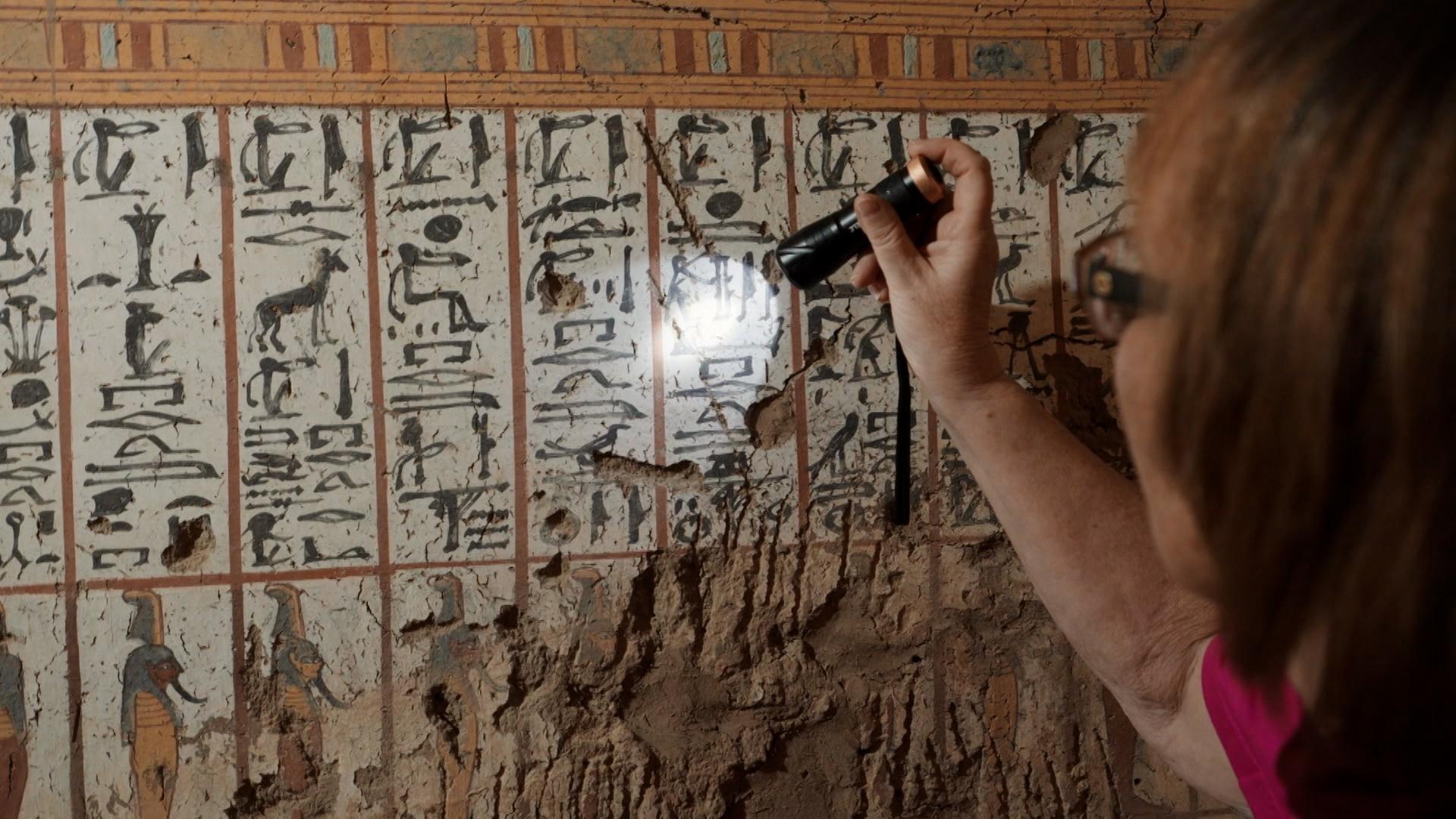
Poetry, particularly older poetry, can be full of archaic language, reversed syntax, and cultural allusions that would have been perfectly clear to readers in 1820, but are totally incomprehensible to the modern student. When Shakespeare says “Shall I compare thee to a summer day?” he is not merely posing an idle question he is drawing on centuries of poetry tradition concerning beauty, time, and the role of art.
Poetry packs enormous meaning into tiny spaces. Every word choice, every line break, every punctuation mark can carry significance. This density means that missing one crucial element can throw off your entire interpretation.
Unlike mathematical equations, poems don’t have single correct answers. This freedom can be paralyzing when you’re trying to write an academic essay that requires concrete arguments and evidence.
Poetry can be difficult to understand without knowing about historical events, cultural movements, biographical details, and literary traditions that are not easily discerned by looking at the text alone.
Poetry deals with intense emotions, philosophical questions, and human experiences that can be emotionally overwhelming to analyze repeatedly and systematically.
The Multiple Reading Approach:
First Reading: Impressionistic
Second Reading: Analytical
Third Reading: Contextual
The Annotation Strategy:
Essential Context Categories:
Biographical Context:
Historical Context:
Literary Context:
Research Resources for Adelaide Students:
Form and Structure Elements:
Poetic Forms:
Structural Features:
Visual and Spatial Elements:
Analyzing Form’s Relationship to Meaning:
Literary Device Identification:
Figurative Language:
Sound Devices:
Imagery Categories:
Advanced Language Analysis:
Common Poetic Themes:
Developing Your Interpretation:
Avoiding Common Interpretation Pitfalls:
Essential Elements:
Example Structure: When Emily Dickinson penned Because I could Not Stop For Death in 1863, she took the customary personification of death as a terrifying apparition and turned him into a polite gentleman caller. Dickinson musters the meter, imagery, and personification to introduce a new conception of death as a soft shift rather than a violent demise, thereby subverting Victorian fears of death, yet at the same time reaffirming the importance of the era on appropriate social behavior.
Paragraph Structure:
Evidence Integration:
Analysis Techniques:
Effective Conclusion Elements:
Avoid These Conclusion Mistakes:
Red Flags That Indicate You Need Support:
Academic Support vs. Academic Dishonesty: Getting help with poetry analysis doesn’t mean having someone else write your essays. Legitimate academic support involves:
Conceptual Tutoring: Literature tutors will assist you in deciphering difficult poetic theories, teach you analysis methods and hone your interpretive powers. They can take you through the close reading process and make you see how to go about observation, to analysis, and then on to interpretation.
Writing Support: The experts in academic writing will assist you with essay organization, constructing clear argumentation and using evidence. They will also assist you to figure out the conventions of academic writing and refine your prose style.
Research Guidance: Knowledgeable researchers can assist you in identifying pertinent academic materials, teach you about secondary source analysis and application, and how to incorporate research into your arguments without sounding irrelevant.
Assignment-Specific Help: Other services provide support specific to certain kinds of tasks, be it comparative analysis, research papers, or creative responses to literature.

For Adelaide literature students seeking comprehensive academic support, several reputable platforms offer specialized assistance:
StudyCreek provides personalized tutoring specifically designed for literature students. Their experts understand the unique challenges of poetry analysis and can help you develop the skills needed to succeed in your Adelaide literature program while maintaining academic integrity.
DissertationHive is an all-in-one service to tackle difficult literature tasks. They have people in their team who are literature professionals, and they can assist you in seeing how to go about literary research, how to write advanced arguments, and how to make your ideas appear on paper in a clear and convincing manner.
StudyCorgi offers the possibility to access literature analysis examples and consultations with experts. Their materials can assist you in learning about various methods of analysis and getting a vision of how effective students organize their reasoning and prove their interpretations.
EssayPro allows you to meet literature experts that will guide you on your approach to analysis, building better arguments, and overall grades through improving your academic writing.
EssayShark provides particular assistance in poetry analysis and other literature-related tasks since their professionals are aware of the Australian academic environment and can offer culturally competent help.
Edusson offers the full range of academic writing services, and we can assist you in acquiring research and critical analysis skills that will allow you to succeed in literature classes.
Comparing Poems:
Comparative Structure:
Feminist Criticism:
Marxist Criticism:
Postcolonial Criticism:
Psychoanalytic Criticism:
Imitation and Parody:
Dramatic Monologue:
Visual Response:
Online Databases:
Poetry-Specific Websites:
Digital Tools:
Organization Tools:
Time Management:
Strategies for Difficult Poems:
Avoiding Over-Analysis:
Integrating Personal and Academic Approaches:
Finding Your Interpretive Style:
Building Your Literary Knowledge:
Skills for Honours and Postgraduate Work:

Effective Study Schedules:
The Adelaide Student’s Schedule:
Prioritization Strategies:
Benefits of Collaborative Learning:
Effective Study Group Practices:
Local Opportunities:
Building Professional Networks:
Analyzing poetry does not necessarily mean a one-man battle against ungraspable poems and unmet time limits. The obstacles are not imaginary–the language of the ancients is often archaic, the symbolism is difficult, one feels the compulsion to say something original–but they can be overcome, given the proper attitude and encouragement.
Keep in mind that all great literature scholars were once in the same position as you are now: they were confused by some poems, overwhelmed by the deep level of analysis that was expected of them, and they were unsure of their interpretive skills. The variance between the successful and the miserable is not an inborn ability but a desire to ask questions, to stick with the process of skill-building, and to be receptive to the challenge and the beauty of literary art.
Adelaide has some distinct benefits to literature students; quality universities, rich cultural life, and proximity to traditional and modern literature resources. Use these opportunities but also be aware of when you can learn faster and achieve better results with the help of a professional.
It could be examining the metaphysical conceits of John Donne, the imagist methods of Ezra Pound, or the post-colonial attitudes of contemporary Australian poetry: whatever your target area of knowledge, the abilities you cultivate in this supported, mindful practice will stand you in good stead throughout your academic life and (much of it) afterwards.
The bottom line is that your endeavor into the analysis of poetry is an intellectual development and creative thought process, as well as a greater insight into the human condition. Do not allow a few moments of frustration over hard reading matter to stand in the way of your finding out the satisfactions of this difficult, though in the end, rewarding field.
The poets whose work you are analyzing had their own struggles with making the art that has the ability to encapsulate the complexity of human experience. The work of a student is to respond to that complexity in a mindful, truthful, and well-supported manner as the case may require. It is not a bit shameful to seek assistance in learning the tools and methods of literary analysis–quite the contrary, it is an indication of academic maturity and of strategic thinking.
And thus, the next time you will be stuck on a certain incomprehensible stanza at 2 AM, you will know: you are not the only one, there is help, and with practice and patience (and the proper instruction) you will get it. Your marked Tennyson need by no means be a tear-stained monument to academic effort–it may become the source of real literary understanding and enjoyment.
Name:
Instructor’s name:
Course:
Date:
The book of unknown Americans by Christina Henriquez
Books not only give a stage and a voice to authors, but also allow characters to communicate
important messages that otherwise would never see the light of day. Christina Henriquez uses her
masterpiece ‘The Book of Unknown Americans’ to give voice to voiceless immigrants who are
often ignored by the society as well as the government. In her book, immigrants are portrayed as
ordinary human beings capable of love beyond the physical shortcomings of individuals. Ideally,
the book is an effective tool of bringing the unknown to light.
Never let me go by kazoo Ishiguru
In the novel ‘never let me go’ by Kazoo Ishiguru is an interesting depiction and interrogation of
the human perception of molarity. Hailsham is a great boarding school that is known to provide
quality education. The students are well acquainted with literature and art as well as prepared to
become good people as the society requires. However, the author is skeptical about this approach
and the way that the world treats those that are vulnerable or disadvantaged. According to the
novel, protecting the children while neglecting to inform them of the world they are bound to
face is a disservice to them and to the society.
The hunger games by Suzanne Collins
‘The Hunger games’ by Suzanne Collins is one in a trilogy of novels. In the novel, an unknown
apocalyptic even destroys the continent’s civility which sets on a series of events including the
hunger games. The author uses the voice of a 16 year old, Katniss to tell the eventualities of the
depleted civility. In the nation of Panem, a boy and a girl are selected through an annual lottery
to take part in the hunger games during which the wrestle to death.
In his exquisite works, he addresses major issues affecting the society including extreme poverty, oppression, starvation and the implications of war. Often these issues are neglected, but in the book it is hard to ignore
them when they are happening on national TV.
The fault of our stars by John Green
Love and life are perhaps two of the most transcendental words among all humanity. They are
known to all and experienced by all during one’s lifetime. The author John Green add a
humorous touch to these two aspects of humanity in telling the love story of two cancer survivors
Hazel and Augustus. In the beginning of the story, Hazel is depressed despite having scored a
few more years after beating stage four cancer. However, meeting Augustus revives her love for
life once again.
Feed by M.T. Anderson
Human beings despite being intelligent beings tend to be too hungry to reach higher goals into
the future. Often, the consequences of such developments are unknown. The novel lead one to
ask the question whether human beings will someday become too intelligent to bring forth their
ruin. In the novel ‘Feed’ by M.T. Anderson, a group of young people in a futuristic community
take a trip to the moon. During their trip their hacker interferes with their feeds causing them to lie for several days with nothing but emptiness in their brains. The novel is both intriguing and provocative in the sense of how much is possible in the future.
The Curious Incident of the Dog in the Night-time by Mark Haddon
Human beings are not always receptive to differences that exist among human beings. There are
a number of common differentiating aspects among human beings including race, intelligence
and wealth. However, even attributes that are perceived to be good could be perceived negatively
like when a person is too intelligent that they do not fit in the normal spectrum of human
intelligence. In an unusual plot, the author, Nark Haddon tell the tale of the life led by
Christopher an overly intelligent man with no connection whatsoever with human beings.
Redeployment by Phil Klay
Veterans find it rather difficult to fit back into the society after witnessing the worst of humanity.
Phil Klay addresses the themes of brutality, faith, fear, guilt, hopelessness and survival in the
attempt to portray a picture of what soldiers have to face in the frontline of the war. Despite the
fact that their devoting and braveness is heartwarming, the eventualities of the war crush some
aspects of their humanity. Most suffer from trauma and could use better rehabilitative system so
that they can lead ordinary lives.
The dew breaker by Edwidge Danticat
The author Edwidge Danticat tell the story of the dew breaker, an ordinary man who holds a vital
yet dangerous secret. Themes of love, remorse and hope are explored as the author navigates
through the lives of the people surrounding the dew breaker. In an intriguing way, the author
seamlessly depicts the events that took place in 1906 Haiti and the modern day New York. The journey across history in unforgettable and essentially fits into the American culture and way of life.
Bossypants by Tina Fey
A woman with a dream is one of the phrases that people of today’s generation have heard a
number of times. However, Tina Fey’s Bossypants introduces a different angle of femininity and
how women dream and pursue their interests. The struggles, myths and mentalities that inhibit
the ability of women to advance. The author shares valuable opinions regarding women’s issues
such as breastfeeding, motherhood and food.
Zeitoun by Dave Eggers
One of America’s greatest policy dilemmas is brought to life in Dave Eggers ‘Zeitoun’. America
is fighting a war against terror when hurricane Katrina that hit the gulf coast affecting several
cities and countries in the United States. Zeitoun stays behind to look after their art business as
his wife evacuates with the children. In the days following the hurricane, Zeitoune spends his
time helping the eldery and animals. Unfortunately, he is arrested on terror.
Outliers by Malcolm Gladwell
Everyone seeking to rise through the ranks of wealth and social status must have wondered what
makes high achievers so successful. In his book ‘outlies’, the author Malcom Gladwell takes the
audience through an intellectual journey into the lives of the brightest, most successful and
famous persons in our society. The author challenges people to look into where the world’s
wealthiest have come from rather than focusing on the tip of the iceberg.
Dress your family in corduroy and denim by David Sedaris
Those that have lived in this life long enough understand that there is always something more to
what is seen on the surface. In the story, David Sedaris leads an ordinary life but beneath what is
seen are obscure desires and motives that only he knows. The story in an unforgettable piece of
literature and a must read for everyone.
Girl, interrupted by Susanna Kayson
A story written with great eloquence and exquisite style is just a basic description of the ‘Girl,
interrupted’ by Susanna Kaysen. The author provides an insight of the privileges available to the
wealth in our society through the eyes of an ordinary girl in a psychiatric hospital.
A walk in the woods by bill Bryson
Bill Bryson marries comedy with words in telling his adventure on the 2100 mile along the
Appalachian Trail. The author seeks to reconnect with his country after being away for a long
time. This exceptional book guarantees massive entertainment expressed in the form of majestic
silliness.
Delivering a high-quality product at a reasonable price is not enough anymore.
That’s why we have developed 5 beneficial guarantees that will make your experience with our service enjoyable, easy, and safe.
You have to be 100% sure of the quality of your product to give a money-back guarantee. This describes us perfectly. Make sure that this guarantee is totally transparent.
Read moreEach paper is composed from scratch, according to your instructions. It is then checked by our plagiarism-detection software. There is no gap where plagiarism could squeeze in.
Read moreThanks to our free revisions, there is no way for you to be unsatisfied. We will work on your paper until you are completely happy with the result.
Read moreYour email is safe, as we store it according to international data protection rules. Your bank details are secure, as we use only reliable payment systems.
Read moreBy sending us your money, you buy the service we provide. Check out our terms and conditions if you prefer business talks to be laid out in official language.
Read more