
Welcome to the unique form of academic purgatory known as Australian literature analysis—where every metaphor about the bush somehow relates to post-colonial identity crisis, and where a simple description of a sunset becomes a profound meditation on the Australian psyche.
It’s 2 AM on a Tuesday night in Melbourne. The trams have stopped running, your flatmate has given up asking if you’re “okay in there,” and you’re sitting at your desk surrounded by empty coffee cups and the growing certainty that Tim Winton’s Cloudstreet was written in a secret code only decipherable by literature professors and very dedicated pub trivia teams.
If you’re a Melbourne university student currently questioning whether Patrick White was having a laugh when he wrote those 47-word sentences, or if you’ve started referring to your thesis statement as “the literary equivalent of a drop bear attack,” you’re in excellent company. Students from the University of Melbourne, Monash, RMIT, La Trobe, and every other institution in this city have been exactly where you are right now—staring at a page of Australian literature like it’s written in hieroglyphics.
The good news? You’re not doomed to academic failure. The better news? Help exists, and it doesn’t require you to flee to the actual Outback to find your literary muse.
Remember when Australian literature meant reading Storm Boy and writing a paragraph about why the pelican was probably a metaphor for friendship? Those were simpler times. University-level Australian literature analysis is a completely different beast—one that requires you to navigate complex themes of colonialism, Indigenous dispossession, environmental degradation, urban alienation, and the perpetual Australian question of “who the hell are we, anyway?”
Your lecturers aren’t just asking you to summarize the plot or identify the main characters. They want you to understand how Judith Wright’s poetry reflects the tension between European settlement and environmental consciousness, or how contemporary Indigenous writers like Alexis Wright (no relation, confusingly) are reshaping Australian literary discourse.
Melbourne’s universities each have their own approach to Australian literature, but they all share certain expectations:
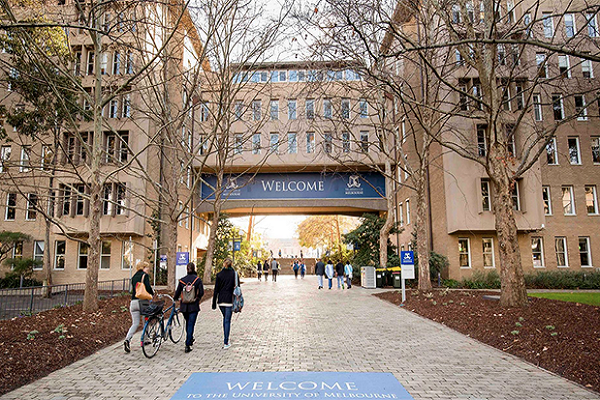
University of Melbourne: Known for its rigorous theoretical frameworks and expectation that students engage with both canonical and contemporary texts through multiple critical lenses.
Monash University: Emphasizes cultural context and interdisciplinary approaches, often connecting literature to history, sociology, and cultural studies.
RMIT: Focuses on practical application and contemporary relevance, encouraging students to connect historical texts with modern Australian experience.
La Trobe: Strong emphasis on social justice themes and diverse voices, particularly Indigenous and multicultural perspectives.
Victoria University: Practical, industry-focused approach that connects literary analysis to broader communication and media contexts.
Regardless of which institution you’re attending, they all expect the same fundamental skill: the ability to analyze Australian literature with sophistication, cultural awareness, and academic rigor.
An Australian literature analysis isn’t just pointing out that the drought in Such is Life represents hardship (though it does). It’s about understanding how that drought functions within larger conversations about Australian identity, environmental consciousness, settler guilt, and the relationship between humans and the harsh Australian landscape.
You’re expected to analyze:
During the early years, Australian literature courses mostly discussed white male writers such as Henry Lawson, Banjo Paterson, and Patrick White. While these remain important, contemporary courses increasingly include:
When texts are expanded, you need to look at not only one text in isolation, but also see how they are connected and answer each other over time and in other cultures.
Your introduction needs to accomplish several things without sounding like you’re reading from a literature textbook:
The Hook: Start the essay by pointing out how you understand why the text is significant. You could also use: “Miles Franklin’s My Brilliant Career, published in 1901, critiqued the gender roles of rural life in Australia, and today, many discussions of feminism in the country still relate to what she wrote.”
Context: Introduce the time and place of the text’s writing and explain what it means in terms of Australian culture. This shows you understand the work isn’t existing in a vacuum.
Thesis Statement: Your central argument should be specific, arguable, and sophisticated. “Lawson’s short stories are about hardship” isn’t enough. Try: “Lawson’s bush stories use vernacular dialogue and episodic structure to critique romantic notions of Australian pioneering while simultaneously reinforcing masculine stereotypes that continue to influence Australian cultural identity.”
Each body paragraph should follow a clear structure:
Topic Sentence: Introduce the specific aspect of your argument this paragraph will explore.
Evidence: Use direct quotations from the text, but choose them strategically. Don’t just quote because you need evidence; quote because the specific language choices support your argument.
Analysis: This is where you earn your marks. Don’t just explain what the quote means; analyze how it works. Consider:
Connection: Link your analysis back to your thesis and forward to your next point.
Example of Strong Analysis: Instead of: “Wright uses imagery to show the connection between people and land.”
Try: “Wright’s description of the Cloudstreet house as having ‘ghosts in the walls and memories in the floorboards’ employs personification to suggest that Australian identity is inseparable from place-based history, challenging narratives of settler belonging while acknowledging the complex layering of Indigenous and immigrant experiences in contemporary Australian consciousness.”
Your conclusion should do more than summarize your argument. It should:
Several factors make Australian literature analysis particularly challenging for Melbourne students:
Melbourne university students often juggle:
Australian literature courses increasingly expect students to:
Finding quality sources for Australian literature analysis can be difficult:
Melbourne universities maintain high expectations for:
Given these challenges, it’s unsurprising that students seek online help with Australian literature analysis. The key is finding support that enhances learning rather than replacing it.
Not all online assistance is created equal. Avoid services that:
Promise Unrealistic Results: Any service claiming you’ll receive a High Distinction paper overnight doesn’t understand the complexity of literary analysis or academic integrity.
Use Generic Templates: Australian literature analysis requires specific cultural knowledge. Services that offer generic “literature essay templates” won’t help you engage meaningfully with texts like Carpentaria or The Drovers Wife.
Lack Australian Context: International services might not understand the nuances of Australian cultural references, historical contexts, or academic expectations at Melbourne universities.
Offer Completed Assignments: This crosses the line from academic support to academic dishonesty, and Melbourne universities have sophisticated plagiarism detection systems.

Look for services that:
Demonstrate Australian Literary Knowledge: They should understand the difference between colonial and contemporary Australian literature, recognize major authors and movements, and appreciate cultural sensitivities around Indigenous representation.
Offer Educational Support: The best services help you understand concepts, improve your analysis skills, and develop your own arguments rather than providing ready-made answers.
Understand Melbourne University Standards: They should be familiar with Australian academic conventions, referencing styles, and the specific expectations of Melbourne institutions.
Provide Transparent Communication: Clear pricing, realistic timelines, and honest discussion of what they can and cannot help with.
StudyCreek stands out for Melbourne literature students because:
For more complex assignments and in-depth analysis:
First Pass – Cultural Immersion:
Second Pass – Thematic Identification:
Third Pass – Analytical Reading:
Understanding Australian literature requires understanding Australian culture:
Historical Research:
Contemporary Context:
Settler Colonial Critique:
Cultural Hybridity:
Landscape as Character:
Sustainability Themes:
Move Beyond Plot Summary: Instead of: “In Cloudstreet, the families not only are under one roof but go through many different situations.”
Try: “Within the home at Cloudstreet, Winton explores how post-war Australians from different generations struggled with troubles in life and tried to discover a sense of belonging in their new society.”
Connect Specific Techniques to Broader Themes: Instead of: “Wright uses metaphors about water.”
Try: “Wright often uses images of water, which shows its positive and harmful effects, representing the beliefs of Indigenous Australians while attacking European efforts to take over and use natural resources.”
Use Scholarly Sources Strategically:
Balance Primary and Secondary Material:
Australian Literature Gateway:
AustLit Database:
Project Gutenberg Australia:
Zotero or Mendeley:
Google Docs or Microsoft Word:
Grammarly or ProWritingAid:
Overland:
Meanjin:
Southerly:
Writers’ Victoria:
Australian Centre for Contemporary Art (ACCA):
Recognition of Country:
Respectful Engagement:
Contemporary Voices:
Themes to Consider:
Australia’s literary landscape increasingly reflects the country’s multicultural population:
Asian-Australian Writers:
African-Australian Writers:
Middle Eastern Australian Writers:
In-Text Citations:
Works Cited Format:
Critical Sources:
Some Melbourne universities prefer Harvard referencing:
In-Text Citations:
Reference List:
Melbourne universities take academic integrity seriously. Understanding the boundaries helps you seek appropriate help:
Acceptable Support:
Unacceptable Practices:
When using services like StudyCreek or DissertationHive:
Contemporary Eco-Fiction:
Analytical Considerations:
Contemporary Women’s Writing:
Critical Approaches:
Contemporary Migration Literature:
Analytical Questions:
Week 1: Text Selection and Initial Reading
Week 2: Research and Second Reading
Week 3: Argument Development
Week 4: Writing and Revision
Create a Master Timeline:
Develop Efficient Reading Strategies:
Practice Unseen Text Analysis:
Memorization Strategies:
Cross-Text Connections:
Historical Contextualization:
Text Analysis Software:
Online Collaboration:
New Voices and Perspectives:
Interdisciplinary Approaches:
Critical Thinking:
Communication Skills:
Research Abilities:
Traditional Literary Careers:
Broader Applications:
Treat Australian literature analysis as a chance to discover some of the world’s most compelling and special writers. Whenever you study a challenging work, like the symbolic literature of Patrick White or the innovative novels of Gerald Murnane, you learn more about the roles of literature and its impact on culture.
Experiencing difficulty with Australian literature analysis shows that you are handling tough and significant pieces of cultural heritage. Literature that yields its meaning easily rarely has much meaning worth discovering. The texts that challenge you are the ones that will ultimately teach you the most about writing, thinking, and understanding the world around you.
Working with Australian stories is helping you develop a broader knowledge of culture that is useful well after your studies. You are able to notice how stories create a nation’s identity, how writers adapt to changing times, and how literature can reinforce and challenge cultural beliefs. These abilities will support you in any job you choose.
Do not worry that asking for help with Australian literature analysis makes you less strong, as many look on it as a sign of intelligence. Scholars, professional critics, and writers usually interact, share their work, and provide feedback to each other. Your academic journey should model this professional behavior.
As you continue your studies in Australian literature, remember that:

Melbourne’s universities offer some of the finest literature programs in the world, with access to exceptional faculty, diverse student communities, and rich cultural resources. Finding Australian literature analysis hard is a special part of learning, as it exposes you to major ideas, new perspectives, and texts that matter.
With the various literary festivals, shops, writers’ centers, and cultural institutions, your city supplies you with many ways to relate your reading to the current world of Australian literature. Make use of these tools, interact with today’s authors and commentators, and understand how your work plays a role in discussing Australian culture.
When you explore topics in For the Term of His Natural Life, My Brilliant Career, Benang, or Unpolished Gem, you are part of the important activity of making sense of culture and its meanings.
Your study of Australian literature is helping you to develop a thoughtful attitude and to interact with different ideas, history, and growth in the nation.
Remember that others have faced the same uncertainties when reading Voss or trying to uncover the hidden meanings in Picnic at Hanging Rock. That discomfort is a common part of education, and many who studied these texts enjoyed prosperous careers.
Australian literature is rich, contains many different styles, and is always expanding. No matter how difficult it may seem, what you discover in history matters and helps continue the debate about who we are and where we could go.
You’ve got this. Although the bush is thick and sometimes confusing, guided by the right experts and strong will, you will end up in the clearing.
Name:
Instructor’s name:
Course:
Date:
The book of unknown Americans by Christina Henriquez
Books not only give a stage and a voice to authors, but also allow characters to communicate
important messages that otherwise would never see the light of day. Christina Henriquez uses her
masterpiece ‘The Book of Unknown Americans’ to give voice to voiceless immigrants who are
often ignored by the society as well as the government. In her book, immigrants are portrayed as
ordinary human beings capable of love beyond the physical shortcomings of individuals. Ideally,
the book is an effective tool of bringing the unknown to light.
Never let me go by kazoo Ishiguru
In the novel ‘never let me go’ by Kazoo Ishiguru is an interesting depiction and interrogation of
the human perception of molarity. Hailsham is a great boarding school that is known to provide
quality education. The students are well acquainted with literature and art as well as prepared to
become good people as the society requires. However, the author is skeptical about this approach
and the way that the world treats those that are vulnerable or disadvantaged. According to the
novel, protecting the children while neglecting to inform them of the world they are bound to
face is a disservice to them and to the society.
The hunger games by Suzanne Collins
‘The Hunger games’ by Suzanne Collins is one in a trilogy of novels. In the novel, an unknown
apocalyptic even destroys the continent’s civility which sets on a series of events including the
hunger games. The author uses the voice of a 16 year old, Katniss to tell the eventualities of the
depleted civility. In the nation of Panem, a boy and a girl are selected through an annual lottery
to take part in the hunger games during which the wrestle to death.
In his exquisite works, he addresses major issues affecting the society including extreme poverty, oppression, starvation and the implications of war. Often these issues are neglected, but in the book it is hard to ignore
them when they are happening on national TV.
The fault of our stars by John Green
Love and life are perhaps two of the most transcendental words among all humanity. They are
known to all and experienced by all during one’s lifetime. The author John Green add a
humorous touch to these two aspects of humanity in telling the love story of two cancer survivors
Hazel and Augustus. In the beginning of the story, Hazel is depressed despite having scored a
few more years after beating stage four cancer. However, meeting Augustus revives her love for
life once again.
Feed by M.T. Anderson
Human beings despite being intelligent beings tend to be too hungry to reach higher goals into
the future. Often, the consequences of such developments are unknown. The novel lead one to
ask the question whether human beings will someday become too intelligent to bring forth their
ruin. In the novel ‘Feed’ by M.T. Anderson, a group of young people in a futuristic community
take a trip to the moon. During their trip their hacker interferes with their feeds causing them to
lie for several days with nothing but emptiness in their brains. The novel is both intriguing and
provocative in the sense of how much is possible in the future.
The Curious Incident of the Dog in the Night-time by Mark Haddon
Human beings are not always receptive to differences that exist among human beings. There are
a number of common differentiating aspects among human beings including race, intelligence
and wealth. However, even attributes that are perceived to be good could be perceived negatively
like when a person is too intelligent that they do not fit in the normal spectrum of human
intelligence. In an unusual plot, the author, Nark Haddon tell the tale of the life led by
Christopher an overly intelligent man with no connection whatsoever with human beings.
Redeployment by Phil Klay
Veterans find it rather difficult to fit back into the society after witnessing the worst of humanity.
Phil Klay addresses the themes of brutality, faith, fear, guilt, hopelessness and survival in the
attempt to portray a picture of what soldiers have to face in the frontline of the war. Despite the
fact that their devoting and braveness is heartwarming, the eventualities of the war crush some
aspects of their humanity. Most suffer from trauma and could use better rehabilitative system so
that they can lead ordinary lives.
The dew breaker by Edwidge Danticat
The author Edwidge Danticat tell the story of the dew breaker, an ordinary man who holds a vital
yet dangerous secret. Themes of love, remorse and hope are explored as the author navigates
through the lives of the people surrounding the dew breaker. In an intriguing way, the author
seamlessly depicts the events that took place in 1906 Haiti and the modern day New York. The
journey across history in unforgettable and essentially fits into the American culture and way of
life.
Bossypants by Tina Fey
A woman with a dream is one of the phrases that people of today’s generation have heard a
number of times. However, Tina Fey’s Bossypants introduces a different angle of femininity and
how women dream and pursue their interests. The struggles, myths and mentalities that inhibit
the ability of women to advance. The author shares valuable opinions regarding women’s issues
such as breastfeeding, motherhood and food.
Zeitoun by Dave Eggers
One of America’s greatest policy dilemmas is brought to life in Dave Eggers ‘Zeitoun’. America
is fighting a war against terror when hurricane Katrina that hit the gulf coast affecting several
cities and countries in the United States. Zeitoun stays behind to look after their art business as
his wife evacuates with the children. In the days following the hurricane, Zeitoune spends his
time helping the eldery and animals. Unfortunately, he is arrested on terror.
Outliers by Malcolm Gladwell
Everyone seeking to rise through the ranks of wealth and social status must have wondered what
makes high achievers so successful. In his book ‘outlies’, the author Malcom Gladwell takes the
audience through an intellectual journey into the lives of the brightest, most successful and
famous persons in our society. The author challenges people to look into where the world’s
wealthiest have come from rather than focusing on the tip of the iceberg.
Dress your family in corduroy and denim by David Sedaris
Those that have lived in this life long enough understand that there is always something more to
what is seen on the surface. In the story, David Sedaris leads an ordinary life but beneath what is
seen are obscure desires and motives that only he knows. The story in an unforgettable piece of
literature and a must read for everyone.
Girl, interrupted by Susanna Kayson
A story written with great eloquence and exquisite style is just a basic description of the ‘Girl,
interrupted’ by Susanna Kaysen. The author provides an insight of the privileges available to the
wealth in our society through the eyes of an ordinary girl in a psychiatric hospital.
A walk in the woods by bill Bryson
Bill Bryson marries comedy with words in telling his adventure on the 2100 mile along the
Appalachian Trail. The author seeks to reconnect with his country after being away for a long
time. This exceptional book guarantees massive entertainment expressed in the form of majestic
silliness.
Delivering a high-quality product at a reasonable price is not enough anymore.
That’s why we have developed 5 beneficial guarantees that will make your experience with our service enjoyable, easy, and safe.
You have to be 100% sure of the quality of your product to give a money-back guarantee. This describes us perfectly. Make sure that this guarantee is totally transparent.
Read moreEach paper is composed from scratch, according to your instructions. It is then checked by our plagiarism-detection software. There is no gap where plagiarism could squeeze in.
Read moreThanks to our free revisions, there is no way for you to be unsatisfied. We will work on your paper until you are completely happy with the result.
Read moreYour email is safe, as we store it according to international data protection rules. Your bank details are secure, as we use only reliable payment systems.
Read moreBy sending us your money, you buy the service we provide. Check out our terms and conditions if you prefer business talks to be laid out in official language.
Read more