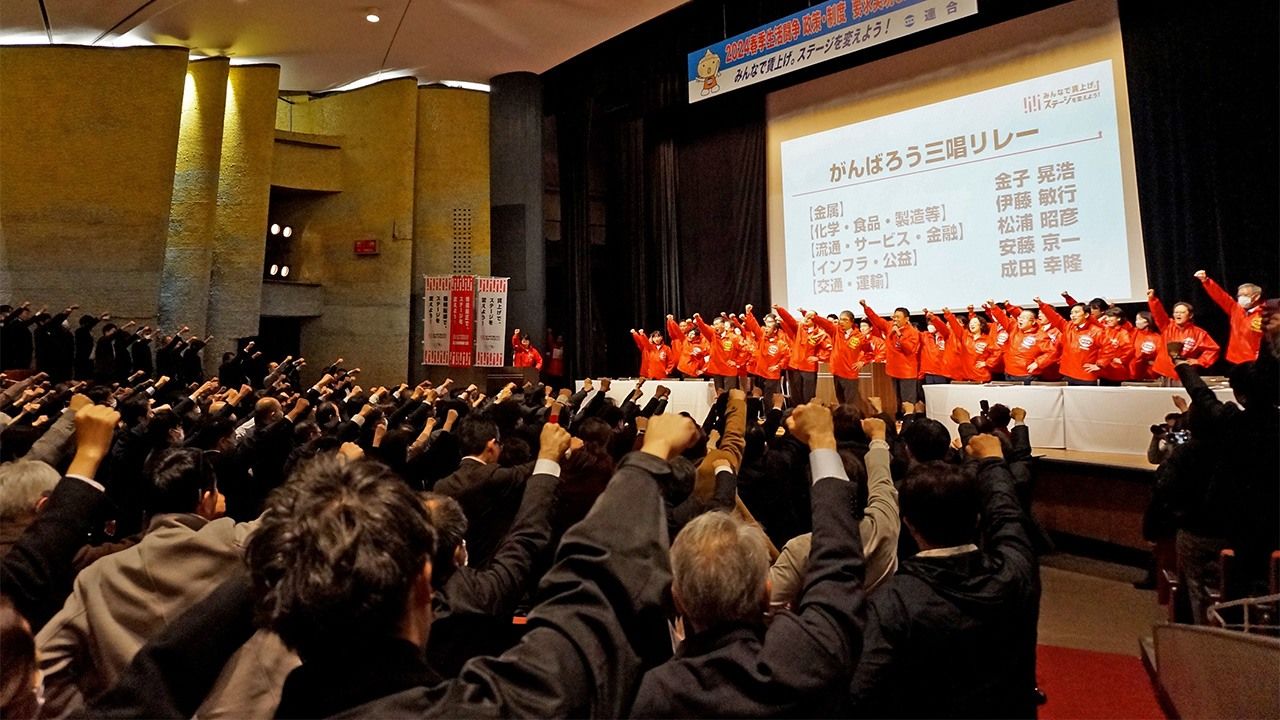
Recently, there has been a resurgence in labor union organization and a subsequent increase in union membership across the United States.
What can today’s labor unions learn from their past 140-year history to 1) Attract and 2) Retain union members?
Your home work should place specific emphasis on Millennials and Gen Z workers (as they will represent 75% of the U.S. workforce by 2025). :
Name: Lessons on the History of Labor Unions: Strategies to attract and retain Millennial and generation z Workers.
Introduction
The labor unions have been very important in the United States in terms of determining the labor rights and the labor conditions at the workplace over the last 140 years. In the past, unions have played a role in protecting major workplace gains like fair pay, safer work environment and benefits among employees. The establishment of collective bargaining and advocacy of employees in the United States became institutionalized with the assistance of such organizations as the American Federation of Labor, the Congress of Industrial Organizations. With time, such groups came together to become the AFL- CIO, which remains to be a great federation of labor unions.
Although it has a historic influence, union membership dropped drastically during the late twentieth century because of the process of globalization, automation, and labor market changes. Nevertheless, in recent years, the union organizing in different sectors has risen. This renewed enthusiasm about labor unions is parallel to the Millennials and the Generation Z workers, who are projected to occupy about 75 percent of the U.S workforce by the year 2025.
The more these generations develop their impact on the labor market, the more the unions need to change their approach to recruitment and retention in accordance with their demands and work priorities. Based on their experience over the years, labor unions will be able to implement measures that are able to attract and retain younger workers and at the same time not lose their main mandate of worker advocacy.
The Labor Movement Lessons of History.
The US labor movement was formed in the late 19 th century when industrialization brought about new economic opportunities as well as working conditions. Unions at an early period were keen on collective action in terms of overworking, occupational health risks as well as poor incomes. The unions were able to negotiate, strike, and politically advocate and implement significant reforms that included the eight hour working day, measures to regulate safety in the workplace and employer provided benefits.
The effectiveness of early unions was, in large part, due to the way they were able to organize workers sensitizing workers to common interests and creating strong identities at a collective level. Workers such as Cesar Chavez stressed on solidarity and community organization as a way of providing solutions to the work-related problems as well as the social inequality. The experiences of these unions in history show that unions are most effective when they are closely related to the needs of workers and change their strategies according to the economic and social changes.
The challenges the modern day labor unions have to contend with are different including technological change, employment patterns in the gig economy and evolving employee expectations. Nevertheless, the principles of collective advocacy, worker empowerment, and social justice do not lack their foundations. Such lessons of history are applicable in enhancing the involvement of unions in the younger workers who infiltrate into the labor market.
Plans to lure Millennial and generation Z Employees.
Focusing on Social Justice and Equity in the workplace.
Employers and organizations that have good social responsibility and equity are usually favoured by the millennial and the generation Z workforces. Studies indicate that young employees are more inclined to be affiliated to establishments that resonate with their values like diversity, inclusion, and equitable job practices.
Traditionally, unions were strongly supported by the time they presented the labor problem in the form of the larger social justice movement. To illustrate this, during the civil rights era, union campaigns portrayed a relation between social and economic discrimination and the inequality. The union should appeal to the younger generation by reminding employers about diversity at work, fair remuneration, environmentalism and a responsible business approach. Unions should show younger generations that they are relevant by connecting the issue of labor rights to wider social problems.
Exploiting Digital Organizing and Communication.
The old system of union organization was very dependent on personal meetings, mailed newsletters, and meetings at the workplace. Yet, the workers of the Millennials and the Generation z use digital platforms and social media as their primary communication tools. The contemporary unions should hence embrace the use of digital tools in order to attract the younger generations.
The mobilization of workers via digital platforms is shown by recent organizing campaigns by employees in corporations like Starbucks and Amazon. Workers can now organize a collective action efficiently and fast due to social media campaigns, online petitions, and virtual organizing meetings.
Investment in digital communication strategies would allow union to access younger workers where they are already engaged, which would make it easier to increase awareness of labor issues and make labor unions membership participation acceptable.
Provision of Career Development Opportunities.
Professional development is another key variable to younger employees. It is common among millennials and generation Z employees to give priority to skill growth and career growth. Traditionally, unions helped workers by providing apprenticeship and vocational training that enabled workers to acquire specialized skills and be employed on a long term basis.
This tradition can be continued by the contemporary unions through the provision of professional development, potential leadership training and mentoring opportunities. The unions will be able to attract more young employees by proving the fact that being a member of the union can lead to a successful career in the long term.
Resolving Emerging Work Structures.
The current labor market is very different to the industrial economy that influenced the formation of early unions. The increasing number of younger employees are working in gig-based or contract employment arrangements which do not have the traditional job security and benefits.
In order to appeal to such workers, unions need to come up with new forms of representation that cater to the needs of the freelancers, distantly working employees, and gig workers. The unions can be made more relevant to the changing work environment by advocating portable benefits, flexible work arrangements, and job security in the nontraditional employment environment.
Retention strategies to Millennial and generation z members.
Furthering Openness and Member Involvement.
Openness and democracy has been a main feature of effective labor unions. There is a high possibility that the workers will stick around when they feel that their voices are acknowledged and their input has a value.
Transparency and accountability are key values among the millennials and the generation Z. The way to retain these members in unions is to make sure that the decisions made are transparent and participatory. Increase engagement and build member trust Digital platforms, where the members can vote on the proposed options, give feedback, and engage in discussions, can help increase the level of engagement.
Exhibiting Verifiable Dividends.
The most sustainable union membership is such where the members can actually see the fruits of collective action. Traditionally, labor unions gained loyalty through attaining wage gains, benefits and job security.
The contemporary unions still need to achieve quantifiable outputs by effective collective bargaining. The ability to negotiate competitive wages, healthcare coverage and working conditions helps establish the importance of having the union membership and make the participation jobs worth the long-run.
Creating Community and Solidarity.
Solidarity has been one of the most significant areas of the labor movement. In the past, unions had built great communities among employees due to common experience, collective action, and solidarity.
The young employees tend to pursue significant working circles and societies. The retention of members can be achieved through the development of a feeling of belonging by the unions through networking, community events, mentorship programs and collaborative efforts. Enhancement of interpersonal relationship between members may improve commitment and long term engagement.
Endorsing Work-Life Balancing.
The millennials and Generation Z employees attach much importance to the work-life balance and personal well-being. Although job security has been the most important consideration of past generations, younger employees tend to emphasize flexibility and mental wellness.
The unions can address these priorities through negotiating the policies that encourage flexible work schedules, paid family leaves, mental health support, and workable workloads. Through such concerns, unions can prove that they are going to make the overall quality of life of workers better.
Conclusion
The history of labor unions in the United States dates back long enough to offer useful information as to how collective worker organizations will be able to change with the economic and social conditions. The workforce is becoming more dominated by The Millennials and Generation Z workers and to stay relevant and effective unions need to change their methods.
Unions can engage the younger workers in their organizations by focusing on social justice advocacy, taking advantage of digital communication tools, providing career advancement opportunities, and responding to the emergent work structures. Simultaneously, to retain such members, openness, concrete work-related enhancement, high-quality community building, and work-life balance-friendly policies are necessary.
When the labor unions effectively incorporate the above strategies without losing the core belief of empowering employees and collective bargaining they can still be instrumental in ensuring that the workplace is fair and equitable to future generations.
References
Budd, J. W. (2020). Labor relations: Striking a balance (6th ed.). McGraw-Hill Education.
Greenhouse, S. (2019). Beaten down, worked up: The past, present, and future of American labor. Alfred A. Knopf.
Milkman, R., & Voss, K. (Eds.). (2004). Rebuilding labor: Organizing and organizers in the new union movement. Cornell University Press.
Pew Research Center. (2023). Majority of Americans approve of labor unions. https://www.pewresearch.org
U.S. Bureau of Labor Statistics. (2024). Union members summary. https://www.bls.gov
Delivering a high-quality product at a reasonable price is not enough anymore.
That’s why we have developed 5 beneficial guarantees that will make your experience with our service enjoyable, easy, and safe.
You have to be 100% sure of the quality of your product to give a money-back guarantee. This describes us perfectly. Make sure that this guarantee is totally transparent.
Read moreEach paper is composed from scratch, according to your instructions. It is then checked by our plagiarism-detection software. There is no gap where plagiarism could squeeze in.
Read moreThanks to our free revisions, there is no way for you to be unsatisfied. We will work on your paper until you are completely happy with the result.
Read moreYour email is safe, as we store it according to international data protection rules. Your bank details are secure, as we use only reliable payment systems.
Read moreBy sending us your money, you buy the service we provide. Check out our terms and conditions if you prefer business talks to be laid out in official language.
Read more