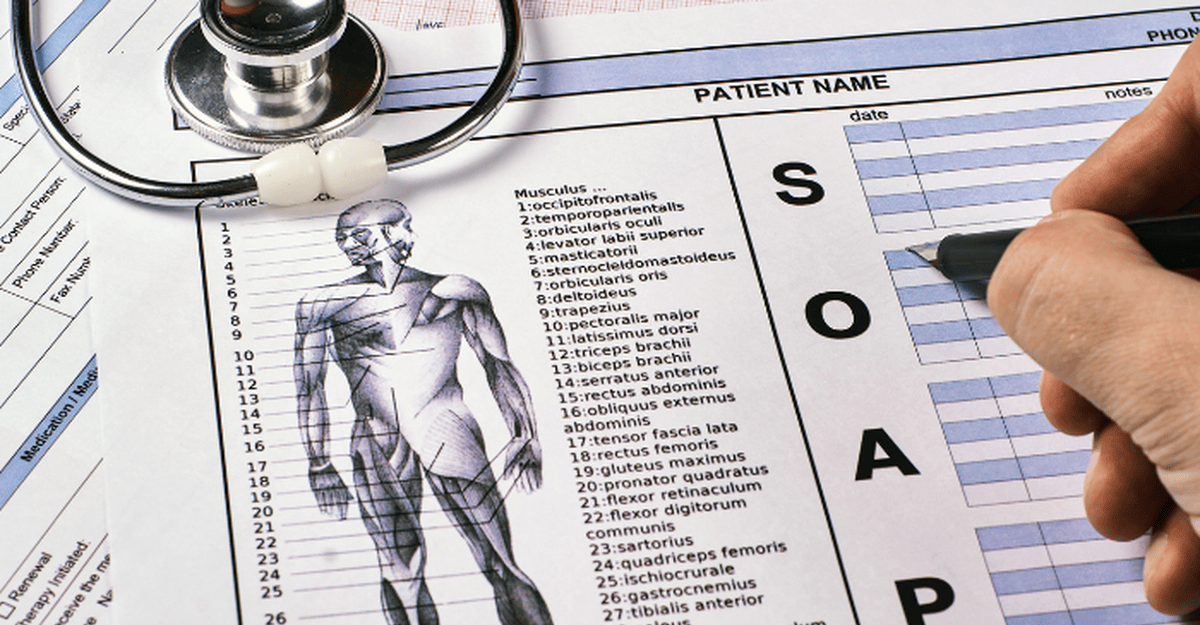


Soap notes will be uploaded to Moodle and put through TURN-It-In (anti-Plagiarism program)
Turn it in Score must be less than 50% or will not be accepted for credit, must be your own work and in your own words. You can resubmit, Final submission will be accepted if less than 50%. Copy paste from websites or textbooks will not be accepted or tolerated. Please see College Handbook with reference to Academic Misconduct Statement.
Example:
PATIENT INFORMATION
Name: Mr. W.S.
Age: 65-year-old
Sex: Male
Source: Patient
Allergies: None
Current Medications: Atorvastatin tab 20 mg, 1-tab PO at bedtime
PMH: Hypercholesterolemia
Immunizations: Influenza last 2018-year, tetanus, and hepatitis A and B 4 years ago.
Surgical History: Appendectomy 47 years ago.
Family History: Father- died 81 does not report information
Mother-alive, 88 years old, Diabetes Mellitus, HTN
Daughter-alive, 34 years old, healthy
Social Hx: No smoking history or illicit drug use, occasional alcoholic beverage consumption on social celebrations. Retired, widow, he lives alone.
SUBJECTIVE:
Chief complain: “headaches” that started two weeks ago
Symptom analysis/HPI:
The patient is 65 years old male who complaining of episodes of headaches and on 3 different occasions blood pressure was measured, which was high (159/100, 158/98 and 160/100 respectively). Patient noticed the problem started two weeks ago and sometimes it is accompanied by dizziness.He states that he has been under stress in his workplace for the last month.
Patient denies chest pain, palpitation, shortness of breath, nausea or vomiting.
ROS:
CONSTITUTIONAL: Denies fever or chills. Denies weakness or weight loss. NEUROLOGIC: Headache and dizzeness as describe above. Denies changes in LOC. Denies history of tremors or seizures.
HEENT: HEAD: Denies any head injury, or change in LOC. Eyes: Denies any changes in vision, diplopia or blurred vision. Ear: Denies pain in the ears. Denies loss of hearing or drainage. Nose: Denies nasal drainage, congestion. THROAT: Denies throat or neck pain, hoarseness, difficulty swallowing.
Respiratory:Patient denies shortness of breath, cough or hemoptysis.
Cardiovascular: No chest pain, tachycardia. No orthopnea or paroxysmal nocturnal
dyspnea.
Gastrointestinal:Denies abdominal pain or discomfort.Denies flatulence, nausea, vomiting or
diarrhea.
Genitourinary: Denies hematuria, dysuria or change in urinary frequency. Denies difficulty starting/stopping stream of urine or incontinence.
MUSCULOSKELETAL: Denies falls or pain. Denies hearing a clicking or snapping sound.
Skin: No change of coloration such as cyanosis or jaundice, no rashes or pruritus.
Objective Data
CONSTITUTIONAL: Vital signs: Temperature: 98.5 °F, Pulse: 87, BP: 159/92 mmhg, RR 20, PO2-98% on room air, Ht- 6’4”, Wt 200 lb, BMI 25. Report pain 0/10.
General appearance: The patient is alert and oriented x 3. No acute distress noted.NEUROLOGIC: Alert, CNII-XII grossly intact, oriented to person, place, and time. Sensation intact to bilateral upper and lower extremities. Bilateral UE/LE strength 5/5.
HEENT:Head: Normocephalic, atraumatic, symmetric, non-tender. Maxillary sinuses no tenderness. Eyes: No conjunctival injection, no icterus, visual acuity and extraocular eye movements intact. No nystagmus noted. Ears: Bilateral canals patent without erythema, edema, or exudate. Bilateral tympanic membranes intact, pearly gray with sharp cone of light. Maxillary sinuses no tenderness. Nasal mucosa moist without bleeding. Oral mucosa moist without lesions,.Lids non-remarkable and appropriate for race.
Neck: supple without cervical lymphadenopathy, no jugular vein distention, no thyroid swelling or masses.
Cardiovascular:S1S2, regular rate and rhythm, no murmur or gallop noted. Capillary refill < 2 sec.
Respiratory:No dyspnea or use of accessory muscles observed. No egophony, whispered pectoriloquy or tactile fremitus on palpation. Breath sounds presents and clear bilaterally on auscultation.
Gastrointestinal:No mass or hernia observed. Upon auscultation, bowel sounds present in all four quadrants, no bruits over renal and aorta arteries. Abdomen soft non-tender, no guarding, no reboundno distention or organomegaly noted on palpation
Musculoskeletal:No pain to palpation. Active and passive ROM within normal limits, no stiffness.
Integumentary:intact, no lesions or rashes, no cyanosis or jaundice.
Assessment
Essential (Primary) Hypertension (ICD10 I10): Given the symptoms and high blood pressure (156/92 mmhg), classified as stage 2. Once the organic cause of hypertension has been ruled out, such as renal, adrenal or thyroid, this diagnosis is confirmed.
Differential diagnosis:
Ø Renal artery stenosis(ICD10 I70.1)
Ø Chronic kidney disease(ICD10 I12.9)
Ø Hyperthyroidism (ICD10 E05.90)
Plan
Diagnosis is based on the clinical evaluation through history, physical examination, and routine laboratory tests to assess risk factors, reveal identifiable causes and detect target-organ damage, including evidence of cardiovascular disease.
These basic laboratory tests are:
· CMP
· Complete blood count
· Lipid profile
· Thyroid-stimulating hormone
· Urinalysis
· Electrocardiogram
Ø Pharmacological treatment:
The treatment of choice in this case would be:
Thiazide-like diuretic and/or a CCB
· Hydrochlorothiazide tab 25 mg, Initial dose: 25 mg orally once daily.
Ø Non-Pharmacologic treatment:
· Weight loss
· Healthy diet (DASH dietary pattern): Diet rich in fruits, vegetables, whole grains, and low-fat dairy products with reduced content of saturated and trans l fat
· Reduced intake of dietary sodium: <1,500 mg/d is optimal goal but at least 1,000 mg/d reduction in most adults
· Enhanced intake of dietary potassium
· Regular physical activity (Aerobic): 90–150 min/wk
· Tobacco cessation
· Measures to release stress and effective coping mechanisms.
Education
· Provide with nutrition/dietary information.
· Daily blood pressure monitoring at home twice a day for 7 days, keep a record, bring the record on the next visit with her PCP
· Instruction about medication intake compliance.
· Education of possible complications such as stroke, heart attack, and other problems.
· Patient was educated on course of hypertension, as well as warning signs and symptoms, which could indicate the need to attend the E.R/U.C. Answered all pt. questions/concerns. Pt verbalizes understanding to all
Follow-ups/Referrals
· Evaluation with PCP in 1 weeks for managing blood pressure and to evaluate current hypotensive therapy. Urgent Care visit prn.
· No referrals needed at this time.
References
Domino, F., Baldor, R., Golding, J., Stephens, M. (2017). The 5-Minute Clinical Consult 2017 (25th ed.). Print (The 5-Minute Consult Series).
Codina Leik, M. T. (2014). Family Nurse Practitioner Certification Intensive Review (2nd ed.). ISBN 978-0-8261-3424-0
Title
SOAP Note: Diabetes Mellitus Type 2..
Student Name
College/University Name
Course Name and Number
Instructor Name
Assignment Due Date
BODY OF PAPER
SOAP Note: Type 2 Diabetes Mellitus
Patient Information
Name: Ms. L.M.
Age: 52 years
Sex: Female
Source: Patient
Allergies: Penicillin (rash)
Current Medications:
Metformin 500 mg PO twice daily
Lisinopril 10 mg PO once daily
Past Medical History:
Type 2 diabetes mellitus, high blood pressure.
Immunizations:
Flu (2025), Covid-19 (series complete), Tdap (5 years ago)
Surgical History:
Cesarean section (2003)
Family History:
Father has passed away (myocardial infarction at the age of 70); mother is still alive with diabetes and hypertension.
Social History:
Denies the use of tobacco or illegal drugs; infrequent alcohol use; full-time worker; lives with spouse.
Subjective
Chief Complaint:
Most of the time, I feel tired and thirsty.
History of Present Illness:
Ms. L.M is a 52-year-old female patient who has experienced fatigue, increased thirst and frequent urination within three weeks. She denies any regular attendance of her diabetic diet and lacks regularity in taking metformin. She has no chest pain, dyspnea, nausea, vomiting, or changes in vision.
Review of Systems:
Constitutional: Denies fatigue, fever or weight loss.
Neurological: Denies headaches, dizzy.
HEENT: denies sore throat or change of looks.
Respiratory: Denies dyspnea or cough.
Heart: Denies chest pains or palpitations.
Gastrointestinal: Denies vomiting, abdominal pain, nausea.
Genitourinary: Denies dysuria, reports polyuria.
Musculoskeletal: Denies pain in the joints.
Skin: No lesions or rashes.
Objective
Vital Signs:
Temperature 98.2C; blood pressure 142/88 mmHg; pulse rate 82 BPM; respiratory rate 18; saturation of oxygen 97% on unaltered air; pressure mass index (BMI) 29.6.
Physical Examination:
General: Vigilant, oriented, denies any acute distress.
Neurological: Neurological intact; muscle strength 5/5.
HEENT: Normocephalic; equal and interactive pupils; oral mucosa wet.
Neck: Supple; no lymphadenopathy.
Cardiovascular: No rebound, regular rate and rhythm; no murmurs.
Lung: Bilaterally clear to auscultation.
GIT: Soft, non tender abdomen; bowel sounds.
Musculoskeletal: Full range of motion; none of the tenderness.
Skin: Warm, dry, intact.
Assessment
Primary Diagnosis:
Hyperglycemia in diabetes mellitus type 2 (ICD-10: E11.65)
Differential Diagnoses:
Hypertension (I10)
Urinary tract infection (N39.0)
Hypothyroidism (E03.9)
Plan
Diagnostics:
Hemoglobin A1C
Fasting blood glucose
Complete metabolic examination.
Urinalysis
Lipid panel
Pharmacologic Treatment:
Carry on metformin 500mg oral twice a day.
Persist with lisinopril 10 mg PO/day.
Nonpharmacologic Treatment:
Diabetic diet education
Weight reduction
Aerobic 30minutes, five times per week.
Patient Education
The patient was informed about the importance of taking medication, monitoring blood glucose, diet control and the possible complications of uncontrolled diabetes. The patient had verbal knowledge.
Follow-Up
Follow-up appointment in three months or earlier in case of the worsening of symptoms. Referral to diabetic educator made.
REFERENCES (NEW PAGE)
American Diabetes Association. (2024). Medical care standards in diabetes-2024. https.
Codina Leik, M. T. (2014). Family nurse practitioner certification intensive review (2 nd ed.). Springer Publishing.
Delivering a high-quality product at a reasonable price is not enough anymore.
That’s why we have developed 5 beneficial guarantees that will make your experience with our service enjoyable, easy, and safe.
You have to be 100% sure of the quality of your product to give a money-back guarantee. This describes us perfectly. Make sure that this guarantee is totally transparent.
Read moreEach paper is composed from scratch, according to your instructions. It is then checked by our plagiarism-detection software. There is no gap where plagiarism could squeeze in.
Read moreThanks to our free revisions, there is no way for you to be unsatisfied. We will work on your paper until you are completely happy with the result.
Read moreYour email is safe, as we store it according to international data protection rules. Your bank details are secure, as we use only reliable payment systems.
Read moreBy sending us your money, you buy the service we provide. Check out our terms and conditions if you prefer business talks to be laid out in official language.
Read more