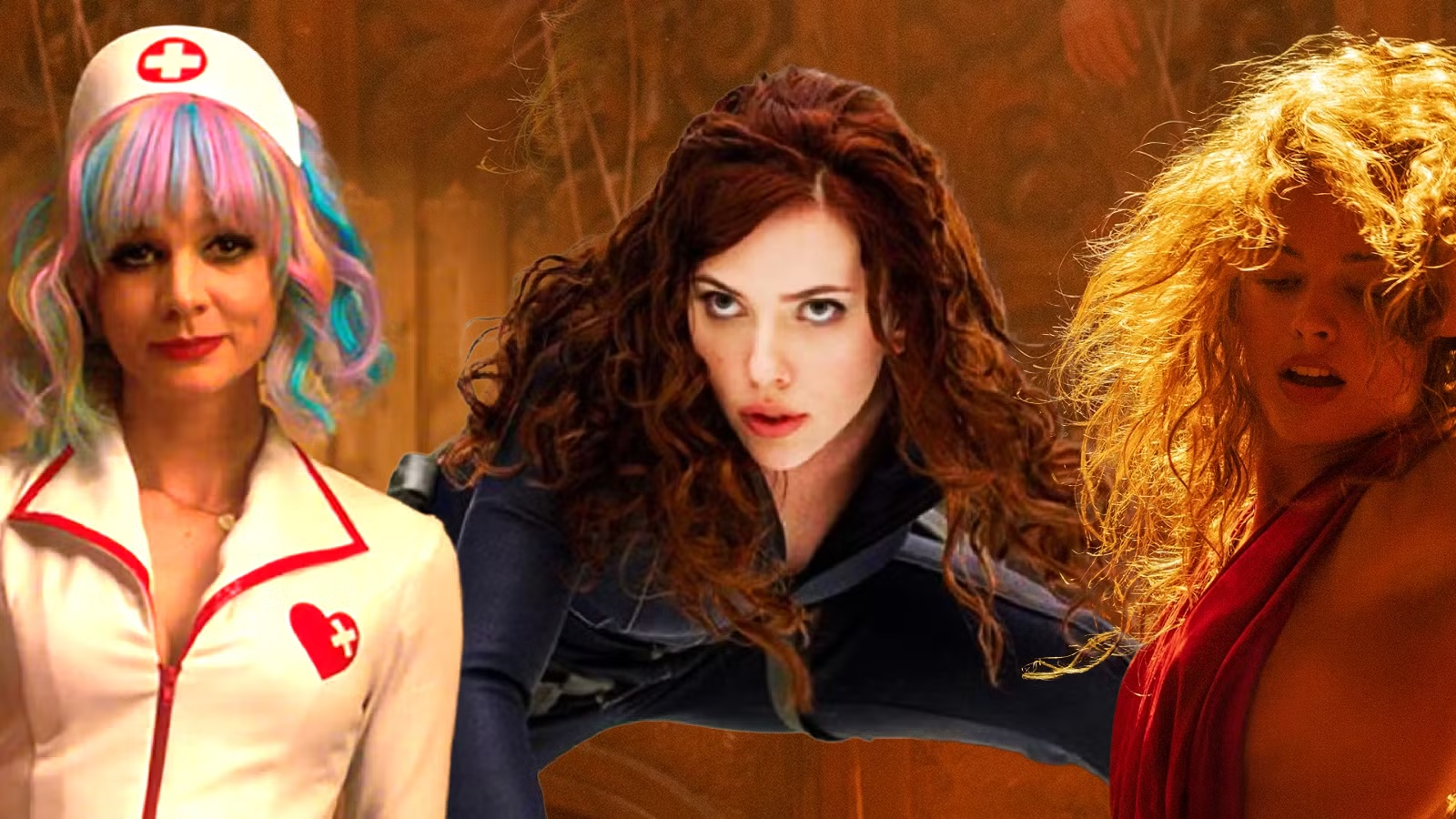
Welcome, literature students! Today, we’re diving into the fascinating world of the femme fatale—the archetype that has been captivating and ensnaring well-meaning protagonists since the days of ancient mythology, and it shows no signs of fading away. Whether you’re putting together analyses at StudyCreek or exploring gender archetypes at DissertationHive, get ready to encounter literature’s most intriguing villain-hero-antiheroine—it’s a bit complicated!
The femme fatale, which translates from French to “deadly woman” (because, of course, the French had to give her a dramatic title), is a classic character who wields her sexuality, charm, and an air of mystery to lead men to their downfall. She’s not just a pretty face; she’s smart, morally complex, and completely unrepentant about using her feminine allure as a weapon. Picture her less as a Disney princess and more like a chess master in lipstick, viewing men as mere pawns in her game, ready to sacrifice them for her own gain.
Throughout the ages, she has graced countless works of literature and film: Salome demanding the head of John the Baptist; Lady Macbeth plotting murder with chilling precision; Carmen leading Don José to his downfall; Phyllis Dietrichson luring insurance salesmen into deadly schemes in Double Indemnity; and Cersei Lannister wielding her power with ruthless cunning, even involving her own children. What unites them all? A fierce sense of agency, a complex sexuality, an aura of danger, and the inevitable narrative consequences that often follow their actions.
Ancient & Biblical Origins: Eve, Delilah and the Sirens set the stage for a recurring theme—women whose allure leads men to their downfall. These early portrayals only fueled societal fears about female sexuality and power. In essence, ancient writers were saying “women are a threat” and they crafted entire mythologies around that idea.
Victorian Gothic: The 19th century introduced us to some truly complex characters, like Bram Stoker’s female vampires and Thomas Hardy’s tragic heroines, who boldly defied the expectations of their time. These women not only pushed against the strict boundaries of Victorian morality but also faced harsh consequences in their stories for their rebelliousness. The message: female independence equals destruction (yours and everyone else’s).
Film Noir Era: The 1940s and 50s really nailed the cinematic archetype. Icons like Barbara Stanwyck, Rita Hayworth, and Lana Turner brought to life women who smoked, plotted, and donned stunning hats while skillfully manipulating desperate men. These film noir femme fatales represent a blend of capitalism and sexuality—they crave money, independence, and control, wielding the only weapons a patriarchal society allows: their bodies and their wits.
Contemporary Subversions: Modern literature and film have really changed the game when it comes to archetypes. Just look at Amy Dunne from Gone Girl—she turns victimhood into a powerful weapon. Basic Instinct‘s Catherine Tramell controls the narrative entirely. These versions explore the complex question of whether the femme fatale is truly a villain or if she’s just a victim of systems that only allow women to wield power through their sexuality.
The femme fatale remains a captivating figure because she brings so much to the table. In stories where women often lack agency, she stands out with her independence. Unlike many female characters who are defined by their relationships with men, she embraces her sexual autonomy. She’s not just a pretty face; she’s smart, strategic, and layered—qualities that literature frequently assigns to male characters. Sure, she might play the villain, but one thing’s for sure: she’s never dull.
Feminist Readings: The archetype is both intriguing and a bit troubling. Could she be a reflection of society’s anxieties about female strength? Absolutely. Does she also represent female rebellion against restrictive gender roles? Also yes. She’s a fascinating mix of empowerment and limitation—a character who harnesses her sexuality to gain strength, yet faces consequences for that very same sexuality.
When writing about femme fatales, consider:
The femme fatale tells us more about the anxieties of society than about real women. She acts as a mirror, reflecting our cultural fears surrounding female sexuality, power, and independence. To truly understand her, we need to grasp the patriarchal systems that brought her to life—and also recognize the feminist potential in taking her back.
The takeaway? The femme fatale stands out as one of literature’s most intricate female characters, largely because the literary world has always had a complex relationship with powerful women. She embodies the roles of villain, victim, and icon—all at once.
Now go analyze. Your essay awaits, and unlike the protagonists she seduces, you’ll survive the encounter.

Write a 1000 word argumentative research paper based on a comparative analysis of two or more complementary film and literary texts.
Investigate the archetype of the femme fatale and show how The Lady of the Gawain, Fatal Attraction’s Alex Forrest, and Lisa Sheridan from Obsessed (2009).
Student Name
Professor Name
Course Title
Date
Fatal Power: A Comparative Analysis of the Femme Fatale Archetype in Sir Gawain And The Green Knight, Fatal Attraction and Obsessed (2009)
The femme fatale archetype has been a captivating figure throughout history, showing up in everything from medieval poetry to modern films and pop culture. She represents a complex mix of seduction, danger, and female empowerment. Often seen as a challenge to male authority, the femme fatale also reflects societal fears and concerns surrounding gender, sexuality, and control. This paper explores how characters like the Lady of Sir Gawain And The Green Knight, Alex Forrest from Fatal Attraction, and Lisa Sheridan in Obsessed (2009) wield their power through manipulation, desire, and psychological influence. Yet, their portrayals also highlight changing social views on women’s independence. While the medieval Lady’s strength is tied to courtly behavior and moral dilemmas, Alex and Lisa represent late-twentieth- and early-twenty-first-century anxieties about women who disrupt traditional family dynamics. Together, these characters showcase the evolution and lasting impact of the femme fatale archetype.
The Lady in Sir Gawain And The Green Knight stands out as one of the earliest and most intriguing femme fatales in English literature. Unlike the violent portrayals we often see in modern films, her strength lies in her social finesse and psychological cunning. She approaches Gawain with a carefully crafted seduction, slipping into his chamber time and again under the pretense of courtly manners. Her flirtation is both playful and strategic, putting Gawain in a tricky spot where his honor, desire, and duty all collide. The Lady wields her power by turning politeness into a weapon: every time Gawain refuses her advances, he risks breaking the rules of hospitality, while accepting them puts his chastity and spiritual integrity on the line. Unlike modern femme fatales who operate chaotically, the Lady acts within a structured social performance designed to test Gawain’s virtue. Her power is intellectual and symbolic, revealing the medieval concern that female persuasion can destabilize even the most honorable knight.
In stark contrast, Alex Forrest from Fatal Attraction showcases a much more intense and psychologically charged version of femme-fatale power. As a professional and independent woman navigating 1980s America, Alex initially comes off as confident and in control. But when Dan Gallagher tries to limit their relationship to just a fleeting affair, her emotional turmoil takes center stage in the story. Alex’s strength reveals itself through her obsession, unpredictability, and her refusal to accept the domestic limits that Dan’s marriage imposes on her. Her actions—like stalking, making self-harm threats, and intruding into Dan’s family life—turn the very emotions society expects women to suppress into weapons. In this way, Alex personifies the cultural anxiety surrounding female independence and sexual freedom during a time when women were increasingly stepping into the workforce and pushing back against patriarchal norms. Unlike the Lady of Gawain, whose seduction is more controlled and symbolic, Alex’s behavior is raw, confrontational, and destructive, challenging not just Dan but also the larger narrative of the traditional nuclear family.
Lisa Sheridan from Obsessed (2009) offers a fresh take on the classic femme fatale, intertwining themes of psychological turmoil with today’s worries about workplace dynamics and female rivalry. Much like Alex, Lisa becomes enamored with a man who doesn’t return her affections. Yet, her strength shines through a guise of innocence, vulnerability, and professional competence. At first, she uses her job as a backdrop for subtle manipulation—flirting masked as concern, and unsolicited emotional revelations presented as cries for help. Her true power lies in her ability to seem harmless while orchestrating scenarios that jeopardize Derek Charles’s marriage and career. In contrast to Alex, who boldly challenges societal norms, Lisa operates as a quiet infiltrator, her destructive tendencies hidden behind a delicate exterior. She exploits modern issues like harassment, HR policies, and corporate image to stir up chaos in Derek’s life, showcasing how the femme fatale has evolved to navigate today’s institutional frameworks.
When you look at it, all three characters use seduction as a way in, but their reasons and approaches really show where they come from culturally. The Lady uses seduction to test someone’s virtue; Alex does it to seek emotional validation and push back against domestic limits; and Lisa uses it to chase a fantasy of romantic possession that isn’t quite grounded in reality. Their levels of agency also differ. The Lady acts under the direction of the Green Knight, functioning as part of a broader moral design. Alex operates independently, resisting male control and attempting to assert power over a patriarchal family structure. Lisa, however, performs independence while actually seeking total emotional dependence on Derek. These variations highlight how the femme fatale adapts to the fears of each era—she embodies the cunning women feared in medieval times, the sexual independence that raised eyebrows in the 1980s, and the emotional unpredictability that unsettled workplaces in the 2000s.
Despite their differences, each woman reveals the vulnerabilities of the male protagonists they pursue. Gawain’s pride and strict code of honor make him an easy target for the Lady’s challenges. Dan Gallagher’s infidelity and emotional dishonesty open the door for Alex’s obsession, exposing the fragility of the domestic life he claims to cherish. Derek Charles’s need to maintain a flawless image and avoid conflict allows Lisa to escalate her actions. In every scenario, the femme fatale’s strength lies not just in what she does, but in the flaws she uncovers in male behavior. She acts as a mirror, reflecting the insecurities and moral shortcomings of the men who dread her influence.
The femme fatale archetype continues to hold a strong influence because it tackles the cultural fears we have about gender and control. Each of these women—the Lady, Alex, and Lisa—challenges different aspects of male dominance. The Lady questions the idea that men are morally superior; Alex shakes up the notion of a stable patriarchal home; and Lisa challenges what we think about professionalism and emotional safety in the workplace. Though they each have their own approach, all three disrupt the social structures that men depend on to keep their power. In doing so, they show us that the power of the femme fatale goes beyond just sexuality; it’s also psychological, symbolic, and deeply intertwined with society’s expectations of femininity.
To wrap things up, the characters of the Lady in Sir Gawain And The Green Knight, Alex Forrest from Fatal Attraction, and Lisa Sheridan in Obsessed all showcase how the femme fatale has transformed over time—from a noble tester of virtue to a modern psychological menace. Their representations reflect changing societal anxieties about female independence while also emphasizing the ongoing theme of male vulnerability. Together, they solidify the femme fatale’s place as one of the most enduring and culturally significant archetypes in literature and film.
Delivering a high-quality product at a reasonable price is not enough anymore.
That’s why we have developed 5 beneficial guarantees that will make your experience with our service enjoyable, easy, and safe.
You have to be 100% sure of the quality of your product to give a money-back guarantee. This describes us perfectly. Make sure that this guarantee is totally transparent.
Read moreEach paper is composed from scratch, according to your instructions. It is then checked by our plagiarism-detection software. There is no gap where plagiarism could squeeze in.
Read moreThanks to our free revisions, there is no way for you to be unsatisfied. We will work on your paper until you are completely happy with the result.
Read moreYour email is safe, as we store it according to international data protection rules. Your bank details are secure, as we use only reliable payment systems.
Read moreBy sending us your money, you buy the service we provide. Check out our terms and conditions if you prefer business talks to be laid out in official language.
Read more