7 Powerful Insights to Positively Address Racial Health Disparities – StudyCreek.com
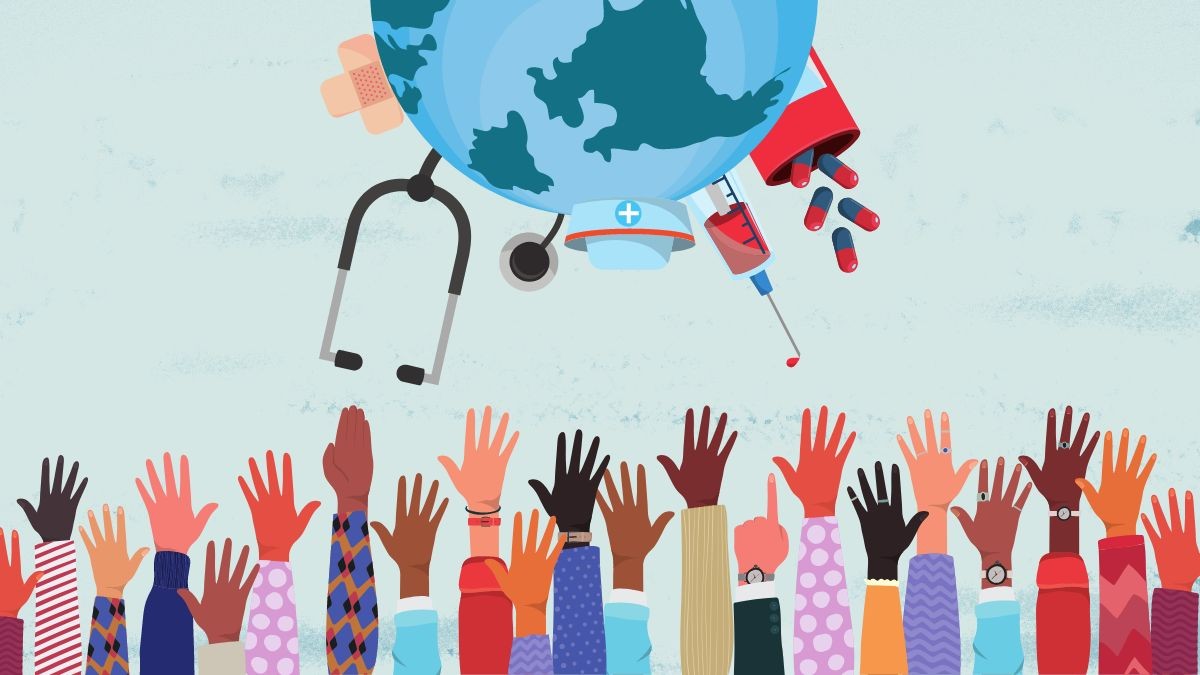
Learn seven useful lessons that reveal the causes of racial health disparities and discuss the positive solutions to address equity problems in American healthcare. Get to know how systemic change, community involvement, and evidence-based approaches can establish healthier futures of everybody.
Introduction
The issue of racial health disparities has been discussed more urgently across the United States, and rightfully so. With the communities, healthcare facilities, and policymakers pursuing sustainable solutions, it has now been realized that there is a moral duty to address inequities in addition to it being a priority in terms of healthcare. To the inequalities in access to care to the individual level of misfortune caused by discrimination, racial health disparities continue to define who becomes ill, who receives treatment, and who prevails.
The article discusses seven lessons that are potent to understand the underlying reasons behind the issue of racial health disparities and provide practical and positive ways of how to build a more just healthcare future. Regardless of whether you are a healthcare student, provider, policymaker, or a person who cares about justice, these insights will encourage actual transformation.
To further academically and research back up, visit
StudyCreek.com an inbound resource focused on high-quality writing and academic tools to students and healthcare professionals.
Learning about the Real Picture of Racial Health Inequality.
We should know the magnitude of the problem in order to make a change. Racial health disparity is not a personal issue, it is a systemic difference that extends to a population. The access to quality care has been unequal in marginalized populations like the African Americans, Native Americans, Latinx populations and Pacific Islanders over generations.
These racial health inequalities are manifested in the following places:
- Mothers and infants mortality.
- Chronic disease prevalence
- Life expectancy
- Mental health access
- Emergency care response
- Healthcare affordability
The results are not abstract, but extremely personal, when it comes to their impact on families and communities, which have generational accruing effects.
The continued effect of Systemic Racism on Health.
Systemic racism is one of the greatest causes of racial health disparities and has remained at the forefront to influence health policies, clinical care, insurance cover, and even the neighborhoods. The long-standing unjustice in history like the Tuskegee Syphilis Study, racially segregated hospitals, and prejudiced insurance has its mark.
These inequalities bring about racial health disparity in four significant ways:
- Mistrust towards healthcare systems.
- Lack of equity in the provision of healthcare services.
- Low availability of specialists.
- Increased exposure to long-term stress and the environment.
In order to grasp the full study of the racial health disparities, we need to realize ways in which the past policies continue to affect current results.
Social Determinants That Propel The Inequalities in Health.
Social determinants of health, which include housing stability, education, income, employment, and transport are very significant determinants of racial health disparities. Access to medical care can be obstructed by such factors as food insecurity or transportation even in cases of medical care availability.
Racial health disparities are always experienced by communities who usually face barriers like:
- The problem of living in healthcare deserts.
- Increased exposure of pollutants.
- Poor transport facilities.
- Poor access to health literacy material.
When such issues coincide, they support the disparities in health among races, establishing cycles that may not be easy to end, without deliberate action.
Implicit Bias and Clinical Care.
Well trained medical practitioners may still harbor biases that affect their judgment unconsciously. Such biases are one of the factors that lead to racial health disparities especially on matters such as pain management, accurate diagnosis, and emergency response.
Research demonstrates that patients of color die:
- Less likely to be well treated with regard to pain.
- More apt to get their symptoms ignored.
- Reduced opportunities of receiving high-level interventions.
Implicit bias is not intentional injury, but the consequence, which is expanding racial health differences, is the same. The solutions to this problem include training, awareness and having diverse staffing.
Local-Based Solutions that bring about a real change.
Solutions to racial health disparities should be community-based to lessen them. The access to healthcare is being changed by community health workers, mobile clinics, culturally informed treatment, and education programs based in the neighborhood.
Such solutions are effective since they:
Create credibility with the familiar face.
Conquer supply challenges.
Deliver culturally sensitive services.
Establish long-term relationships.
The active use of partnerships with local organizations can be emphasized in many successful initiatives, such as the outreach networks and the resource, such as WorkVix.com that offers community-based digital tools and insights.
Community initiatives directly cut down on the racial health disparity, as they go to the people where they are, physically, emotionally, and culturally.
Innovation and Technology as Health Equity Tools.
The current technology has effective means of eliminating racial health disparities. Telehealth, health tracking and diagnostic tools based on artificial intelligence, and mobile applications have increased care access among underserved populations.
An example is telehealth, which has contributed to the reduction of the racial health disparity based on transportation challenges particularly among the rural and urban underprivileged communities. Nevertheless, such issues as the digital divide should be taken into account. Not all people have equal access to stable phones or the internet.
Technology can be used as an equalizer in the struggle against health disparities based on race when implemented wisely.
Policymaking, Training, and Education towards a more equitable Future.
Lastly, to ensure sustainable development, it is necessary to invest in healthcare education and policy reform. The curriculum in nursing schools, medical programs, and other institutions offering public health services need to be integrated to directly tackle the problem of racial health disparities, cultural competence, and social justice.
Possible future healthcare leaders need to know how racial health disparities grow, how they are supported by policies, and how they are disrupted by clinical practice. There should also be advocacy on fair insurance cover, equitable resource allocation and community health programs.
This is where the academic support sites like StudyCreek.com enable students, clinicians and researchers to create evidenced based and informed work that can truly change the system.
Summary: The Racial Health Disparity Can Be minimized with the help of a collective action.
The racial health disparity solutions need dedication, consciousness, and structural transformation. Through root cause knowledge, investment in education, community cooperation and the promotion of fair policy, we can create a healthcare system in which all people, irrespective of race, have an equal opportunity to be healthy and healed.
Inequality in healthcare as a racial phenomenon is not a myth, yet the prospect of positive change is real. This collaboration can enable communities and providers to achieve a healthier and more equitable future, using the right tools, leadership and dedication to such a result.
Need academic assistance, writing, or evidence based advice in healthcare research? Go to
StudyCreek.com.
In order to get a deeper sample of resources and knowledge, one can also look up
WorkVix.com, a useful outbound resource of various digital tools.
SAMPLE QUESTION
In Healthy People 2020, there is a need to address health disparities among African Americans, Asians, American Indians, Latinx, Alaskan Americans, and Pacific Islanders. According to Copeland (2005), “disparities are not merely health issues but reflect grave inequalities that require remedies so that social justice prevails, regardless of race.” The recent burden we are currently facing due to COVID-19, long-standing systemic health and social inequities, has put many people from racial and ethnic groups at increased risk of getting sick and dying. For this module, we will explore the 1619 Project to begin a dialogue about the legacy of slavery in healthcare
This week you will listen to episode 4 of the 1619 Project podcast to springboard a dialogue about Race and Health in America.
This assignment has two parts:
Part 1:
- Listen to the Podcast “How Bad Blood Started,” which is in module 8 course readings
- Consider these questions while listening to the podcast and answer them in the assignment as well:
- What lines/moments while listening to the podcast stuck out to you, and why?
- What emotions did you feel when listening to the podcast?
- What are some of the ways the history of racism continues to impact racialized groups’ access to healthcare?
- What do you want to know more about?
Part 2: Reflective Assignment
- What did I learn?
- Two things I can teach another person about what I learned.
- How will this influence my practice as a future healthcare provider?
https://1619.simplecast.com/episodes/episode-4-how-the-bad-blood-started-RHvJIhR3
ANSWER
Part 1: Podcast Reflection- How the Bad Blood Started.
Memorable Moments and Lines That Stood Out.
Some of the most memorable situations of the podcast were the description of the Tuskegee Syphilis Study and the way that government doctors were aware that they were letting Black men to struggle and die due to a curable condition. A particularly strong piece of writing was the discussion on how these men were shown that they were being treated when in fact they were being watched as their disease advanced. This scenario was quite shocking as it proved a calculated and methodical breach of morality, consent and humanity as such.
An additional scene, which touched my heart, was the one where the narrator described the origin of medical racism that started with the slavery due to the experimentations of the enslaved Black bodies. This history as presented so coherently by hearing made me understand the extent to which racism has permeated the roots of American medicine.
Feelings I Experienced in the Process of Listening.
When I listened, I became angry, sad and disbelieved. The deliberate misinterpretation and lack of consideration of the Black lives was the source of the anger. The sadness was due to the realization of how the experience of the generational trauma continues to impact black communities in the modern world. I also experienced some form of heaviness when I understood that these malpractices did not occur in isolation but rather they are part of a bigger trend of abuse within the medical system.
I also had sympathy to the families of the victims, and they relied on institutions that failed them. It helped me better realize why there is still a medical mistrust among African Americans and other racialized groups.
The role of the History of Racism in HealthCare Access.
The history of racism still influences the access to healthcare among racialized populations in a variety of ways:
Medical mistrust: Past wrongs such as Tuskegee and forced sterilizations are some of the factors that make people of color feel fear or distrust of healthcare institutions, resulting in many not seeking care at all or putting it off.
Implicit bias: The research demonstrates that healthcare givers tend to misjudge the extent of pain among Black patients and thus they end up under-treated.
Structural barriers This is because racialized groups tend to reside in underserved neighborhoods with reduced clinics, reduced specialists, and extended wait periods.
Insurance inequities: Due to the historical economic disparities, the people of color are overrepresented as uninsured or underinsured.
COVID-19 inequalities: The pandemic showed how the history of chronic inequality leads to the increased mortality of the Black, Latinx, Native American, and Pacific Islander populations.
These systemic and historical problems demonstrate that the differences that we experience nowadays are not simply the coincidences but the creations of policies, beliefs, and practices, which have been developing over centuries.
What I Want to Know More About
After listening to the podcast, I would want to know further about:
The exact persons and groups of the victims of Tuskegee and the way the relatives perceive their family history nowadays.
Other minor instances of unethical medical practices by racialized groups, like Puerto Rican experiments with birth control or Native American sterilizations.
Current policies that are being established to restore confidence between underprivileged populations and healthcare systems.
The impact of medical racism on (or lack of impact on) medical and nursing education curricula.
Part 2: Reflective Assignment
What Did I Learn?
I came to understand that medical racism in America did not begin with Tuskegee, but rather began many years ago, during slavery, when Black bodies served as subjects of experiments with no sense of free will and moral safeguards. The Tuskegee case was not a stand-alone event but rather a disturbing trend of healthcare dehumanization that has been occurring over a long time.
I also read that the current racial health disparity is also directly related to these past injustices. The cynicism that most communities have towards health systems is not unreasonable or unjustified- it is a reaction to the reported abuse that has occurred over generations.
Lastly, I was taught that health disparities are not simply a clinical ability, but it needs cultural humility, historical awareness, and equity.
Two Things I Can Teach Another Person.
The mistrust of the medical system in people of color is not new.
The Tuskegee Study and previous types of exploitation have left a generational trauma and distrust in healthcare behavior that persist in the current healthcare situation.
The disparities in health are social and structural rather than biological.
Discriminatory treatment, inadequate access, inadequate insurance, racism, unequal distribution of healthcare resources, and many other factors are all factors that contribute to worse outcomes in African Americans, Latinx people, Native people, and other minority groups.
What Will This Have to do with my Future work as a Healthcare Provider?
This education will affect my practice by helping me become more deliberate in equitable, culturally sensitive, and trauma-conscious care. Knowing the history of racism in medicine would assist me in:
Treat patients in a non judgmental manner.
Be a good listener to issues, more so on matters of mistrust.
Campaign against regulations and policies that promote admission and equity.
Break implicit biases within myself and work environment.
Establish trust, transparency, respect, and patient centredness.
Report when I witness discriminatory treatment.
In my life as a future healthcare provider, I would like to participate in the process of restoring the trust and making sure that the wrongs of the past should not be repeated. The acknowledgment of the medical racism history is the initial step in developing the system when every patient will feel safe, appreciated, and treated with dignity irrespective of race.